
Could a medication that helps with appetite and blood sugar also require a long-term plan for nutrition, side effects, and discontinuation? GLP-1 medications can support type 2 diabetes care and chronic weight management, but they aren't a universal shortcut or a treatment chosen from body size alone. The right decision depends on the specific brand, FDA-approved indication, medical history, other therapies, tolerability, and follow-up.
Byline: Empire Medical Wellness Editorial Team
Published: August 27, 2026
Updated: August 27, 2026
Table of Contents
- What GLP 1 Medications Are and How They Work
- FDA-Approved GLP 1 Drugs by Indication
- Who Qualifies for GLP 1 Treatment
- Benefits and What the Evidence Actually Shows
- Side Effects, Risks, and Red Flags to Watch For
- Starting, Monitoring, and Long-Term Maintenance
- Questions to Ask Your Physician and Common Misconceptions
What GLP 1 Medications Are and How They Work
GLP-1 stands for glucagon-like peptide-1, an incretin hormone released by intestinal L-cells after eating. Natural GLP-1 helps the body respond to food, but it remains in the bloodstream for only about 2 to 3 minutes because enzymes and the kidneys remove it quickly. This short half-life explains why therapeutic GLP-1 receptor agonists require molecular changes that extend their activity.
GLP-1 receptor agonists are medications designed to activate the same receptor as natural GLP-1, while lasting much longer. They influence several connected systems rather than producing one isolated effect.
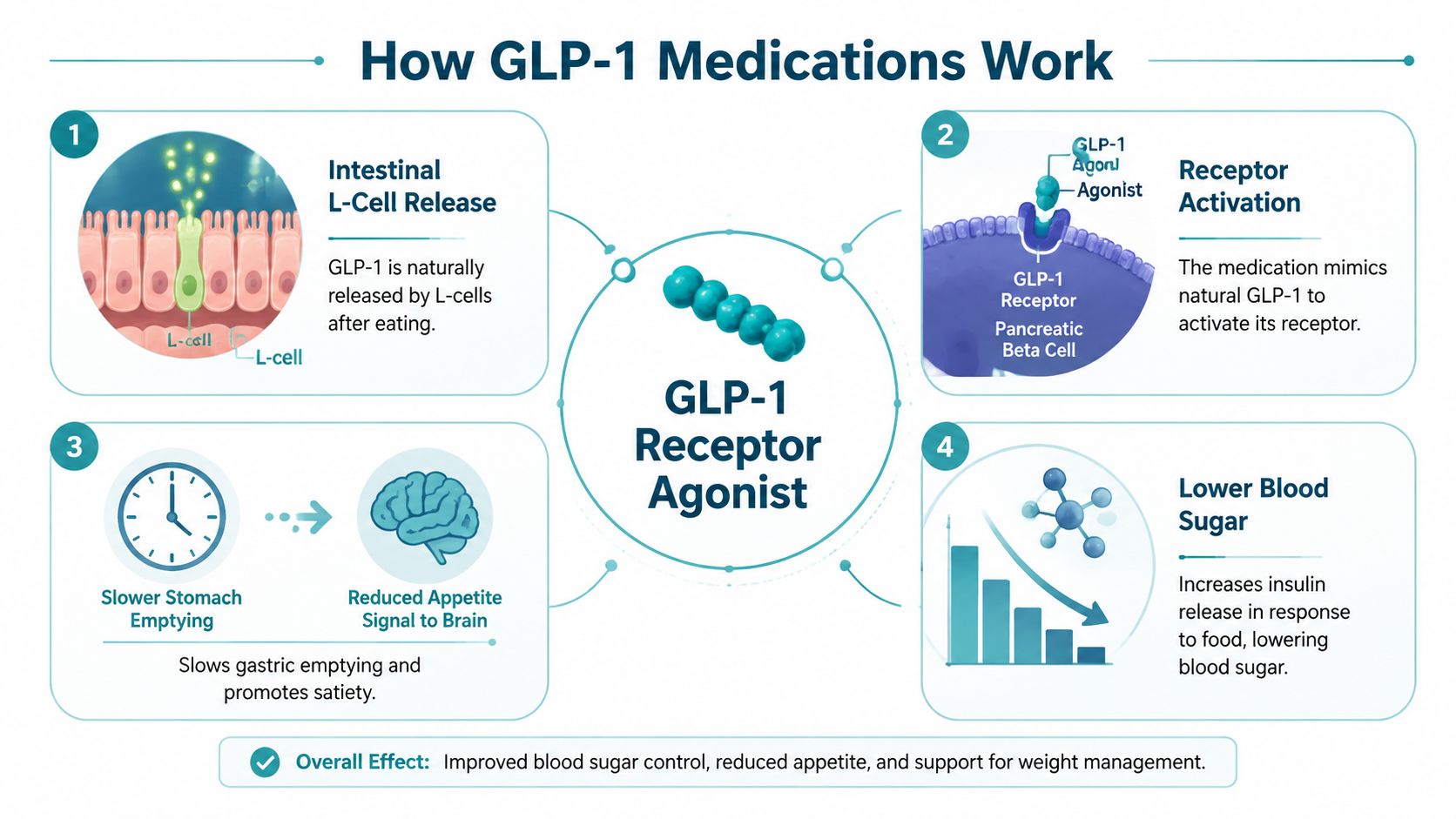
Four connected effects
Food-dependent insulin release: When glucose is high, GLP-1 receptor activity encourages the pancreas to release insulin. This glucose-dependent action helps explain why the class is useful in type 2 diabetes care.
Less glucagon: Glucagon raises blood glucose by signaling the liver to release stored glucose. GLP-1 receptor agonists reduce glucagon secretion when it isn't needed, helping moderate glucose levels after meals.
Slower stomach emptying: Food moves out of the stomach more slowly. That can soften the rise in blood glucose after eating and create earlier fullness. The same effect also helps explain common digestive symptoms such as nausea, constipation, diarrhea, and vomiting.
A stronger fullness signal: GLP-1 receptors in the central nervous system influence appetite regulation. Many patients experience less hunger or feel satisfied with smaller portions, although the degree of change varies.
These mechanisms can produce downstream improvements in HbA1c, body weight, blood pressure, and lipid measures, depending on the medication, indication, baseline health, and treatment response. Cardiovascular or kidney benefits should be described carefully. Some brands have specific approved cardiovascular indications, while other possible benefits remain dependent on the evidence for a particular drug and patient population.
The class has become relevant to both diabetes and obesity medicine because it addresses blood glucose regulation and appetite biology. For example, physician-led care may include tirzepatide treatment information when the medication is clinically appropriate.
The benefit also depends on continued exposure. These medicines change appetite, digestion, and glucose signaling while they are active. Stopping treatment can therefore require a deliberate maintenance conversation rather than an assumption that a completed prescription represents a permanent cure.
FDA-Approved GLP 1 Drugs by Indication
The phrase “GLP-1 medication” can obscure an important distinction. A molecule may have different brand names, formulations, approved uses, and dosing schedules, so a diabetes label shouldn't automatically be treated as a weight-management label.
The table below is a high-level orientation. Exact prescribing information governs eligibility, administration, contraindications, warnings, and dose changes.
FDA-Approved GLP-1 Receptor Agonists by Indication
| Brand Name | Generic | Approved Indication | Route | Frequency |
|---|---|---|---|---|
| Ozempic | Semaglutide | Type 2 diabetes and certain cardiovascular risk-reduction use in the labeled population | Injection | Weekly |
| Wegovy | Semaglutide | Chronic weight management, with a cardiovascular risk-reduction indication in the labeled population | Injection | Weekly |
| Rybelsus | Semaglutide | Type 2 diabetes | Oral tablet | Daily |
| Victoza | Liraglutide | Type 2 diabetes and cardiovascular risk reduction in the labeled population | Injection | Daily |
| Saxenda | Liraglutide | Chronic weight management in adults and adolescents 12 and older | Injection | Daily |
| Trulicity | Dulaglutide | Type 2 diabetes and cardiovascular risk reduction in the labeled population | Injection | Weekly |
| Byetta and Bydureon | Exenatide | Type 2 diabetes | Injection | Daily or extended-release weekly formulation |
| Adlyxin | Lixisenatide | Type 2 diabetes | Injection | Daily |
| Mounjaro | Tirzepatide | Type 2 diabetes | Injection | Weekly |
| Zepbound | Tirzepatide | Chronic weight management | Injection | Weekly |
Semaglutide's cardiovascular indication is distinct from its weight-management indication. The FDA approved Wegovy to reduce the risk of cardiovascular death, heart attack, and stroke in adults with cardiovascular disease who have obesity or overweight. The FDA announcement explains that indication and its population.
Tirzepatide is not technically a pure GLP-1 receptor agonist. It activates both GIP and GLP-1 receptors, making it a dual agonist, while Mounjaro and Zepbound carry different labels. A patient researching Ozempic for type 2 diabetes should therefore compare the actual label and clinical goal, not just the popularity of a brand name.
Who Qualifies for GLP 1 Treatment
Eligibility follows two different pathways that people often combine incorrectly.
For type 2 diabetes, a clinician may consider a GLP-1 receptor agonist when glucose targets aren't being met with the current plan or when the medication's broader benefits fit the patient's established cardiovascular, heart-failure, or kidney-risk profile. The decision depends on the complete diabetes regimen, kidney and liver status, hypoglycemia risk, and the specific product label.
For chronic weight management, FDA labeling for semaglutide and tirzepatide uses a threshold of BMI 30 kg/m² or greater, or BMI 27 kg/m² or greater with at least one weight-related condition. Examples include hypertension, type 2 diabetes, or high cholesterol. Tirzepatide is intended to be used with a reduced-calorie diet and increased physical activity, as stated in the FDA approval announcement for chronic weight management.
BMI is a formal labeling framework, not a complete diagnosis or a measure of personal worth. A physician also considers weight history, previous treatment response, sleep, nutrition, mental health, reproductive plans, other medications, and whether ongoing follow-up is realistic. A person shouldn't assume that appearance alone reveals eligibility.
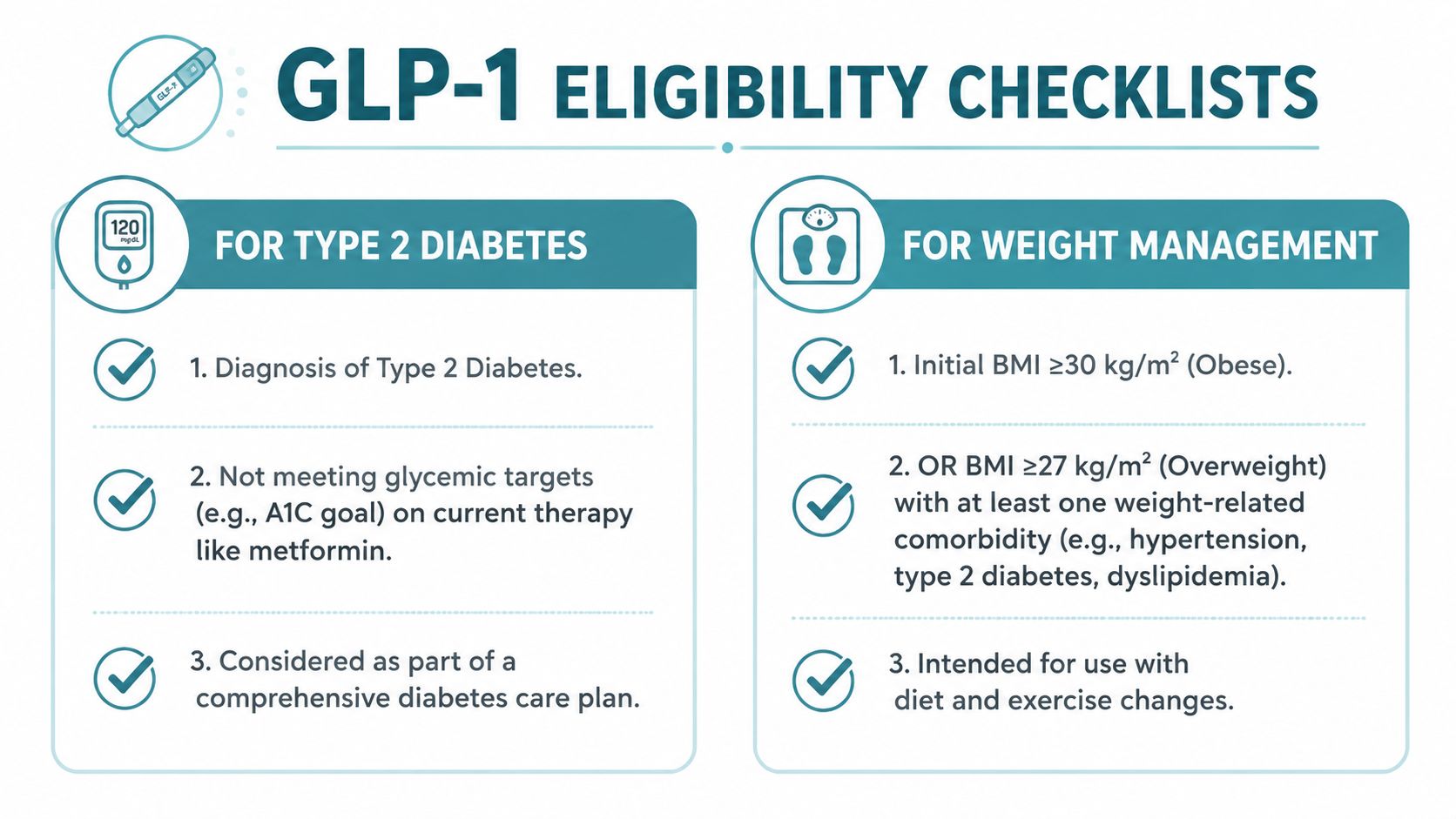
Situations that change the decision
The boxed warning for relevant products means they shouldn't be used by people with a personal or family history of medullary thyroid carcinoma, or by people with multiple endocrine neoplasia syndrome type 2. Pregnancy also requires particular caution because weight loss treatment isn't appropriate during pregnancy. A history of pancreatitis doesn't automatically produce one universal answer for every product, but it calls for careful review.
People considering physician-led obesity medicine care should bring a complete medication list and relevant medical records. Candidacy is a shared decision, not a checklist that can be completed safely without clinical context.
Benefits and What the Evidence Actually Shows
The evidence for GLP-1-based obesity treatment extends beyond a single heavily discussed drug. A 2025 meta-analysis of 47 randomized controlled trials involving 23,244 participants found that GLP-1 receptor agonists produced an average weight reduction of 4.57 kg, a BMI reduction of 2.07 kg/m², and a waist-circumference reduction of 4.55 cm versus placebo. These pooled findings appear in the meta-analysis published in Diabetes Care.
A separate systematic review of 22 trials and 17,183 participants reported that 50.2% of treated participants achieved at least 5% weight loss, while 17.5% achieved at least 10% weight loss, compared with placebo, in the reviewed evidence. These are pooled results, not promises for an individual patient.
Evidence summary
| Evidence point | What it shows | Clinical meaning |
|---|---|---|
| GLP-1 receptor agonists | Repeated trial evidence across a large pooled population | The class isn't defined by one drug or one study |
| Tirzepatide versus semaglutide | In a head-to-head obesity trial of 751 participants, mean loss at week 72 was 20.2% versus 13.7% | Average efficacy differed in that study, but tolerability and candidacy still matter |
| GLP-1-based research activity | One review identified 227 completed interventional obesity studies, including 86 liraglutide, 18 semaglutide, 18 tirzepatide, and 15 exenatide studies | The field contains varied drugs, populations, and endpoints |
| Pooled body-weight reduction | One meta-analysis found 12.79% average reduction across GLP-1 receptor agonist trials, with tirzepatide at 17.03% and semaglutide at 11.37% | Results depend on the included trials and shouldn't be converted into a personal forecast |
The head-to-head finding is reported in the PubMed record for the comparative trial. Tirzepatide's dual GIP and GLP-1 activity may contribute to greater average weight reduction than GLP-1 monotherapy, but “more effective on average” isn't the same as “right for everyone.”
People with type 2 diabetes and people treated primarily for obesity may experience different outcomes because their baseline glucose, weight, comorbidities, concurrent therapies, and treatment goals differ. Trial efficacy also differs from real-world effectiveness, where access, persistence, side effects, dose interruptions, nutrition, and follow-up influence results. Information about semaglutide in obesity care should therefore be read alongside the plan for monitoring and maintenance.
Side Effects, Risks, and Red Flags to Watch For
The most common GLP-1-related problems affect the digestive system. Nausea, vomiting, diarrhea, constipation, and early satiety can occur because the medication changes appetite and gastric emptying. Gradual label-based titration may improve tolerability, but symptoms shouldn't be dismissed if they persist, prevent hydration, or interfere with nutrition.
Practical rule: A symptom's seriousness depends on its intensity, duration, associated symptoms, and the patient's medical context.
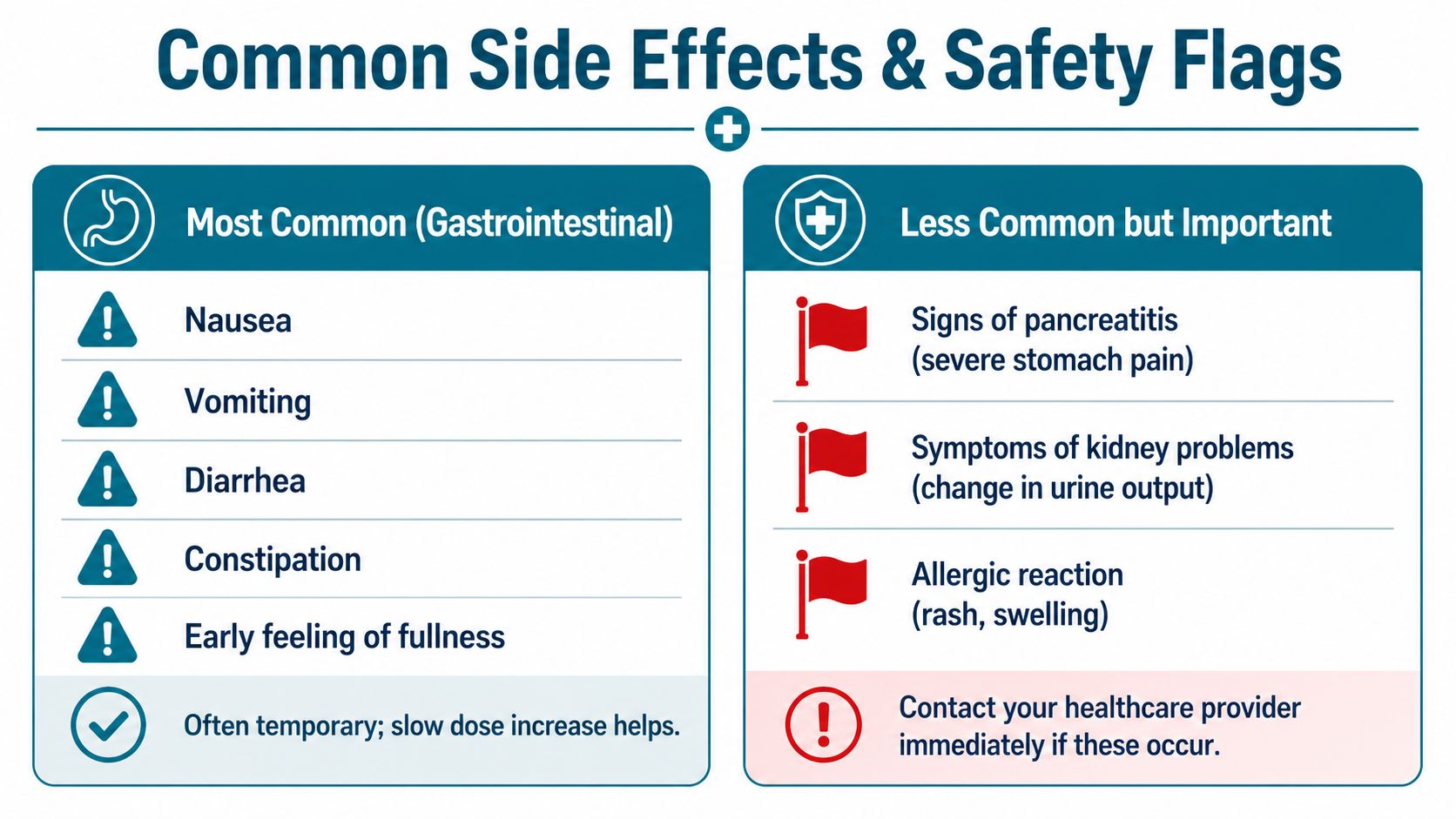
Common versus urgent symptoms
| Situation | Examples | Appropriate response |
|---|---|---|
| Often monitored routinely | Mild nausea, earlier fullness, constipation, diarrhea | Record timing and severity, maintain nutrition and fluids as tolerated, and discuss symptoms at follow-up |
| Contact the prescribing clinician promptly | Persistent vomiting, worsening abdominal symptoms, difficulty maintaining fluids, meaningful change in urination, or new vision concerns | Seek same-day clinical guidance |
| Emergency concern | Severe or persistent abdominal pain, fainting, breathing difficulty, facial or throat swelling, or signs of a severe allergic reaction | Seek emergency care |
Gallbladder disease, including gallstones and cholecystitis, is associated with GLP-1 receptor agonists, particularly with higher doses and longer use. Confirmed acute pancreatitis remains rare and hasn't shown a clear significant increase in large cardiovascular outcome trials, but severe abdominal pain still warrants urgent evaluation. An NIH-reviewed clinical discussion summarizes these safety considerations.
Hypoglycemia risk is generally lower when a GLP-1 medication is used alone, but the risk can rise when it is combined with insulin or a sulfonylurea. A clinician may need to review the overall regimen rather than treating each medication in isolation.
Patients should also tell anesthesiology teams about GLP-1 therapy because delayed gastric emptying can affect aspiration planning. Pregnancy, prior severe gastrointestinal disease, suspected gastroparesis, thyroid-cancer history, and medication allergies require product-specific review. For an accessible discussion of managing Ozempic nausea and heart palpitations, use it as general education, not as a substitute for the prescribing information or medical evaluation. More product-specific safety information is available in this guide to Mounjaro side effects.
Starting, Monitoring, and Long-Term Maintenance
Starting therapy should answer more questions than “Which medication is available?” A careful evaluation may include an HbA1c, lipid panel, renal and liver function testing, baseline weight and blood pressure, and pregnancy testing when relevant. The clinician also reviews current medications, prior treatment, gastrointestinal history, thyroid-cancer history, pancreatitis history, reproductive plans, and the patient's goals.
Semaglutide and tirzepatide use label-based dose escalation. The prescribed starting amount is lower than the eventual maintenance amount for the applicable product, and increases occur gradually when clinically appropriate. Exact schedules differ by brand and indication, so patients shouldn't combine instructions from Ozempic, Wegovy, Mounjaro, or Zepbound.
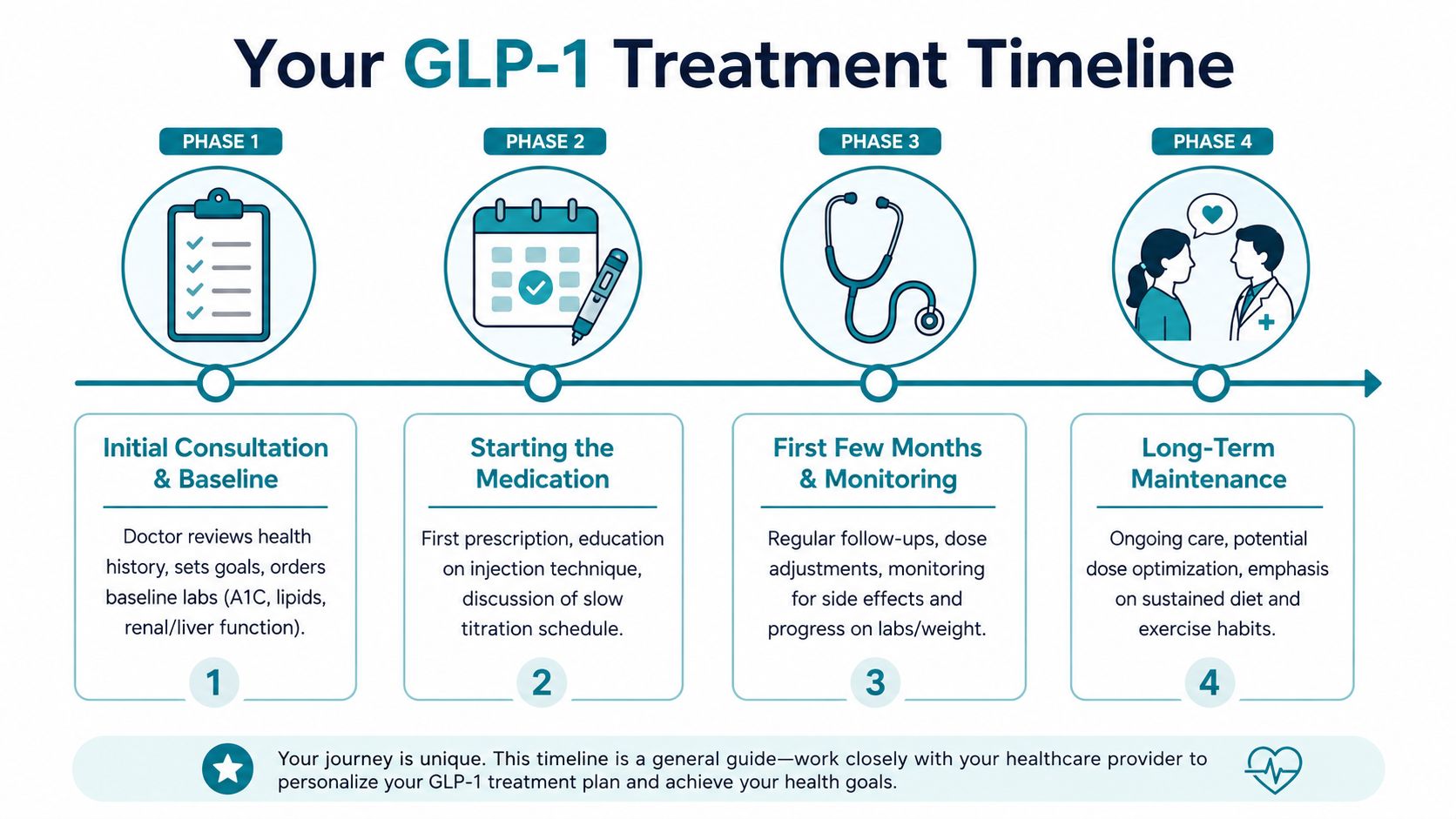
What follow-up evaluates
Early follow-up focuses on tolerability, appetite and eating changes, glucose data when relevant, hydration, bowel symptoms, medication interactions, and whether the patient can follow the prescribed schedule. A physician may adjust the plan when side effects outweigh benefit or when the response doesn't fit the treatment goal.
A long-term plan should also address protein-containing foods, adequate fluids, movement, resistance exercise when appropriate, sleep, and preservation of lean tissue. The 2025 nutrition review in Nature Reviews Endocrinology found that there is still no global consensus framework for dietary screening, intervention, or supplementation for GLP-1 receptor agonist users. That gap supports individualized nutrition monitoring rather than a one-size-fits-all supplement plan.
The maintenance question deserves direct attention. A 2025 U.S. analysis found median persistence of about 10.7 months across GLP-1 receptor agonist users. Real-world studies have also reported markedly different discontinuation patterns, including 52% discontinuation within 12 months in one Danish study of adults using semaglutide for weight loss. The PubMed analysis describes this persistence and discontinuation evidence.
That variation means stopping shouldn't be treated as a routine finish line. Weight regain may occur after discontinuation, and glucose control can change in people using treatment for diabetes. Any decision to continue, adjust, or stop should be planned with the prescribing clinician.
Questions to Ask Your Physician and Common Misconceptions
A productive consultation starts with the clinical question, not a preferred brand. Ask:
- Candidacy: Which FDA-approved indication fits my situation, if any?
- Comorbidities: How do my blood pressure, glucose, cholesterol, sleep, kidney function, or cardiovascular history affect the decision?
- Safety: Do my thyroid history, pancreatitis history, gastrointestinal symptoms, pregnancy plans, or allergies change the risk?
- Interactions: Could this medication affect my insulin, sulfonylurea, other glucose-lowering therapy, or an upcoming procedure?
- Titration: What product-specific escalation schedule applies, and what symptoms would delay an increase?
- Monitoring: Which labs, home measurements, symptoms, and nutrition markers will we follow?
- Maintenance: What would continued therapy, a change in therapy, or planned discontinuation look like?
Myth and evidence
Myth: GLP-1 therapy is a short-term fix.
Evidence: The appetite and glucose effects depend on active treatment. Persistence is often imperfect in real-world care, so a maintenance plan belongs in the initial discussion.
Myth: A single BMI number determines treatment.
Evidence: BMI thresholds are part of FDA labeling for chronic weight-management indications, but medical history, comorbidities, risks, goals, and follow-up capacity also matter.
Myth: All GLP-1-based drugs are identical.
Evidence: Semaglutide is a GLP-1 receptor agonist. Tirzepatide activates both GIP and GLP-1 receptors. Brands also carry different approved indications and formulations.
Myth: Natural GLP-1 and a supplement are interchangeable with a prescription medication.
Evidence: Natural GLP-1 is rapidly broken down, while prescription receptor agonists are engineered to extend activity. Supplements shouldn't be assumed to reproduce an FDA-approved medicine's pharmacology or evidence.
Hypothetical example: An adult with a qualifying weight-management indication asks for treatment but reports persistent vomiting and uses insulin. A clinician would first assess the vomiting and hydration risk, review the insulin regimen and glucose safety, and determine whether treatment is appropriate before discussing escalation. The example is educational and doesn't represent an Empire patient or a dosing recommendation.
For adults seeking private, physician-led obesity care, Empire Medical Wellness offers medical and metabolic assessment, individualized weight-management planning, medication evaluation when clinically appropriate, ongoing monitoring, and long-term maintenance planning. Visit the practice website to review the care model and decide whether a physician consultation fits your needs.
This article is educational and isn't personal medical advice. If you have severe abdominal pain, persistent vomiting, breathing difficulty, facial or throat swelling, fainting, or another emergency symptom, seek emergency medical care.