
Could the most important GLP-1 question be what happens after the medication stops, rather than how quickly weight comes off? GLP-1 medicines are prescription treatments that mimic a gut hormone involved in blood sugar, appetite, and digestion. They can support diabetes care and chronic weight management, but they aren't interchangeable, risk-free, or usually a short course.
This guide explains the biology, FDA-approved uses, differences between GLP-1-only and dual GIP/GLP-1 medicines, common and serious risks, eligibility, and the maintenance decisions that matter when treatment becomes difficult to continue. The discussion is for adults considering private, physician-led obesity care, not a diagnosis or individualized treatment plan.
Table of Contents
- What GLP-1 Medicines Are and How They Work
- GLP-1 vs Dual GIP and GLP-1 Medicines Compared
- Approved Uses for Type 2 Diabetes and Weight Management
- Common Side Effects and Red Flags That Need Clinician Review
- Who Is a Candidate and When to Pause for Clinician Input
- What Happens When You Stop and How Maintenance Planning Works
- Frequently Asked Questions About GLP-1 Therapy
What GLP-1 Medicines Are and How They Work
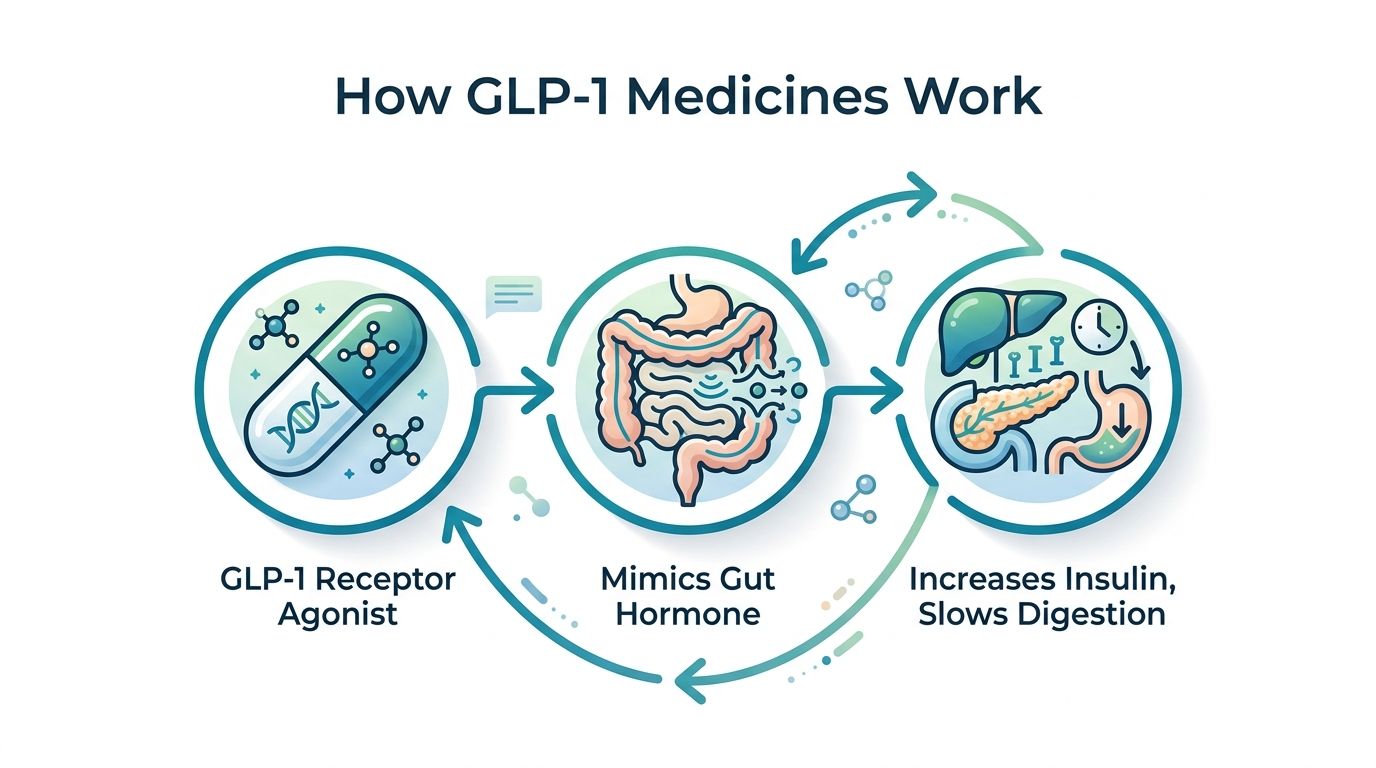
GLP-1 medicines mimic glucagon-like peptide-1, a hormone released by the gut after eating. This hormone is an incretin, meaning it helps the body coordinate insulin and blood-sugar regulation in response to food. Prescription GLP-1 receptor agonists activate GLP-1 receptors in the pancreas, digestive system, and brain.
The effect depends on glucose levels. GLP-1 receptor activation can increase insulin secretion when blood glucose is high, reduce post-meal glucagon release, slow gastric emptying, and reduce appetite. Slower stomach emptying can extend fullness after a meal, while signals involving the hypothalamus and other appetite-regulation pathways can reduce hunger.
Natural GLP-1 is broken down quickly by the enzyme DPP-4. Prescription medicines are engineered to last longer. Depending on the molecule, they resist enzymatic breakdown and bind to albumin or use other structural changes that allow once-daily or once-weekly administration.
The main molecules
Representative GLP-1 receptor agonists include semaglutide, liraglutide, dulaglutide, and exenatide. They share a receptor pathway, but their approved brands, doses, formulations, dosing frequency, and indications differ.
The clinical history helps explain why this class matters. The FDA approved liraglutide for type 2 diabetes in 2010, followed by weekly semaglutide in 2017 and obesity-dose semaglutide in 2021. That progression shows how a diabetes-related hormone pathway became a chronic weight-management treatment in a relatively short period. A clinical summary of these milestones and obesity-trial outcomes reports average weight loss of about 14.9% with semaglutide 2.4 mg, while tirzepatide reached 20.9% in SURMOUNT-1.
Mechanism doesn't guarantee a particular result. A person's response depends on the medicine, dose, adherence, tolerability, health conditions, and whether treatment continues. Readers interested in hormone-related weight-management questions can also review how GLP-1 therapy may be discussed in menopause, while the FDA-reviewed information for Ozempic and semaglutide treatment provides a practice-specific educational starting point.
GLP-1 vs Dual GIP and GLP-1 Medicines Compared
Is tirzepatide another GLP-1 medicine? No. Tirzepatide is not a GLP-1-only medicine. It activates both the GLP-1 receptor and the GIP receptor, so it belongs to the dual incretin agonist class.
GIP, or glucose-dependent insulinotropic polypeptide, is another hormone released in response to food. Activating both receptors may affect insulin secretion, appetite regulation, and fat-tissue biology differently from activating the GLP-1 receptor alone. The practical distinction matters because tirzepatide and semaglutide have different mechanisms, labeling, tolerability, and evidence. They should not be treated as interchangeable products.
| Medicine or class | Mechanism | Representative agents | FDA-approved use categories | Route and frequency | Notable evidence |
|---|---|---|---|---|---|
| GLP-1-only medicines | Activate the GLP-1 receptor | Liraglutide, semaglutide, dulaglutide, exenatide | Type 2 diabetes, with certain agents also approved for chronic weight management | Oral or injectable, depending on product | Semaglutide 2.4 mg produced about 14.9% average weight loss in large obesity trials, as described in the earlier clinical summary |
| Dual GIP/GLP-1 medicine | Activates both GIP and GLP-1 receptors | Tirzepatide | Type 2 diabetes and chronic weight management, under separate brand labels | Weekly injection, depending on product labeling | Tirzepatide produced 20.9% average weight loss in SURMOUNT-1, according to the same evidence summary |
| GLP-1-only medicines with cardiovascular-outcomes evidence | GLP-1 receptor activation plus disease-specific outcomes evidence | Liraglutide, semaglutide, dulaglutide | Diabetes indications with cardiovascular labeling for certain products | Product-specific | Cardiovascular findings depend on the medicine, population, and label. They should not be assumed for every product. |
Direct comparison also requires attention to study design. In SURMOUNT-5, average weight loss over 72 weeks was 20.2% with tirzepatide versus 13.7% with semaglutide. These trial averages describe groups, not guaranteed individual outcomes. They also do not resolve differences in contraindications, gastrointestinal tolerance, access, cost, or treatment goals. The comparative results should be read alongside current product labeling and a clinician's assessment.
Stopping treatment adds another practical difference to discuss. Appetite and weight-regulation effects may change after medication is withdrawn, so a larger trial result does not answer whether a person can maintain weight without ongoing support. Physician-led care should therefore address continuation, dose adjustments, side-effect management, and a maintenance plan rather than treating weight loss as a one-time endpoint.
For diabetes-focused education, Mounjaro information from Empire Medical Wellness describes a brand associated with tirzepatide. The clinician's task is to match the product and indication to the patient's medical situation.
Approved Uses for Type 2 Diabetes and Weight Management
Semaglutide illustrates why brand names can mislead patients. Ozempic is associated with type 2 diabetes, while Wegovy is associated with chronic weight management. The active molecule may be related, but the approved indication, dose, formulation, and labeling are not interchangeable.
Tirzepatide follows the same pattern: Mounjaro is associated with type 2 diabetes, and Zepbound with chronic weight management. Liraglutide has separate diabetes and weight-management brands. Dulaglutide and exenatide remain diabetes-focused products in the comparison above.
What the weight-management label means
The FDA-reviewed Wegovy materials describe semaglutide as a GLP-1 receptor agonist for chronic weight management in adults with obesity, or adults with overweight plus at least one weight-related comorbid condition. The treatment is used with a reduced-calorie diet and increased physical activity.
Common adult eligibility thresholds are:
- BMI of 30 or higher, or
- BMI of 27 or higher with at least one weight-related condition, such as hypertension, dyslipidemia, type 2 diabetes, or obstructive sleep apnea.
BMI is a screening tool, not a diagnosis or full health assessment. A physician-led review also examines weight history, current medications, laboratory findings, eating patterns, physical and mental health, and the patient's goals.
The label describes eligibility, not a guaranteed outcome or a permanent solution. Because appetite and weight regulation can change after treatment stops, prescribing should include a discussion of continuation, follow-up, and maintenance planning rather than treating weight loss as a one-time endpoint.
Why brand names can confuse patients
The same molecule does not make two prescriptions identical. An approved diabetes indication does not automatically authorize use for cosmetic weight loss, and findings from one product should not be transferred casually to another.
Empire's type 2 diabetes educational resources offer additional diabetes-focused context. A qualified prescriber must still match the product and indication to the patient's medical situation. Off-label cosmetic use falls outside the standard chronic obesity-management framework described by approved labeling.
Common Side Effects and Red Flags That Need Clinician Review
Could digestive symptoms tell you whether a GLP-1 medicine is working, or whether treatment needs review? The most common effects involve the digestive system: nausea, early fullness, vomiting, constipation, diarrhea, abdominal discomfort, or indigestion. Injectable products can also cause reactions where the medicine enters the skin.
Symptoms often begin or intensify during dose escalation. Receptor activity is increasing, while the digestive system is adjusting to slower stomach emptying and changed appetite signals. Mild effects may ease with time, but persistent or severe symptoms call for clinical guidance, not self-directed dose changes. GLP-1 constipation explained describes why slower digestion can contribute to constipation.
Risks that require a higher level of attention
These conditions require prompt attention: pancreatitis, gallbladder disease, hypoglycemia, acute kidney injury related to dehydration, and thyroid C-cell tumors. The boxed thyroid warning is especially relevant to people with a personal or family history of medullary thyroid carcinoma or MEN 2.
The risk of hypoglycemia rises when a GLP-1 medicine is used with insulin or a sulfonylurea. Semaglutide labeling also warns about diabetic retinopathy complications, suicidal ideation, and aspiration during anesthesia or deep sedation. A warning does not predict that an individual patient will develop the problem. It does mean the prescriber needs a complete medical and medication history, including other glucose-lowering drugs and planned procedures.
Practical rule: Do not manage a serious or escalating reaction by skipping, doubling, or changing medication independently. Contact the prescribing clinician, who can determine whether evaluation, supportive care, or a treatment adjustment is appropriate.
Red flags for same-day contact
Seek prompt clinician guidance for:
- Severe, persistent abdominal pain, especially with vomiting.
- Repeated vomiting or diarrhea that prevents adequate hydration.
- New visual changes, particularly for a person with diabetes.
- Possible low blood sugar, such as sweating, shaking, confusion, weakness, or unusual drowsiness.
- Jaundice, dark urine, or significant upper-abdominal symptoms.
- A persistent neck mass, hoarseness, or trouble swallowing.
Empire's Wegovy side-effect resource provides related educational information. It does not replace product-specific labeling or direct medical assessment. Early reporting also gives a physician more information for safe dose decisions and longer-term treatment planning.
Who Is a Candidate and When to Pause for Clinician Input
A prescription decision can't be made responsibly from appearance or a single online questionnaire. Eligibility is only the beginning. The clinician must determine whether the potential benefit justifies the risks for that individual and whether the person can be monitored over time.
A clearly labeled fictional composite example
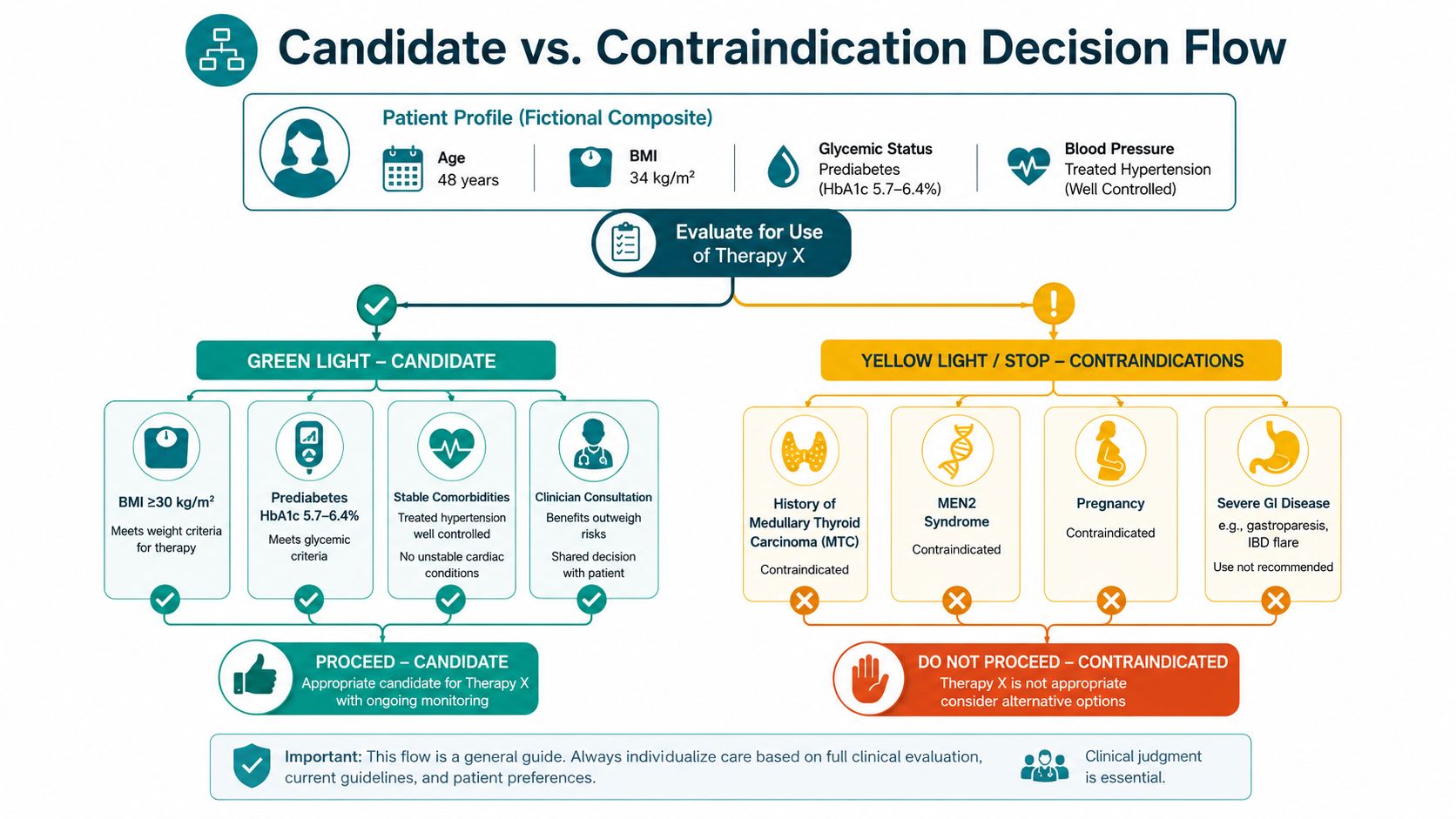
Fictional composite, not a real patient: A 48-year-old adult has a BMI of 34, prediabetes, and treated hypertension. That profile may fit the broad FDA-aligned weight-management threshold, but it doesn't establish candidacy. A prescriber would still review medical history, current medicines, laboratory information, gastrointestinal symptoms, thyroid-cancer history, pregnancy status when relevant, and treatment goals.
By contrast, an adult with a BMI of 26 who wants medication solely for cosmetic weight loss doesn't meet the usual FDA-aligned threshold described above. The appropriate response isn't a judgment about that person's appearance. It's a recognition that the risk-benefit calculation and approved indication differ.
Reasons to pause before prescribing
The following situations require direct clinician review:
- Do not use with pregnancy, a personal or family history of medullary thyroid carcinoma, MEN 2, or prior hypersensitivity to the product.
- Use caution with pancreatitis history, gastroparesis, gallbladder disease, kidney impairment, or concurrent insulin or sulfonylurea therapy.
- Review active eating disorders, recent bariatric surgery, uncontrolled psychiatric illness, and possible medication interactions.
- Use additional age-specific judgment for adolescents and adults older than 75.
These categories aren't a substitute for an assessment. Product labels can differ, and a clinician may need laboratory testing, outside records, or coordination with another treating professional.
The treatment decision may be discussed through physician-led weight-loss care at Empire Medical Wellness, but readers shouldn't infer that any particular medication will be prescribed. The fictional example above illustrates a decision process, not an outcome.
What Happens When You Stop and How Maintenance Planning Works
What should happen if GLP-1 therapy becomes unavailable, intolerable, ineffective, or no longer medically appropriate? Stopping deserves as much planning as starting. Real-world data show that 53.6% of patients stopped by one year and 72.2% by two years, with gastrointestinal side effects and cost among leading reasons, according to real-world discontinuation data. A separate meta-analysis found pooled weight regain of 9.69 kg after discontinuation.
Access can change the plan even when treatment is working. Recent reporting found that more than one in three GLP-1 users face access barriers, often involving pharmacy shortages. Cost and insurance coverage also commonly contribute to discontinuation, while reporting on access and discontinuation linked lower household income with higher discontinuation.
Why regain can occur
While active in the body, GLP-1 medicines can reduce appetite and slow gastric emptying. They do not permanently remove the biological, environmental, and behavioral factors that influence food intake and body weight. After treatment ends, hunger and food intake may increase, and the physiologic pressures that supported regain can return.
Weight regain is not evidence of weak character or failed effort. It reflects the chronic nature of obesity for many patients and the need for a durable treatment strategy. Some may continue medication under supervision. Others may need a planned transition, a different medicine, or a nonmedication approach.
Maintenance is more than a refill
A physician-led maintenance plan can include:
- Review of weight and health trends, rather than scale weight alone.
- Periodic laboratory assessment when clinically indicated.
- Adequate nutrition and protein intake, particularly when appetite is reduced.
- Resistance training and other movement to support physical function and lean tissue.
- Sleep and stress review, since both can affect appetite and metabolic health.
- Cardiovascular-risk reassessment, including blood pressure, glucose, and lipids when relevant.
- A written contingency plan for side effects, supply interruptions, insurance changes, or discontinuation.
The plan should be discussed before treatment begins. It should identify how the clinician and patient will monitor changes, respond to regain, and adjust care if the original medication no longer fits the patient's needs.
Frequently Asked Questions About GLP-1 Therapy
How quickly do semaglutide and tirzepatide work?
Changes in appetite or fullness may appear before measurable weight loss. Some patients notice eating less during the early dose-escalation period, while the scale may shift more gradually. Blood-sugar improvement can follow its own timeline. Because A1C represents average glucose over a longer period, clinicians assess it over time rather than after only a few doses.
Trial averages describe groups, not individual outcomes. Semaglutide 2.4 mg produced about 14.9% average weight loss, while tirzepatide reached 20.9% in SURMOUNT-1. Those results provide context, not a personal forecast.
Why is titration gradual?
Gradual escalation helps the prescriber balance treatment effect with tolerability, particularly gastrointestinal symptoms. The appropriate schedule depends on the product label, indication, response, other medicines, and medical history. Only a qualified prescriber should select a dose, delay an increase, or change the regimen.
What should someone do after a missed dose?
The correct response depends on the product and how much time has passed. Patients should check the current FDA-approved instructions for their specific brand and contact the prescribing clinician or pharmacist if the instructions are unclear. Do not take extra medication to compensate unless a qualified clinician specifically directs it.
Can these medicines be used long-term?
For chronic obesity and type 2 diabetes, treatment may continue long-term when benefits outweigh risks. Follow-up should review effectiveness, side effects, laboratory findings, changing health conditions, and the patient's preferences. There is no universal “finish the course” rule for chronic disease treatment.
Stopping also deserves planning. Hunger and weight may change after discontinuation, so the clinician and patient should decide in advance how to monitor symptoms, regain, and alternative treatment options.
Do food, alcohol, or other prescribers matter?
Product instructions differ, especially between oral and injectable medicines, so patients should follow the label for their specific prescription. Alcohol may complicate glucose management and worsen nausea or dehydration for some people. Tell every prescriber about GLP-1 or dual incretin treatment, particularly before surgery, anesthesia, or changes involving insulin and other glucose-lowering medicines.
Cost, insurance coverage, prior authorization, and supply can affect continuity. Prescriptions for GLP-1 drugs for overweight or obesity rose sharply from 2019 to 2024, and adults prescribed a GLP-1 without a type 2 diabetes diagnosis also increased substantially during that period, according to HealthVerity's market analysis. Access planning belongs in the clinical conversation.
A clinician-led program should monitor response and tolerability rather than treat prescribing as a transaction. It should clarify the treatment goal, warning signs, follow-up schedule, and maintenance approach if the medication no longer fits the patient's needs.
Empire Medical Wellness provides private-pay, physician-led obesity medicine evaluations, medication management when clinically appropriate, ongoing monitoring, and long-term maintenance planning for adults. Visit Empire Medical Wellness to learn about the practice and request information about an evaluation.
Byline: Empire Medical Wellness Editorial Team
Published: August 19, 2026
Updated: August 19, 2026
Sources
This article is educational and isn't personal medical advice. A qualified clinician must evaluate your health history, medications, risks, and treatment goals before recommending or changing GLP-1 therapy.