
Can a Suboxone prescription be written quickly but still be difficult to start, fill, or continue? Suboxone is a prescription combination of buprenorphine and naloxone used in the treatment of opioid use disorder. For many adults, the harder questions come after the prescription: whether a pharmacy has it available, how treatment begins safely, and what helps someone remain engaged months later.
Table of Contents
- What Suboxone Is and Who It Is For
- How Buprenorphine and Naloxone Work Together
- The Treatment Journey From Induction to Maintenance
- Comparing Suboxone With Methadone and Naltrexone
- Safety, Side Effects, Interactions, and Overdose Planning
- Common Myths About Suboxone and What the Evidence Shows
- Practical Checklist for Talking With a Physician
- Frequently Asked Questions and Next Steps
What Suboxone Is and Who It Is For
Could Suboxone fit your treatment goals, and can you continue getting it reliably after the prescription is written? Suboxone is the brand name for buprenorphine/naloxone, a medication used for maintenance treatment of opioid dependence within a broader plan that may include counseling and psychosocial support, according to the FDA-approved labeling. Buprenorphine is the therapeutic opioid component. Naloxone is included mainly to discourage diversion and misuse.
Suboxone received U.S. approval on October 8, 2002. The cited formulation information lists an approved indication for adults age 16 years and older (NCBI). SAMHSA explains that buprenorphine expanded access because it could be prescribed or dispensed in physician offices, rather than requiring an older clinic-based model (SAMHSA).
Who may discuss it with a physician
A clinician may consider buprenorphine/naloxone for an adult with opioid use disorder who wants medical help reducing withdrawal, cravings, and unsafe opioid use. The assessment should cover opioid and other substance use, current medications, medical conditions, pregnancy status when relevant, previous treatment, and immediate overdose risk. A single symptom or medication history cannot establish whether Suboxone is appropriate.
People may seek care after regular use of illicit opioids, prescription pain medications, or another opioid. Changing from methadone or another treatment needs individualized medical planning. Intoxication, breathing problems, severe sedation, or urgent withdrawal can also change what happens next.
A prescription does not guarantee continued access. Before treatment starts, ask which pharmacies can fill it, what to do if the medication is unavailable, how follow-up will work, and what support could help you stay in care over time. These questions can be discussed with an addiction medicine specialist. Adults seeking broader education can also review this substance abuse services resource. Neither resource replaces an individualized clinical assessment.
Practical rule: A safe plan includes the prescription, pharmacy arrangements, follow-up, overdose prevention, and a response plan if treatment becomes difficult.
How Buprenorphine and Naloxone Work Together
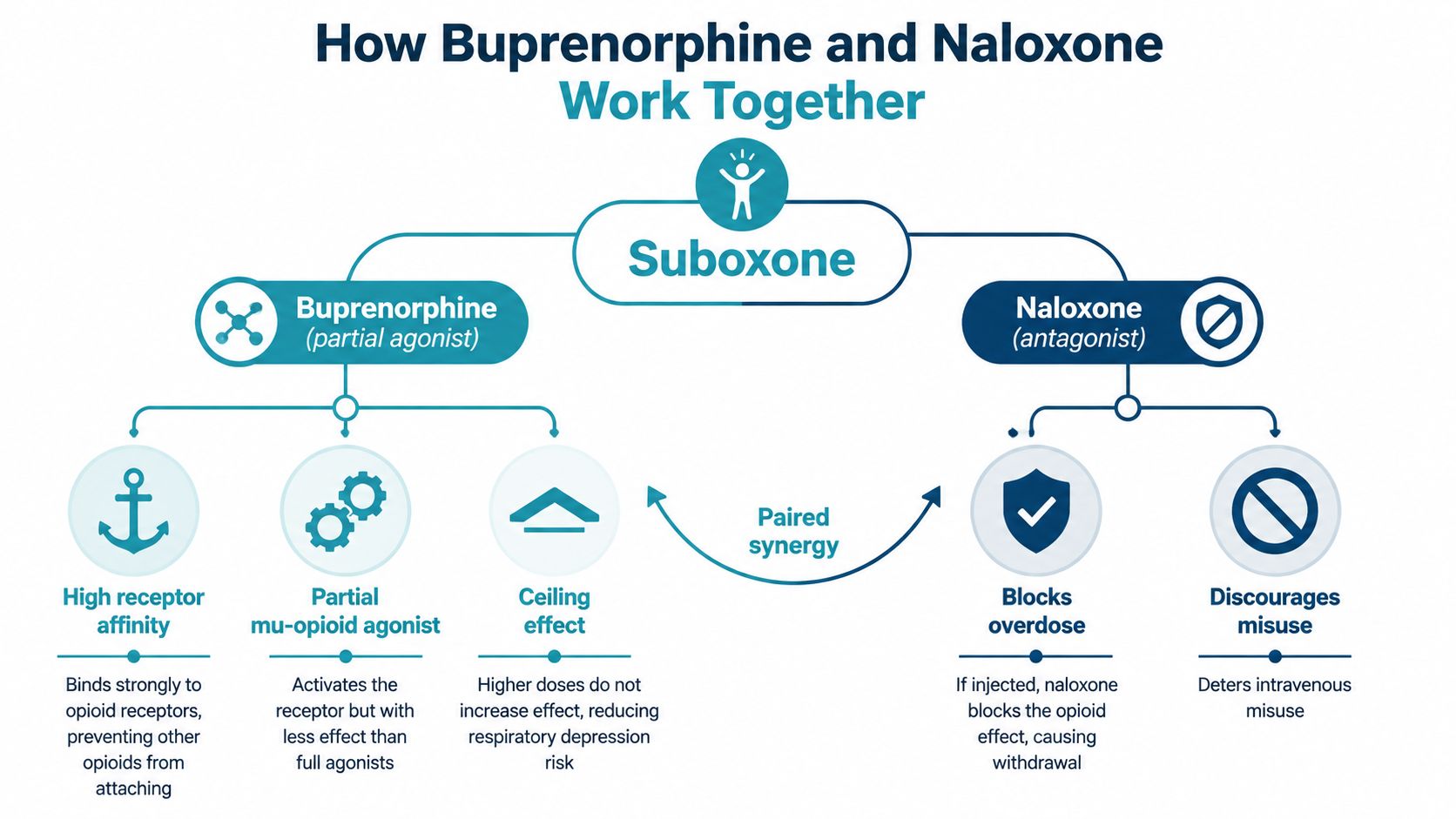
What allows Suboxone to reduce opioid withdrawal and cravings while also discouraging misuse? Its two ingredients act at opioid receptors in different ways.
Buprenorphine is a partial mu-opioid receptor agonist. It attaches strongly to the receptors affected by opioids, but activates them less fully than a full opioid agonist. That activity can ease withdrawal and cravings. Because buprenorphine binds tightly, other opioids may have less ability to produce their usual effects.
Buprenorphine also has a pharmacologic ceiling effect. The NCBI Bookshelf clinical reference reports that 4 mg per day occupies about 50% of mu-opioid receptors, generally enough to suppress withdrawal, while 16 mg per day occupies about 80% and can block the euphoric effects of most abused opioids. These figures describe receptor activity, not a guarantee of safety or protection from overdose. Sedation and respiratory depression remain possible, particularly with alcohol, benzodiazepines, or other central nervous system depressants.
Why naloxone is included
Naloxone is an opioid antagonist, so it blocks opioid receptors rather than activating them. When Suboxone is taken as directed under the tongue or in the cheek, naloxone is intended to have little effect on treatment. If the product is injected, naloxone can become active and trigger precipitated withdrawal. That added consequence is meant to discourage injection misuse, as explained by SAMHSA's buprenorphine information.
Buprenorphine provides the main treatment effect for routine withdrawal and cravings. Naloxone serves an abuse-deterrent role, so it is not the ingredient expected to control everyday cravings.
Adults comparing receptor strategies can review information about naltrexone treatment. Naltrexone blocks opioid effects instead of partially activating opioid receptors, so its starting requirements and trade-offs differ. During a pharmacy shortage or an extended treatment plan, these distinctions are practical questions to discuss with a physician, not reasons to switch medications without guidance.
The Treatment Journey From Induction to Maintenance
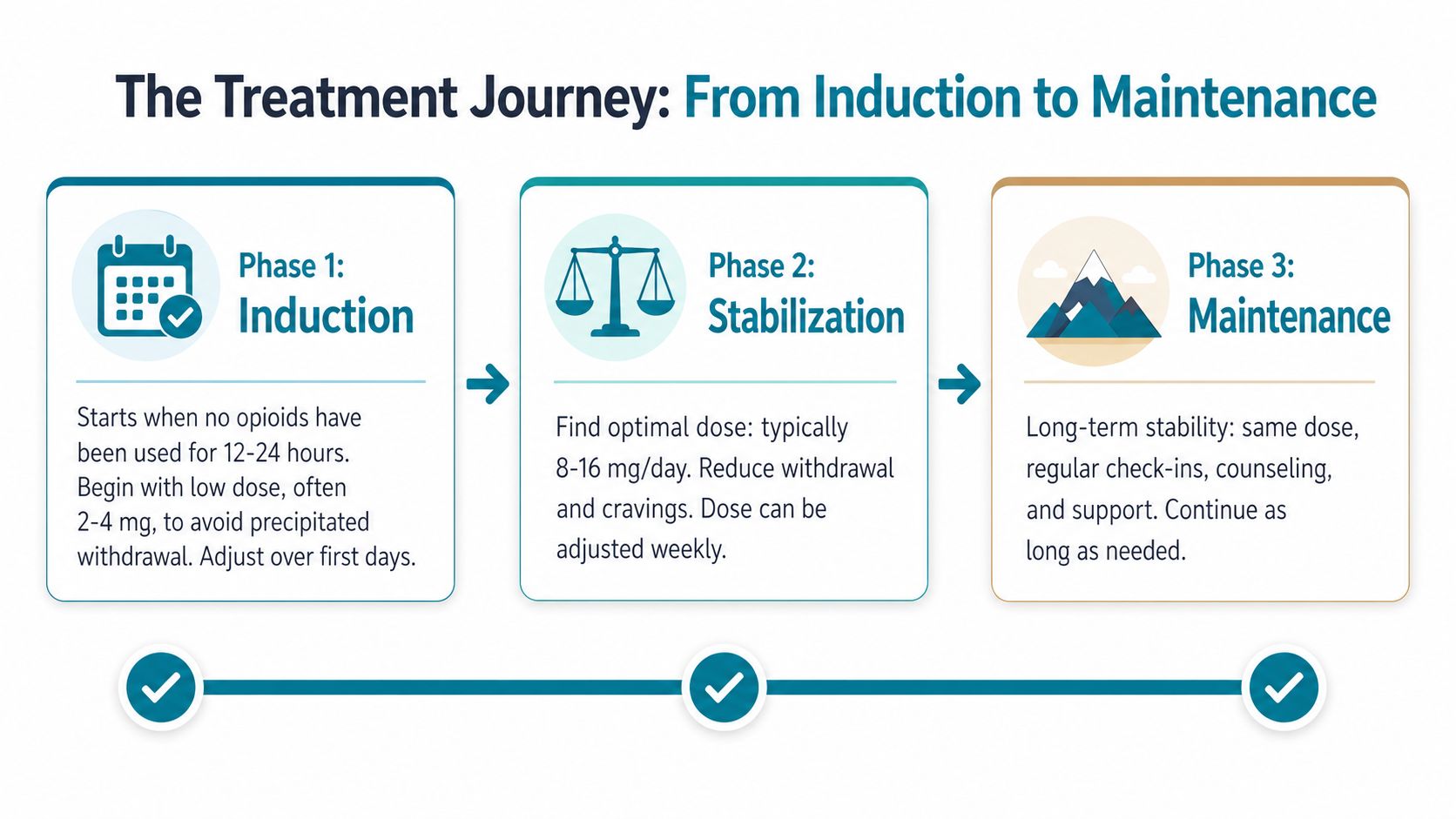
How does Suboxone treatment change after the first prescription is written? Care usually moves through induction, stabilization, and maintenance, yet the timing differs by person. A physician assesses recent opioid use, withdrawal, medical history, and follow-up access before deciding how to begin.
Induction
Induction is the transition to buprenorphine. The main concern is precipitated withdrawal, a sudden worsening that may happen when buprenorphine displaces a full opioid agonist from receptors before the body is ready. Clinicians therefore assess current withdrawal and recent opioid use instead of relying on a universal clock.
The Clinical Opioid Withdrawal Scale, or COWS, may help describe withdrawal severity. Assessment can occur in person or remotely, depending on the setting and applicable rules. An online timeline or infographic cannot determine an individual's starting instructions.
Stabilization and maintenance
During stabilization, the physician and patient review whether withdrawal and cravings are controlled, side effects disrupt daily life, and the prescription can be filled reliably. Standard sublingual buprenorphine/naloxone maintenance dosing is generally described as 4 mg/1 mg to 24 mg/6 mg daily, with a cited target of 16 mg/4 mg once daily. SAMHSA TIP 63 reports no clear clinical advantage above 24 mg of buprenorphine per day.
Maintenance can continue for months, years, or longer. Tapering and dose changes require shared decisions, especially when a pharmacy cannot supply the medication consistently. Patients can ask how refill delays will be handled, whether prescriptions can be transferred, and how often visits or testing are expected. Stopping abruptly may increase withdrawal, relapse, and overdose risk, so changes should follow a clinician-guided plan.
An overview of opioid withdrawal manifestations can help patients recognize possible symptoms, but it cannot decide when medication should begin.
Comparing Suboxone With Methadone and Naltrexone
Which treatment fits depends on more than medication strength. Suboxone, methadone, and extended-release naltrexone differ in receptor action, starting requirements, dispensing location, monitoring, medical considerations, and the practical demands a person can manage over time.
| Attribute | Suboxone, buprenorphine/naloxone | Methadone | Extended-release naltrexone |
|---|---|---|---|
| Medication type | Partial opioid agonist plus antagonist | Full opioid agonist | Opioid antagonist |
| Main clinical role | Reduces withdrawal and cravings and can limit effects of other opioids | Reduces withdrawal and cravings through full receptor activation | Blocks opioid effects after an opioid-free transition |
| Usual care setting | Prescription-based outpatient care may be possible | Dispensed through an opioid treatment program under applicable rules | Administered as a long-acting injection by a healthcare professional |
| Starting concern | Starting before adequate withdrawal can precipitate withdrawal | Requires careful medical assessment and monitoring | Opioid-free status must be confirmed before treatment |
| Key trade-off | Pharmacy availability and ongoing follow-up can become barriers | Clinic structure may create travel and scheduling demands | The opioid-free transition and adherence to repeated injections can be difficult |
| Questions to ask | How will induction, pharmacy access, and follow-up work? | What dispensing schedule and monitoring will apply? | How will opioid-free status and continued injection visits be managed? |
Buprenorphine is widely dispensed through retail pharmacies. CDC data show dispensing remained at a similar level across the reported years, but these figures cover buprenorphine broadly rather than Suboxone alone (CDC). A prescription does not guarantee a smooth fill. Patients can ask whether the office will help locate supply, transfer a prescription when permitted, and respond if a pharmacy cannot fill it.
Naltrexone avoids opioid agonist activity, yet treatment cannot begin until opioids have been cleared from the body. That waiting period can be difficult, and repeated injections require continued appointment access. Readers seeking plain-language clarification of what naltrexone full dose means can review that explanation.
Methadone is another established pathway, with more structured dispensing requirements that may affect transportation, work, travel, and appointment planning. Methadone treatment resources can provide general background, while a physician can discuss whether clinic routines fit the patient's circumstances.
Shared-decision questions should include: How quickly can treatment start? What happens if the pharmacy is out of stock? Which visits, tests, or injections are expected? How will cravings, side effects, missed medication, and a future taper be handled? The best option is the one whose clinical benefits and daily requirements can be sustained safely.
Safety, Side Effects, Interactions, and Overdose Planning
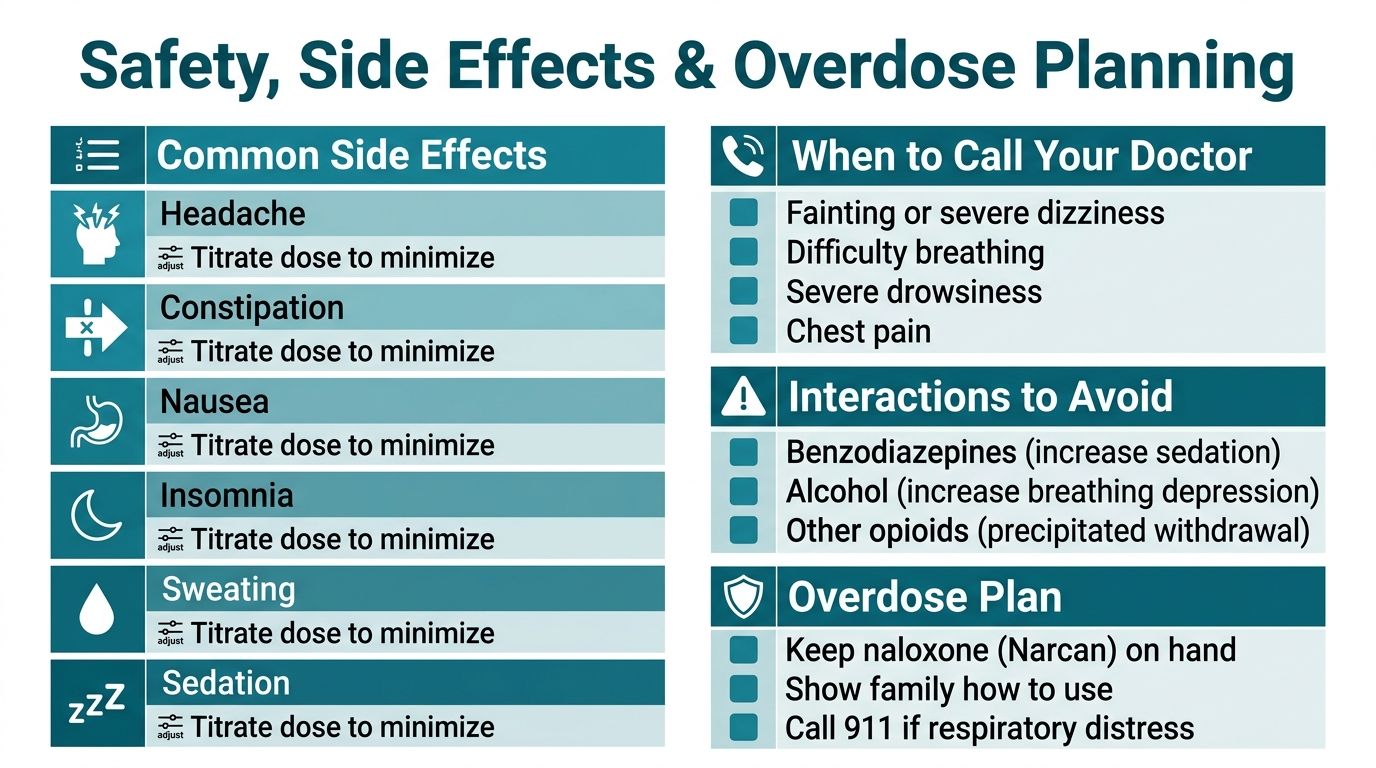
Is Suboxone safer than a full opioid agonist? It generally has a different safety profile, but “safer” does not mean harmless. Common adverse effects include headache, constipation, nausea, insomnia, sweating, and sedation. A prescriber can review which symptoms interfere with daily life and adjust the treatment plan rather than expecting the patient to tolerate every effect.
The greatest breathing risk often comes from combinations. Alcohol, benzodiazepines, sleep medicines, sedating antihistamines, other opioids, and other central nervous system depressants can increase sedation and respiratory danger. Give the clinician a complete medication and substance list. Drugs that inhibit or induce CYP3A4 can change buprenorphine exposure. Severe liver disease, pregnancy, breathing disorders, and allergies also require individual medical review.
A practical safety checklist
- Name every substance: Include alcohol, prescribed sedatives, sleep aids, stimulants, cannabis, pain medicines, and nonprescription products.
- Plan for a missed or extra dose: Do not guess about doubling, replacing, or changing medication. Ask the prescribing clinician or pharmacist for specific instructions.
- Report urgent symptoms: Fainting, severe dizziness, unusual drowsiness, difficulty breathing, chest pain, or signs of a serious allergic reaction require prompt medical attention.
- Discuss liver monitoring: The physician may consider medical history, examination, and laboratory testing when liver disease or medication risk makes it relevant.
- Keep naloxone available: Household members and trusted support people should know where it is and how to use it. Naloxone safety information can support that conversation.
What to do during a suspected overdose
Signs can include unresponsiveness, very slow or absent breathing, and pinpoint pupils. Call 911 immediately, administer naloxone if available, provide rescue breathing or CPR if trained and appropriate, and stay with the person until emergency responders arrive. Naloxone can wear off or require repeat administration, so emergency evaluation remains necessary even if the person wakes up.
FDA REMS materials for Suboxone film describe a program approved on August 30, 2010, addressing accidental overdose, misuse, and abuse risks while informing physicians, pharmacists, and patients (FDA REMS document). A written plan shared with a support contact clarifies emergency decisions if the person becomes sedated or cannot communicate.
Common Myths About Suboxone and What the Evidence Shows
Myth one means Suboxone replaces one addiction
Buprenorphine is an opioid medication, so physical dependence can develop. Physical dependence isn't the same as addiction, which involves impaired control and continued harmful use. Maintenance treatment aims to reduce withdrawal and cravings while supporting safer, more stable functioning. Suboxone is intended to be used within a complete treatment plan, rather than treated as a standalone cure, as described in the FDA labeling.
Myth two says everyone should taper quickly
Treatment duration is not identical for every adult. Evidence reviewed in SAMHSA TIP 63 found that buprenorphine/naloxone treatment retained participants longer than placebo in one phase 3 trial. Another multi-state population study found that only 41% of the examined population remained in treatment for at least six months. These findings make early follow-up, dose review, and reliable prescription access practical concerns. Tapering should be a shared clinical decision, not a test of motivation.
Myth three says treatment causes emotional numbness
Some people experience sedation or other unwanted effects. Others have fewer cravings and less disruption from withdrawal. The relevant question is whether the medication supports alertness, daily functioning, and safety for that person. A dose or treatment plan that feels unsuitable deserves discussion, not silent discontinuation.
Myth four says pain care becomes impossible
Acute pain may require coordination among the addiction physician, surgeon, anesthesiologist, and other clinicians. Patients should disclose buprenorphine before planned procedures and ask how pain relief will be managed. The plan may combine several approaches. Medication changes should be made with clinical guidance, because stopping or altering treatment independently can create new risks.
Myth five says pharmacy access is a minor detail
A U.S. cross-sectional study found that 57.9% of contacted pharmacies reported buprenorphine/naloxone in stock, with differences by state and chain (American Journal of Addictions study). Pharmacy availability can therefore affect continuity, especially for telemedicine patients or people seeking medication after an urgent event. A prescription does not guarantee that the medication will be ready that day. Before treatment starts, it is reasonable to ask what happens if the first pharmacy cannot fill it.
Labeled-hypothetical example: An adult has cravings despite taking medication, recently used a sedative, and learns that the nearby pharmacy cannot fill the prescription. The clinician may need to review overdose safety, substances, and medications, reassess opioid use disorder care, discuss alternatives, coordinate pharmacy logistics, and arrange closer follow-up. This example is not an Empire patient or a prediction of an individual outcome.
The practical myth-busting question is: What changes if my pharmacy is out of stock, I use another sedating medication, I have surgery, or I return to opioid use? The answers show whether the plan addresses continuity, changing risks, and real-life interruptions, rather than assuming recovery will follow a simple path.
Practical Checklist for Talking With a Physician
What should you bring to a Suboxone appointment so the plan works beyond the prescription? Start with information that helps the physician assess opioid use disorder, medical risks, treatment preferences, and barriers that could interrupt care. A clear discussion can also address what happens after the prescription leaves the office.
Prepare before the appointment
- Substance history: Record recent opioids, route and pattern of use, last use, previous withdrawal, alcohol, sedatives, and other substances.
- Treatment history: Include prior buprenorphine, methadone, naltrexone, counseling, emergency visits, overdoses, and why earlier treatment ended.
- Medical context: Report liver disease, breathing problems, pregnancy or pregnancy plans, pain conditions, allergies, and every prescribed or nonprescription medicine.
- Safety concerns: Tell the physician whether naloxone is available and whether someone trusted could respond during an emergency.
Bring practical questions, too. Ask how induction will be assessed, which symptoms require urgent contact, and how cravings, sedation, breathing risk, liver concerns, pain, pregnancy status, or benzodiazepine use will be reviewed. Discuss film versus tablet, generic versus branded medication, take-home arrangements, and follow-up timing if these choices affect adherence.
A simple monitoring plan should identify four points:
- Measure: What symptoms, risks, or treatment outcomes will be tracked?
- Baseline: What history, examination, medication review, or laboratory information establishes the starting point?
- Reassessment: When will the physician review progress, and how should you make contact sooner?
- Safety threshold: Which finding calls for a phone call, urgent evaluation, emergency care, or a change in treatment?
Pharmacy reliability belongs in the same conversation. Ask whether the office can help confirm stock, whether prior authorization may delay dispensing, and what to do if the pharmacy cannot fill the prescription. Clarify who to contact, whether a different pharmacy can be used, and how missed access will be handled. Revisit these questions as circumstances change.
A useful appointment ends with an agreed plan, not just instructions. Ask the physician to summarize the next dose, follow-up method, and action to take if symptoms or access problems arise.
Frequently Asked Questions and Next Steps
How long can someone stay on Suboxone?
There is no required stopping date. Continued treatment may be reasonable when benefits outweigh side effects and relapse risk, the patient prefers it, and follow-up remains available. If tapering is chosen, it should be planned with the prescriber rather than attempted abruptly. Treatment guidance from SAMHSA TIP 63 can support that discussion.
Is Suboxone safe during pregnancy?
Pregnancy changes the risk-benefit discussion and calls for individualized care. Anyone who is pregnant or may become pregnant should tell the prescribing clinician promptly, rather than stopping medication without medical guidance.
What happens after a missed or doubled dose?
Do not automatically replace a missed dose or take extra medication. Contact the prescriber or pharmacist, particularly if sedation, alcohol, benzodiazepines, breathing problems, or other opioids are involved.
Does Suboxone appear on a standard employment drug panel?
Testing panels vary. Buprenorphine may require a specific test and may not appear on every standard panel. Ask the testing program or clinician which substances the selected panel includes, and how results are handled.
Can travel affect dispensing?
Yes. Pharmacy stock, prescription rules, telemedicine requirements, and state regulations can interrupt continuity, especially when travel crosses state lines. Confirm the plan with the prescriber and pharmacist before leaving. Ask what to do if the usual pharmacy cannot fill the prescription, whether another pharmacy may be used, and whom to contact if access is delayed.
Empire Medical Wellness provides private-pay, physician-led outpatient addiction medicine assessment, treatment when clinically appropriate, monitoring, recovery planning, and coordination with outside clinicians or programs when authorized. Visit Empire Medical Wellness to learn more about whether physician-led care fits your needs.
Publication date: August 26, 2026. Updated date: August 26, 2026.
Sources
- FDA Suboxone prescribing information
- SAMHSA buprenorphine information
- CDC U.S. dispensing rate maps
- NCBI clinical reference on buprenorphine
This article is educational and isn't personal medical advice.