
Metformin is FDA-approved to help control blood sugar in type 2 diabetes, and it isn't FDA-approved as a weight-loss medication. Some adults lose modest weight on it, results vary, and any off-label use requires an individualized decision with a physician.
The counterintuitive finding is that a small change on the scale can still accompany a meaningful metabolic benefit. But weight loss and diabetes prevention are different outcomes. Understanding metformin and weight loss means separating those outcomes, then asking which one a clinician is trying to achieve.
Table of Contents
- Metformin Is Approved for Diabetes, Not Weight Loss
- What Clinical Trials Show About Average Weight Change
- How Metformin May Influence Body Weight
- How Long Weight Changes Last Beyond the First Year
- Which Adults Are Most Likely to See a Benefit
- Side Effects and Safety Checks Worth Discussing
- Using Metformin Alongside Other Weight Medicines
- Bring These Questions to Your Physician Visit
Metformin Is Approved for Diabetes, Not Weight Loss
The FDA label is the official prescribing information describing a medication's approved uses, warnings, and other requirements. Metformin's labeled role is improving blood-glucose control alongside diet and exercise, not treating obesity.
Off-label use means prescribing a medication for a purpose outside its approved indication. That distinction doesn't establish whether a particular prescription is appropriate. It means the physician needs to explain the rationale, relevant evidence, alternatives, and monitoring rather than treating approval for diabetes as approval for weight management.
Metformin uses by regulatory status and weight evidence
The labeled population includes adults and children aged 10 years and older with type 2 diabetes, according to the FDA prescribing information for metformin. The table separates that indication from other clinical contexts.
| Use or context | FDA status | Weight-related evidence | Where to verify |
|---|---|---|---|
| Blood-glucose control in adults and children aged 10 and older with type 2 diabetes, alongside diet and exercise | FDA-labeled indication | Weight change varies and is generally modest | FDA prescribing information; MedlinePlus |
| Weight loss as the main goal in adults without diabetes | Off-label; not FDA-approved for weight loss | Modest and variable; evidence is limited without an appropriate metabolic indication | FDA prescribing information; NIDDK |
| Diabetes-risk reduction in adults at high risk, including prediabetes | Off-label; outside the labeled indication | Diabetes-prevention evidence is distinct from weight-loss evidence | NIDDK Diabetes Prevention Program |
| FDA-approved anti-obesity medicines for chronic weight management | Labeled for weight management, depending on the product | Evidence, eligibility, and expected effects are product-specific | NIDDK prescription medications information |
MedlinePlus information about metformin explains its diabetes use and patient precautions. Separately, NIDDK's overview of prescription medications for overweight and obesity describes medicines approved specifically for weight management.
Different purposes require different expectations
A diabetes prescription may be successful because glucose control improves, even without substantial weight change. A treatment chosen primarily for obesity requires a discussion centered on weight-related goals and appropriate alternatives.
Practical distinction: A medication's effect on weight isn't the same thing as its approved treatment purpose.
For adults considering care related to type 2 diabetes and metabolic health, the starting question is the medical indication. Evidence from one diagnosis shouldn't automatically be applied to someone with a different health profile.
What Clinical Trials Show About Average Weight Change
In the Diabetes Prevention Program, the average weight loss with metformin was modest: 2.1 kg, or 4.6 lb, over about 2.8 years. The intensive lifestyle group lost more on average. These results describe study groups, not a guaranteed outcome for an individual.
Diabetes Prevention Program weight results by study arm
| Study arm | Average weight change over about 2.8 years | Participants with at least 5% loss by year 1 | Participants with at least 5% loss by year 2 |
|---|---|---|---|
| Metformin, about 1,700 mg daily in the trial | Loss of 2.1 kg, or 4.6 lb | 29% | 26% |
| Placebo | Loss of 0.1 kg, or 0.2 lb | 13% | 14% |
| Intensive lifestyle intervention | Loss of 5.6 kg, or 12.3 lb | Not included in this comparison | Not included in this comparison |
The average-change figures cover about 2.8 years of follow-up. The responder figures are separate snapshots, showing the share of participants who had lost at least 5% of their starting weight by the end of year 1 or year 2. All table figures come from the DPP Outcomes Study paper on long-term safety, tolerability, and weight loss. The metformin amount was used in the research protocol, not established as a weight-loss dose.
The original DPP randomized 3,234 adults with high blood glucose to metformin, placebo, or an intensive lifestyle intervention. Its findings were reported in 2002 in the original DPP report. Random assignment helps researchers compare groups while reducing the influence of pre-existing differences.
An average isn't a prediction
The table's averages summarize each group. Individual results varied: some participants lost more, while others changed little. The year-by-year responder figures add a different view, showing how many people crossed a specific threshold rather than how much weight the group lost on average.
The study population also matters. Participants had raised blood glucose and a high risk of diabetes, so their results cannot predict the response of every adult seeking weight management, especially someone with a different metabolic profile.
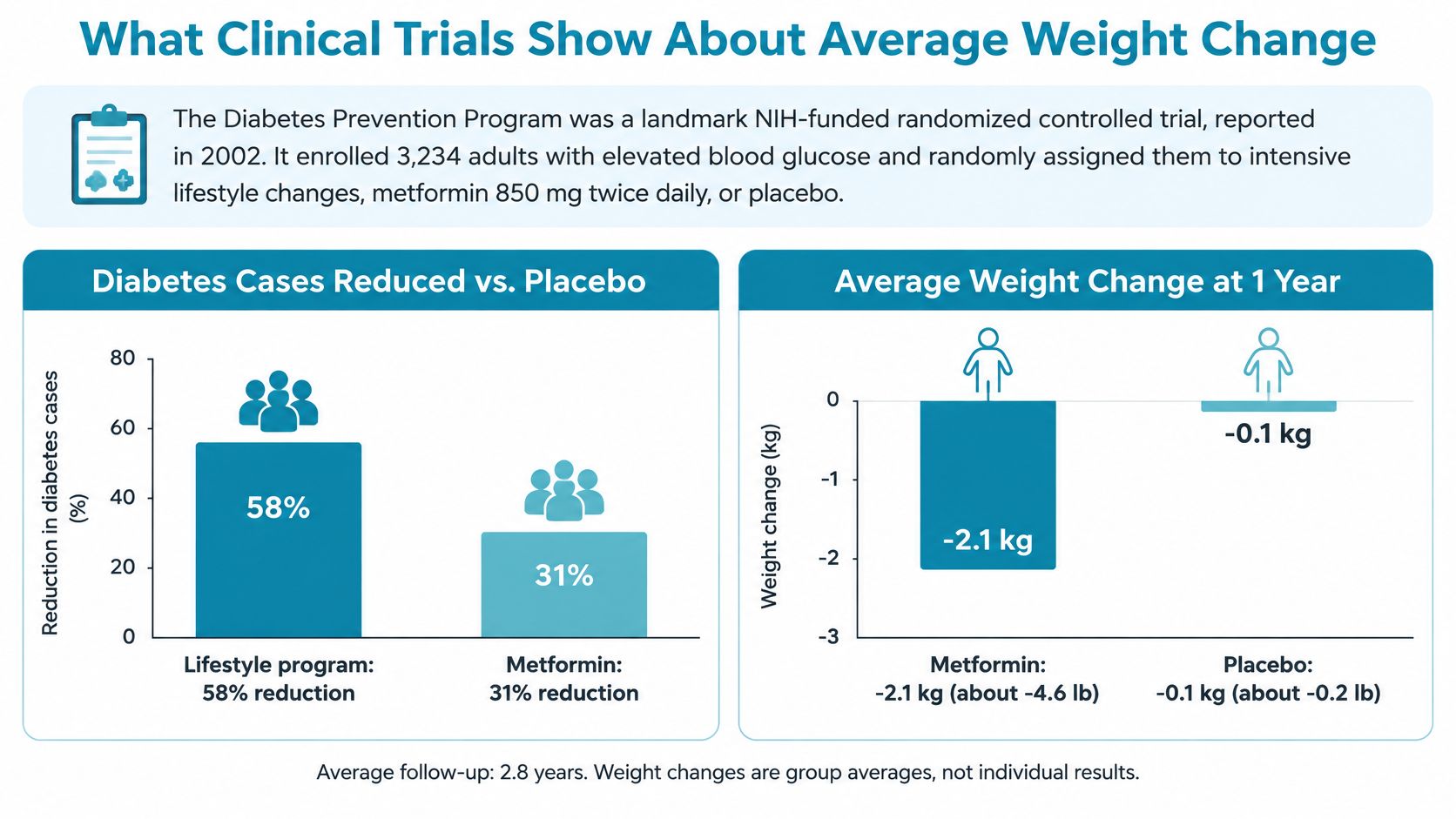
The chart compares diabetes reduction and average weight change for lifestyle intervention and metformin. Its weight figures represent average change over the trial follow-up, about 2.8 years, rather than change in the first year alone.
Weight loss and diabetes prevention are different outcomes
In the original DPP, metformin reduced the risk of developing diabetes by 31% compared with placebo, according to the NIDDK Diabetes Prevention Program overview. That figure describes diabetes prevention, not the percentage of body weight lost.
A secondary analysis in the linked DPP Outcomes Study paper estimated that weight change accounted for 64% of metformin's diabetes-prevention treatment effect. The analysis compared an average 1.72-kg loss with metformin against a 0.29-kg gain with placebo. These figures address a possible connection between weight change and diabetes prevention; they do not replace the main trial's weight averages or predict an individual result.
How Metformin May Influence Body Weight
Insulin can be understood as a key that helps glucose enter cells. With insulin resistance, the locks respond less effectively, and the body may compensate by producing more insulin.
This analogy is useful, but incomplete. Metformin doesn't turn hunger off or make every person with insulin resistance lose weight.
Proposed contributors rather than a single switch
Researchers have proposed several contributors to metformin-associated weight change:
- Less glucose production by the liver. Metformin affects how much glucose the liver releases.
- Improved insulin sensitivity. The body may respond more effectively to insulin.
- Lower compensatory insulin levels. Less insulin may be needed to compensate for resistance.
- Changes in appetite or food intake. Some people may eat less, but appetite suppression isn't guaranteed.
- Gastrointestinal effects. Digestive symptoms can affect eating, although illness-related reduced intake isn't a desirable treatment goal.
These proposed contributors and the modest overall weight effect are discussed in the systematic review and meta-analysis of metformin in adults with overweight or obesity. The review included 49 randomized controlled trials and found a mean BMI reduction versus placebo of 0.56 kg/m² across trial doses of 500 to 2,550 mg daily; average percentage BMI change at approximately 1,700 mg daily was −2.53%.
Those amounts describe study exposure, not a prescribing plan. BMI, or body mass index, relates weight to height; a change in BMI isn't the same as a fixed number of pounds lost.

Why a plausible mechanism doesn't guarantee a result
The review supports a modest, variable effect rather than a universal response. Its clinical interpretation suggests greater relevance when metabolic concerns such as insulin resistance, prediabetes, or diabetes are present than when an adult is metabolically healthy.
A mechanism explains how an effect might happen. It doesn't establish how large that effect will be, whether it will happen for a particular person, or whether the medication is the most suitable option.
A clinician may therefore assess starting weight, waist circumference, glucose-related laboratory markers, tolerability, kidney function, and the treatment indication together. A prescription alone doesn't establish that weight loss will follow.
How Long Weight Changes Last Beyond the First Year
The scale is one gauge on a clinical dashboard. Glucose measures, waist size, medication tolerance, and the original reason for treatment provide other information.
Long-term metformin findings can sound contradictory until the study population is clear. A result among early responders isn't the same as an average across everyone assigned to treatment.
Early responders and the broader treatment group
In the DPP Outcomes Study analysis, participants who had lost at least 5% of their starting weight after the initial year were examined for longer-term maintenance. During years 6 through 15, average loss relative to baseline was 6.2% among those originally assigned to metformin, 3.7% in the former lifestyle group, and 2.8% in the former placebo group, according to the long-term DPP weight-loss analysis.
That publication reports separate initial-year responder figures of 28.5% with metformin and 13.4% with placebo. Those values come from its analysis and shouldn't be merged with the rounded responder figures in the original-trial comparison.
| Population being discussed | Appropriate interpretation |
|---|---|
| Participants who responded early and entered the maintenance analysis | Some early responders maintained meaningful loss |
| The broader metformin treatment group | Average long-term loss was smaller |
| A person newly considering treatment | Neither group average supplies a personal forecast |
Across the broader metformin group, long-term average weight loss was approximately 1% to 2%, as summarized in the publication record for the long-term weight-loss study. The stronger maintenance finding therefore shouldn't be presented as the expected result for every patient.
A small scale change can still matter
Early response can inform a continuation discussion, but it doesn't guarantee future maintenance. Likewise, limited weight change doesn't automatically mean that a medication prescribed for another metabolic purpose has failed.
Long-term benefit should be judged against the reason treatment was prescribed, not against a weight-loss promise the research never made.
A clinician can distinguish weight-management goals from diabetes-prevention or glucose-control goals. If the main goal is weight reduction and that goal isn't being met, reassessment is more useful than assuming indefinite treatment will eventually produce a larger effect.
Which Adults Are Most Likely to See a Benefit
The most useful question isn't whether metformin can change weight. It is whether the available evidence resembles the person's medical situation and intended treatment goal.
Relevant populations include the following, with different levels and types of evidence:
- Adults with prediabetes or increased diabetes risk. The DPP directly studied this population.
- Adults with insulin resistance. The metabolic rationale may be relevant, but it doesn't establish an individual weight outcome.
- Adults with type 2 diabetes. Metformin already has a labeled glucose-control role.
- Women with polycystic ovary syndrome. PCOS evidence is population-specific and shouldn't be generalized to all adults.
- Women with prior gestational diabetes. A history of diabetes during pregnancy was relevant to diabetes-prevention subgroup findings.
Diabetes-prevention findings aren't weight-loss selection rules
NIDDK identifies stronger metformin diabetes-prevention effects among adults aged 25 to 44, those with a BMI of at least 35 kg/m², and women with previous gestational diabetes in its summary of evidence supporting diabetes prevention. These subgroup findings inform discussion; they aren't automatic prescribing rules or guarantees of greater weight loss.
The same NIDDK resource reports that losing 5% to 7% of starting weight reduced diabetes risk in the DPP, while metformin prevented diabetes to a lesser degree than intensive lifestyle intervention. Again, the outcome being discussed is diabetes prevention.

Similar weight goals can raise different medical questions
Hypothetical comparison: An adult with prediabetes and high fasting glucose presents a different decision from an adult without diabetes, prediabetes, metabolic syndrome, or PCOS who seeks weight change alone. The first discussion includes a defined glucose-related concern; the second needs particularly careful consideration of whether metformin's evidence matches the goal.
Neither hypothetical establishes a treatment recommendation. Appearance alone can't establish insulin resistance or another metabolic diagnosis.
An evaluation of insulin resistance and related metabolic concerns can help clarify the question. The physician still needs to weigh the medical indication, kidney function, tolerability, and alternatives. These population-level findings don't assess any individual reader.
Side Effects and Safety Checks Worth Discussing
Metformin safety topics to discuss with a prescriber
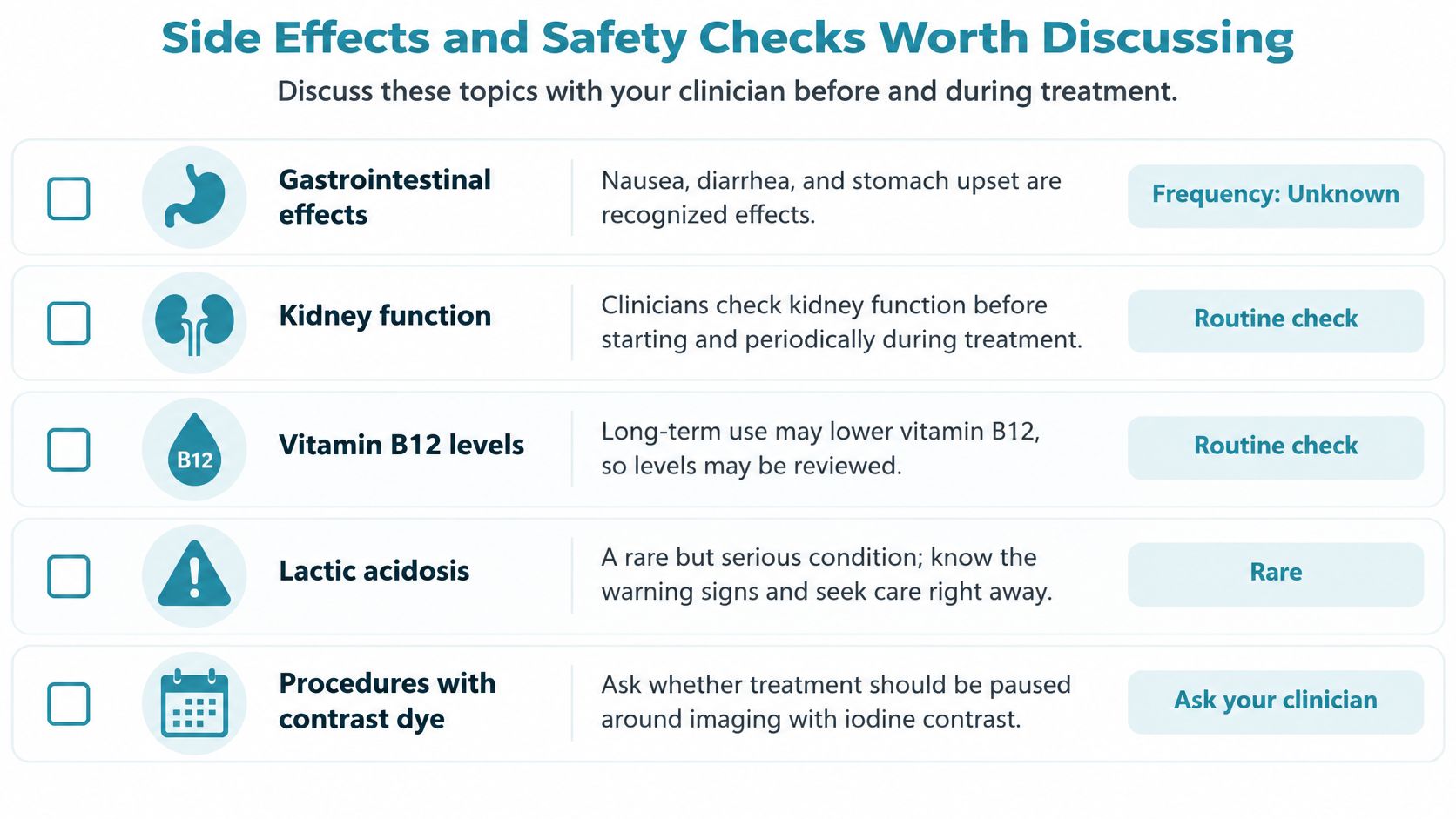
The following checklist summarizes precautions described in the FDA labeling and MedlinePlus information linked earlier.
| Safety topic | What it means | When to raise it |
|---|---|---|
| Gastrointestinal effects | Nausea, diarrhea, and stomach upset are recognized effects; the practice's frequency isn't documented | Symptoms persist, worsen, or interfere with food or fluids |
| Kidney function | Severe impairment is a contraindication; kidney review helps determine suitability | Before treatment, during monitoring, and before planned iodinated-contrast imaging |
| Vitamin B12 | Long-term use may lower B12 in some people | Monitoring visits or new fatigue, numbness, or tingling |
| Lactic acidosis | A rare but serious condition requiring emergency care | Unusual muscle pain, trouble breathing, unusual sleepiness, or stomach pain with other symptoms |
| Dehydration, acute illness, and contrast imaging | These circumstances can affect treatment safety and may require an individualized plan | Vomiting, diarrhea, inability to drink fluids, or planned procedures |
Emergency symptoms deserve a different response
Rare doesn't mean unimportant. Lactic acidosis involves an unsafe buildup of lactic acid and is described in metformin's warnings. The symptoms listed in the table warrant emergency care right away rather than waiting for a routine appointment.
The FDA's metformin safety labeling contraindicates treatment when estimated glomerular filtration rate, or eGFR, is below 30 mL/min/1.73 m². eGFR is an estimate of kidney filtering function.
The labeling also lists hypersensitivity to metformin and acute or chronic metabolic acidosis, including diabetic ketoacidosis, as contraindications. These aren't issues that a weight-loss goal overrides.
Routine monitoring and symptom discussions
Gastrointestinal symptoms deserve attention even when they aren't emergencies. Persistent nausea or diarrhea can make treatment difficult to sustain and can interfere with adequate fluid intake.
- Tolerance review. The prescriber can assess symptoms and decide whether formulation or titration changes are appropriate.
- B12 discussion. Monitoring can be individualized, and fatigue or nerve-related symptoms shouldn't be assumed to have a single cause.
- Illness and procedures. Severe illness, dehydration, or planned iodinated contrast imaging warrants specific prescriber guidance.
There isn't a universal procedure-hold instruction suitable for every reader. Kidney function, the procedure, and the individual clinical situation affect the decision; patients shouldn't change medication independently.
A broader weight-loss medication evaluation should include these safety questions alongside potential benefit. Uncomfortable symptoms aren't proof that treatment is working, and reduced eating because of illness isn't the same as a sustainable therapeutic response.
Using Metformin Alongside Other Weight Medicines
The evidence described earlier addresses metformin's average weight change and its role in diabetes prevention. It does not establish how much additional weight people lose when metformin is combined with another weight medicine, or whether a particular combination improves outcomes. A result from metformin alone cannot predict the effect of a two-medicine plan.
Metformin and medicines used for weight management may have different purposes. For example, a clinician may consider metformin for glucose-related reasons and a separate medicine for weight management. The reason for each medicine should be clear, and weight change is only one measure to discuss. Glucose markers, side effects, and whether the plan is manageable also matter.
People considering GLP-1 medication care can ask whether a GLP-1 medicine has a role alongside metformin in their specific situation. The answer depends on the person's health needs and the evidence for the proposed combination. Neither a medicine's individual effects nor its intended use proves that combining it with metformin will provide extra benefit.
Useful questions for the prescriber include:
- What goal is each medicine meant to address? Clarify whether each is being considered for blood glucose, weight, or another medical reason.
- What evidence supports using these medicines together? Ask whether the expected benefit comes from studies of the combination or from evidence about each medicine separately.
- How would we judge whether the combination is helping? Discuss which changes in weight, glucose-related measures, or day-to-day tolerability would matter.
- Could the combination change the side effects or monitoring plan? Ask what symptoms or changes would prompt the clinician to review the regimen.
A pharmacist can also help explain how the medicines fit together. The prescriber can then weigh that information against the treatment goals and the patient's circumstances.
Bring These Questions to Your Physician Visit
A visit about metformin should clarify the treatment goal, how progress will be assessed, and when the plan might change. Prior weight history, relevant lab results, current medications, and personal concerns can help the physician interpret the evidence. The scale is one measure, not the whole picture.
Use these questions to guide the discussion:
- What medical reason supports considering metformin? Ask whether the proposed use is FDA-labeled or off-label, and what evidence applies to that goal.
- Which outcomes matter besides weight? Depending on the reason for treatment, waist circumference or glucose-related markers may help assess benefit.
- How will kidney function and vitamin B12 be reviewed? Ask what monitoring fits your health history and treatment, rather than assuming one schedule suits everyone.
- What would lead us to reassess the plan? Agree on how limited benefit, troublesome symptoms, or a change in health circumstances should prompt follow-up.
- What other options should we compare? The discussion may include FDA-approved anti-obesity medicines and lifestyle support. Suitability depends on the individual.
- Which symptoms mean I should contact the practice? Clarify which concerns can wait for routine follow-up and which need emergency care.
A clear plan is more useful than a promised number
The DPP results are research findings, not a prediction of what one patient will experience. No practice-specific early weight average or metformin weight-loss dosing protocol is presented here. A change on the scale may matter for one health goal without showing the full effect on another.
For an individualized discussion, contact Empire Medical Wellness to schedule a first obesity medicine appointment. The evaluation can consider medical and metabolic factors, weight history, and treatment options.
The useful outcome of the visit is a shared understanding of what treatment is intended to accomplish, how benefit will be measured, and when the plan will be reconsidered.
Editorial information and sources
Byline: Empire Medical Wellness Editorial Team
Publication date: Not specified
Updated date: Not specified
Sources: FDA metformin prescribing and safety information; MedlinePlus metformin drug information; NIDDK guidance on prescription weight-management medicines and the Diabetes Prevention Program; Long-Term Safety, Tolerability, and Weight Loss Associated With Metformin in the Diabetes Prevention Program Outcomes Study; the DPP long-term weight-maintenance analysis; and the cited systematic review and meta-analysis of randomized trials. Direct supporting links appear beside the relevant evidence above.
This article is educational and isn't personal medical advice.
For adults considering physician-led obesity care, Empire Medical Wellness offers medical and metabolic assessment, individualized weight-management planning, and ongoing monitoring. Contact the practice to discuss an appointment and whether metformin's evidence fits your medical goals or another approach deserves consideration.