
Has the hard part of stopping cocaine already passed once the exhaustion lifts?
Cocaine withdrawal is the set of mood, energy, sleep, appetite, and craving changes that can appear after prolonged or heavy cocaine use stops or drops sharply. It doesn't follow one fixed timetable. A quieter week doesn't mean the risk period is finished.
People often picture a short detox, then a straight return to normal. What usually happens is less tidy. Early exhaustion can give way to low mood, broken sleep, and craving that comes back with stress, certain places, or a lost night of rest. That pattern is a medical and safety concern, not a test of character.
This article covers typical timing, what the changes reflect, when to get urgent help, and how physician-led outpatient care fits. It isn't a detox protocol, a prescription, or a forecast for any one person.
Empire Medical Wellness Editorial Team. Published and updated 8 October 2026.
Table of Contents
- Cocaine Withdrawal Timeline at a Glance
- Common Symptoms and Why They Happen
- Warning Signs That Need Urgent or Same-Day Care
- Why Symptoms Return and Why Mood Needs Close Watching
- Medical and Behavioral Support Options Explained
- Daily Coping Steps for the First Weeks
- Prepare for a Physician-Led Evaluation
Cocaine Withdrawal Timeline at a Glance
Cocaine withdrawal is the group of mood, energy, sleep, appetite, and craving changes that can follow when prolonged or heavy use stops or falls sharply. There isn't one schedule that fits everyone. The windows below are approximate guides drawn from a NIDA clinical guide and from MedlinePlus. They describe common patterns, not a prediction of how any one person will feel.
The early crash can start soon after use stops, often within hours to about a day, as stimulation drops and missed sleep catches up. The NIDA guide describes an early withdrawal phase of about 0 to 15 days, with more sleep, depressed or anxious mood, poor concentration, impulsive behavior, irritability, and strong cocaine cravings. It also describes a later stretch called "the Wall," at about 46 to 120 days, when low energy, depressed mood, irritability, boredom, concentration problems, and renewed cravings may raise relapse risk. MedlinePlus notes that depression and craving can persist for months after long-term heavy use.
How to read the phases
| Phase | Typical window | Common experiences | Main risk to watch |
|---|---|---|---|
| Early phase | About 0 to 15 days | Sleepiness, low or anxious mood, poor concentration, irritability, strong cravings | Safety concerns, including suicidal thoughts, during early abstinence |
| Later vulnerability period (the Wall) | About 46 to 120 days | Low energy, depressed mood, boredom, concentration problems, renewed cravings | Relapse |
| Persistent symptoms | Months, and the length differs by person | Ongoing low mood, sleep or concentration problems, craving linked to stress or cues | Relapse and untreated depression |
Match the calendar to a row, then watch mood, safety, and daily functioning more closely than the day count. A person on day 4 and a person in month 3 can both need care. The day number doesn't decide that.
Practical rule: If mood, sleep, or craving is getting worse, the phase label doesn't make the change less important.
These ranges overlap real life. Someone may sleep through the first weekend, feel steadier in week three, then hit a flat, irritable stretch near month two. That swing is part of why follow-up outlasts the crash.
Common Symptoms and Why They Happen
Repeated cocaine exposure can dull the brain's response to ordinary rewards and make stress-related circuits more sensitive. The National Institute on Drug Abuse explains that, once cocaine is absent, those shifts contribute to low mood and withdrawal symptoms. Pleasure from food, company, or a finished task may feel thin. Stress can feel louder. Craving fills that gap.
Symptoms reflect changes after use stops or decreases. NIDA's drug index lists depression, fatigue, increased appetite, insomnia or unpleasant dreams, slowed thinking and movement, restlessness, and strong cravings. Those signs don't, by themselves, establish a diagnosis of cocaine use disorder. A closer look at cocaine's effects can help separate one hard day from a pattern worth bringing to a clinician.
Symptoms by area
- Mood: Low or dysphoric mood, less pleasure, anxiety, and irritability. A hypothetical example is someone who used to enjoy a weekly game and now sits through it feeling flat and short-tempered.
- Energy and sleep: Fatigue, sleeping far more than usual, or insomnia, plus vivid or unpleasant dreams.
- Appetite: Hunger that jumps, sometimes with little interest in cooking or regular meals.
- Thinking and movement: Trouble concentrating, slowed thinking and movement, or the opposite, restlessness and pacing.
- Craving: Strong urges, often set off by a person, a street, a paycheck, or a feeling.
A quiet, exhausted person can still be at real risk. Visible agitation isn't a reliable measure of how someone is doing. Sleepiness can hide hopelessness. Restlessness can hide a plan to use again.
Write down what shows up, when it started, and how strong it feels. A few dated notes give a clinician a clearer picture than a single word like "bad" or "fine."
Warning Signs That Need Urgent or Same-Day Care
Call 911 or go to the nearest emergency department for chest pain or pressure, a seizure, trouble breathing, fainting, severe confusion, or a racing or irregular heartbeat with other symptoms. If there are thoughts of suicide or self-harm, call or text 988 for the Suicide and Crisis Lifeline. Call 911 if there is immediate danger. For a possible overdose or an unknown substance exposure, call Poison Control at 1-800-222-1222, or call 911.
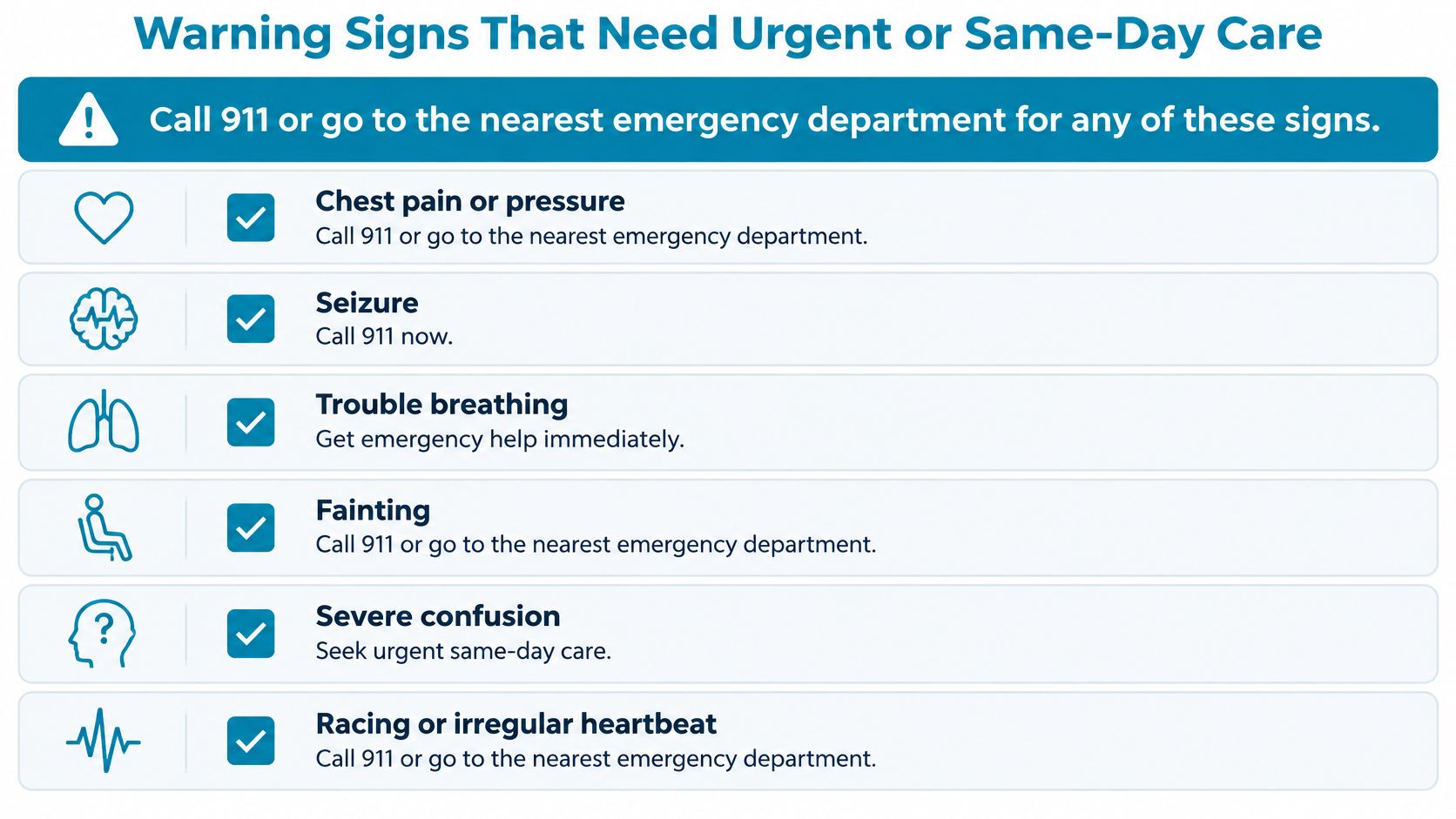
Feeling tired isn't the same as being safe. Low mood that can be managed still deserves follow-up, including attention to depression that shows up in early abstinence. Don't wait through a weekend to see whether a dangerous sign settles.
Three levels of response
Emergency now
- Chest pain, seizure, or unresponsiveness: Call 911. Don't drive yourself if you may pass out.
- Severe confusion, hallucinations, or severe paranoia: Get emergency care. These aren't ordinary irritability.
- Suicidal thoughts with a plan or intent: Call 911 if danger is immediate, or call or text 988.
Same-day clinician contact
- Worsening depression, or thoughts of self-harm without a plan: Reach a clinician the same day, and use 988 if the thoughts intensify.
- Inability to eat, drink, or stay safe: Same-day contact. Dehydration and an unsafe home change the plan.
- Alcohol or other drugs in the mix, or symptoms getting rapidly worse: Call the same day. Other substances can change both mood and medical risk.
Routine follow-up
- Manageable low mood, cravings, sleep changes, and stable fatigue or appetite shifts: These still belong on a follow-up visit. Stable doesn't mean ignore them.
When you aren't sure which tier fits, get help now. Don't wait for a scheduled appointment to sort it out.
A friend can make the call if speaking feels impossible. Say the symptom in plain words, such as chest pain, a seizure, or thoughts of suicide, so the dispatcher hears the urgency.
Why Symptoms Return and Why Mood Needs Close Watching
Why can a quieter week still fall apart months after the last use? Cocaine withdrawal often behaves less like a short detox and more like a changing risk period. A 2023 clinical review estimated that withdrawal occurs in approximately 53%–97% of people who begin abstinence after prolonged cocaine or methamphetamine use. The same review reported that only about 33% of people treated for cocaine use disorder maintained abstinence over one year after treatment. Those figures describe groups, not one person's course. They do show why follow-up has to outlast the first tired days.
Cocaine withdrawal generally does not produce the life-threatening physiologic syndrome seen with alcohol or sedatives. Severe depression, paranoia, and suicidal thoughts can still occur, especially in early abstinence, and mood can shift again later. Clinical practice generally favors supportive care, and no medication is routinely recommended for cocaine withdrawal itself.
Why a good week can break
The reward system works like a dimmer that was held at full brightness. After cocaine stops, ordinary pleasures can feel flat for a long stretch. Stress, certain people or places, drug cues, and lost sleep can bring craving, low pleasure, vivid dreams, and low mood back after a calmer week. A return of symptoms is a signal to adjust the plan. It is not a verdict that care failed, or that cocaine is required to feel normal.
Timing helps a clinician separate stimulant-related symptoms from a separate depression or anxiety disorder. Sleep, other substance use, medical conditions, and safety all belong in that assessment.
Someone who stopped several weeks earlier can hit a hard week at work and feel sudden craving. That swing is worth reporting the same week it appears. It can also be a moment to revisit what relapse means and how to respond, before a single urge becomes a return to use.
Months in, the response still matches the symptom group. Manageable low mood, cravings, and uneven sleep belong in routine follow-up. A fast drop in mood, or thoughts of self-harm without a plan, needs same-day clinician contact. Chest pain, a seizure, severe confusion or paranoia, or suicidal thoughts with a plan or intent need emergency care.

Mood and safety need a scheduled look, not only a check-in when something feels unbearable.
Bring dates, sleep notes, and any thoughts of self-harm to that conversation. A clinician can use the pattern. A person sitting alone with it usually can't.
Medical and Behavioral Support Options Explained
There is no medication specifically approved by the FDA for cocaine withdrawal. That does not mean care has no role: recovery can include monitoring, help with significant co-occurring symptoms, and behavioral treatment. MedlinePlus patient instructions describe supportive care rather than a single withdrawal drug. A Cochrane review of antipsychotic medicines for cocaine dependence found no established medication treatment of proven efficacy, and the reviewed antipsychotic trials were small or of low-to-moderate quality. This does not support routine antipsychotic use for withdrawal.
What supportive care covers
Supportive care includes tracking hydration, nutrition, sleep, mood, and safety, while assessing depression, anxiety, psychosis, other substance use, and overdose risk. A calm setting and regular meals can help, but they do not replace follow-up with a clinician. Medication decisions are separate and individualized. Do not self-medicate with stimulants or antipsychotics, and remember that an appointment does not guarantee a prescription.
Reward-based programs tied to drug-free tests or other treatment goals are among the better-studied behavioral options for stimulant use disorder. In contingency management, agreed rewards follow progress toward those goals. It is a structured behavioral approach, not a pill that ends craving.
Because symptoms and risk can change over time, support may need to continue beyond the first days of withdrawal. A return to use should prompt a safety-focused discussion with a clinician, rather than an attempt to manage risk alone.
Where care can happen
A clinician can discuss outpatient follow-up and whether a higher level of support is appropriate. Options may include detoxification, residential treatment, partial hospitalization, or intensive outpatient care. Empire Medical Wellness provides confidential, physician-led outpatient addiction medicine care, including assessment, treatment planning, follow-up, and coordination with outside treatment professionals when appropriate and authorized. The practice does not provide those higher levels of care, but can help coordinate the next step when clinically appropriate. Learn about the difference between medical detox and rehab.

Outpatient monitoring may suit someone who can remain safe at home. Severe depression, a need for care for withdrawal from another substance, or an unsafe living situation can mean a higher level of support should be considered. A clinician can help assess the situation and explain appropriate options.
Daily Coping Steps for the First Weeks
These steps support the body and lower avoidable triggers. They don't replace medical care, and they aren't a home detox method.
- Keep a consistent wake time and bedtime, and limit long daytime naps. A steady clock makes mood and craving easier to read. Long naps can push sleep into the next night and worsen irritability.
- Eat regular meals and drink fluids through the day. Raise poor appetite or low intake with a clinician. Skipping food makes fatigue and low mood harder to interpret.
- Build a simple daily schedule. Include at least one planned activity and one contact with a supportive person. An empty afternoon is a common cue for craving.
- Remove or limit cocaine and related supplies at home. Plan a different route or activity away from known high-risk places. Willpower is a weak plan if the supplies stay in a drawer.
- Write a craving plan before the urge hits. Name the trigger, choose one coping step in advance, call a support person, and log what happened.
- Avoid alcohol and other substances. They can complicate mood, judgment, and safety, and they can hide how withdrawal is going.
Skip detox products, supplements, and quick fixes sold as cures. Reliable evidence for them in cocaine withdrawal is lacking. A marketed "crash kit" isn't a treatment.
A worksheet to fill in, not a treatment plan
Complete this with a clinician or a trusted person. Keep crisis numbers easy to reach, on paper and in a phone.
| Planning area | What to write down | How to use it |
|---|---|---|
| Known triggers | People, places, times, or feelings linked to craving | Check when a craving starts |
| Early warning signs | Changes in sleep, mood, thinking, or contact with others | Review with your care team |
| Coping steps | Actions to try before using | Keep them ready at home and on your phone |
| Support contacts | Trusted people and when to call them | Names and phone numbers |
| Care team and crisis numbers | Clinician office, 988, and 911 | Keep where they are easy to find |
The worksheet is a personal planning tool. It isn't a treatment plan, and it doesn't replace 911 or 988.
Prepare for a Physician-Led Evaluation
If chest pain, a seizure, trouble breathing, severe confusion, or immediate danger from suicidal thoughts is present, call 911 or 988 rather than waiting for an appointment. These signs need urgent attention.
When there is no emergency, a physician-led outpatient evaluation can help clarify symptoms and next steps. Addiction medicine care at Empire Medical Wellness begins with a confidential assessment of the person's current situation, medical risks, previous treatment, medications, and goals. The visit may cover mood, sleep, functioning at work or school, and substance use when relevant. It is an evaluation, not a promise of a specific medication. Dr. Chhatpar has advanced fellowship training in addiction medicine at Hartford HealthCare in Connecticut.
What to bring
Bring an updated medication list, including supplements and any side effects noticed, along with notes about symptoms from recent days. Mention any other clinicians involved in care. With the patient's authorization, the practice can coordinate with outside treatment professionals when useful.
When there is no emergency, a first addiction medicine appointment can be a next step. Learn about addiction medicine at Empire Medical Wellness and use online scheduling to request a confidential outpatient evaluation.
Questions worth copying
- Timing: Which symptoms fit my timing, and which need follow-up?
- Rechecks: How often should mood and safety be reassessed?
- Same-day calls: Which signs should prompt a same-day call?
- Other conditions: Are co-occurring conditions worth evaluating?
- Level of care: What support options may fit, and when might another level of care be appropriate?
- Coordination: If I authorize it, how can you coordinate with clinicians I already see?
Use the visit to clarify what needs routine follow-up, what warrants same-day contact, and what calls for emergency care. This educational information is not personal medical advice, a diagnosis, or a plan to start, stop, or change medicine.
Empire Medical Wellness offers private-pay, physician-led outpatient addiction medicine for adults and children and adolescents. An evaluation can consider cocaine withdrawal, mood, and safety, with monitoring and recovery planning when appropriate. If another level of support is clinically appropriate, the practice can help coordinate the next step with trusted treatment partners. Visit Empire Medical Wellness to learn about outpatient evaluation and scheduling when there is no emergency.