
Kratom withdrawal is a dependence-related response that can occur when someone who uses kratom regularly stops or significantly reduces their use. It's generally reported as mild to moderate, but symptoms and their duration can vary widely with use patterns, product type, and individual factors.
A person may notice anxiety, restlessness, stomach upset, or trouble sleeping after delaying a dose or stopping. Those experiences can be unsettling, and they don't automatically mean the same thing for everyone. Understanding the possible pattern, the limits of what research can tell us, and the signs that call for urgent care can help someone decide what to discuss with a clinician.
Table of Contents
- What Kratom Withdrawal Means
- When Kratom Withdrawal Typically Starts and How Long It Lasts
- Physical Symptoms You May Notice
- Psychological Symptoms and Cravings
- Warning Signs That Need Urgent Care
- Why Withdrawal Varies So Much Between People
- What a Physician-Led Outpatient Evaluation Can Offer
- Practical First Steps and Questions to Bring to a Clinician
What Kratom Withdrawal Means
A regular kratom user skips an evening dose and wakes at 3 a.m. sweaty and unsettled, wondering whether this is withdrawal, a virus, or ordinary stress. That uncertainty is the point: withdrawal is a pattern to interpret, not a label to self-apply.
Withdrawal is a cluster of physical or psychological symptoms that can appear after regular use is cut back or stopped once the body has adapted. With kratom, the adaptation involves alkaloids such as mitragynine and 7-hydroxymitragynine, which act at opioid receptors and other neural systems. The process works like a thermostat set around a repeated input: remove the input, and the system can overshoot before it recalibrates. It reflects how the body has adapted, not a personal failing.
Interpretation matters because the same complaints can come from kratom withdrawal, another illness, medication effects, or co-use with alcohol, opioids, benzodiazepines, or stimulants. Product type matters too: powders, capsules, extracts, and enhanced products are not interchangeable exposure. A clinician will usually ask what was used, how much, how often, what changed, what else is in the picture, and which symptoms feel routine versus alarming. A symptom list alone cannot establish a diagnosis. For general context on how clinicians assess substance-related problems, see the DSM-5 criteria for substance use disorders.
Research gives boundaries, not a script for one person. In a voluntary online survey, 29.5% of 289 evaluable respondents met the study criteria for kratom use disorder in the past year. Because participation was voluntary and many returned surveys could not be evaluated, the authors warned against treating that figure as a population estimate or an individual prediction.
Use this material to recognize possible patterns, understand why experiences differ, separate routine assessment from urgent care, and prepare for a clinical conversation. It does not supply a self-detox plan, medication instructions, or a taper schedule.
When Kratom Withdrawal Typically Starts and How Long It Lasts
Someone who uses kratom daily may feel nothing unusual for hours after a missed dose, then notice anxiety or restlessness creeping in the next day. That quiet gap trips people up, because feeling fine early on can look like proof that nothing is wrong.
Clinical literature on kratom withdrawal describes symptoms that can begin within about 12 hours of a last dose, with anxiety becoming more apparent by about 24 hours, alongside a range of possible physical and psychological effects. These are approximate observations, not a clock that predicts what will happen to any one person. A delay in symptoms doesn't rule out withdrawal, and symptoms alone can't confirm it.
The reported course works best as a broad progression rather than a schedule:
| Stage | What may be noticed |
|---|---|
| After a missed or last dose | Symptoms may not be apparent right away. |
| Early period | Anxiety, restlessness, or physical discomfort may emerge. |
| As symptoms develop | Discomfort may involve sleep, mood, muscles, or digestion. |
| Easing | Symptoms may settle, but the pace differs from person to person. |
Why does the range stay so wide? Timing shifts with how much was used, how often, and for how long. A concentrated extract and a plain powder do not deliver the same exposure, and alcohol, opioids, benzodiazepines, or stimulants in the picture can move both onset and intensity. In one community study of dependent users taking at least three daily servings, symptoms generally resolved within one to three days for most participants. That is a group observation rather than a universal timeline, and the evidence does not establish a fixed peak or recovery date for every person.
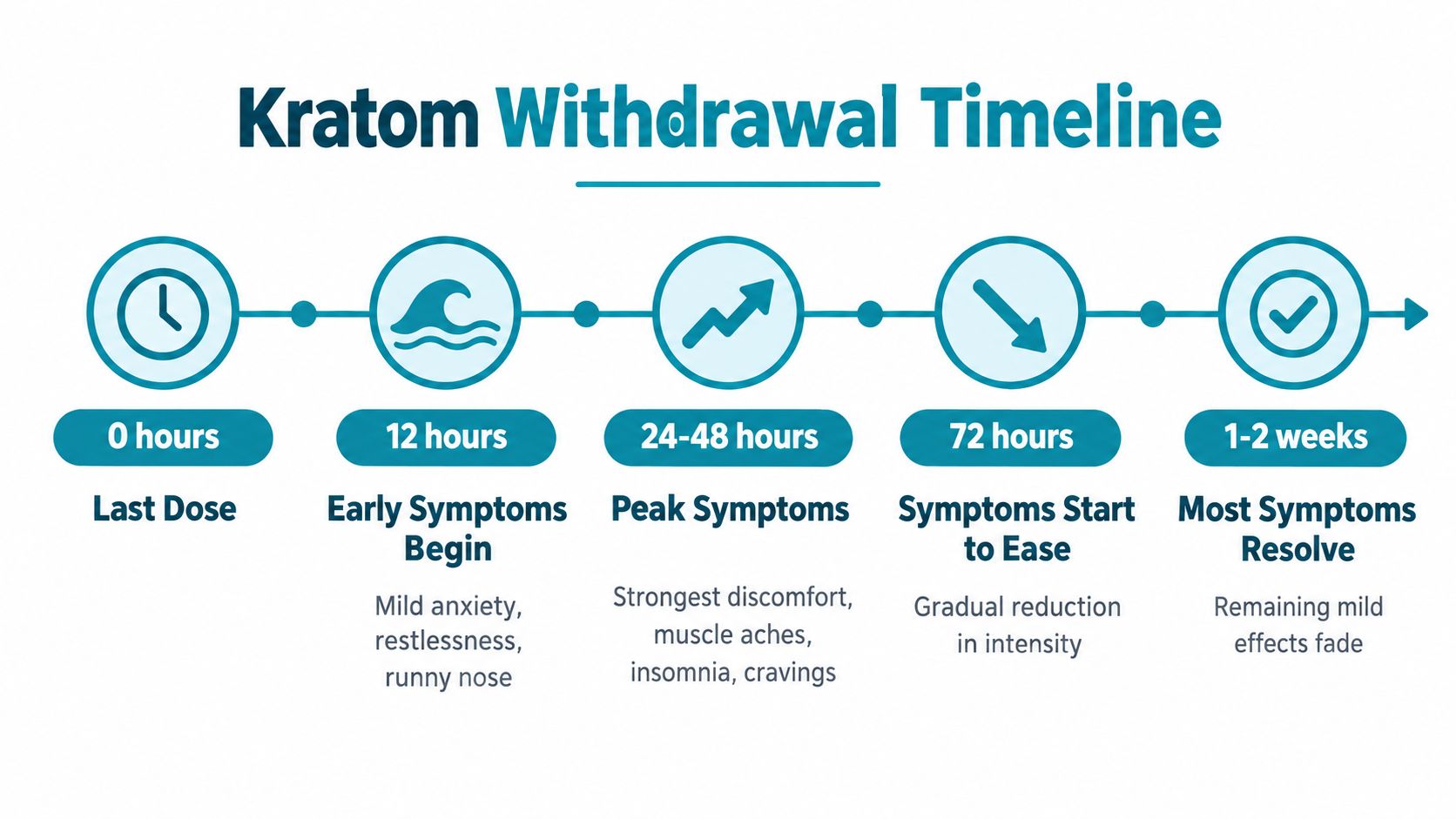
Kratom and conventional opioids can share some features, but their timelines and risks should not be assumed identical. A comparison of opioid withdrawal manifestations can help frame that distinction without treating one person's experience as a template.
That variability is also why the clock alone is a weak basis for self-diagnosis. Pattern, severity, and what else is involved carry more weight than any single hour mark.
Physical Symptoms You May Notice
Someone stopping kratom might notice muscle soreness, stomach upset, or a runny nose, while another person's physical symptoms are less noticeable. Clinicians and surveys describe the physical picture in five broad clusters.
- Muscle aches or spasms: Soreness, body pain, or muscle tightness.
- Digestive upset: Nausea, diarrhea, reduced appetite, and sometimes vomiting.
- Runny eyes or nose: Tearing or nasal discharge can accompany other symptoms.
- Hot flashes, chills, or shakiness: These can feel flu-like and may involve sweating or changes in temperature regulation.
- Sleep disruption: Trouble sleeping can occur alongside fatigue or low energy.
A 2014 study of habitual users in northern Malaysia also reported body pain, muscle spasms, insomnia, tearing or nasal discharge, hot flashes, reduced appetite, and diarrhea. Its participants and setting differ from those in other populations, so the results are one community-sample perspective, not a template for an individual. The Malaysian study provides further detail.
In the online survey described earlier, reported symptom intensity varied widely. Average severity ranged from 22.4 out of 100 for vomiting, reported by 6.2%, to 89.9 out of 100 for intense kratom craving, reported by 5.4%. These figures describe responses in that particular survey, not the likelihood or severity for an individual, as noted earlier.
A symptom list can help someone describe what they notice, but it cannot determine what is causing the symptoms. Sharing physical changes alongside sleep, mood, or craving concerns can give a clinician a clearer picture.
Psychological Symptoms and Cravings
After deciding to cut back or stop kratom, someone may find that anxiety, irritability, restlessness, nervousness, tension, or low mood makes the decision harder to follow. Cravings can add another layer, even when physical symptoms feel manageable.
In the survey discussed earlier, intense craving had a high average severity among the smaller group who reported it. The rating reflects those respondents, not the broader population. The peer-reviewed survey discussed earlier covers both withdrawal experiences and functional effects. It found that 9.3% of respondents reported reducing important social, work, or recreational activities because of kratom use. That result describes reported impact in the survey, not any individual reader's experience.
Craving means a strong urge to use. Its intensity can vary, and the urge may affect daily routines or efforts to stop. A clinician can help assess how mood changes and cravings fit into a person's overall situation. For clarity about recovery language, see what relapse means.
A practical distinction
| More common withdrawal-type concerns | Reasons to seek urgent assessment |
|---|---|
| Anxiety, restlessness, irritability, or low mood to discuss during clinical follow-up | Suicidal thoughts, severe agitation, confusion, hallucinations, or chest symptoms |
| Cravings or disrupted sleep affecting daily routines | Symptoms that suggest severe dehydration or another acute medical problem |
This comparison is not a diagnostic checklist. Mood changes can relate to withdrawal, another health condition, or several factors at once. A clinician can ask when they began, how they are changing, and whether they affect safety or daily functioning.
Warning Signs That Need Urgent Care
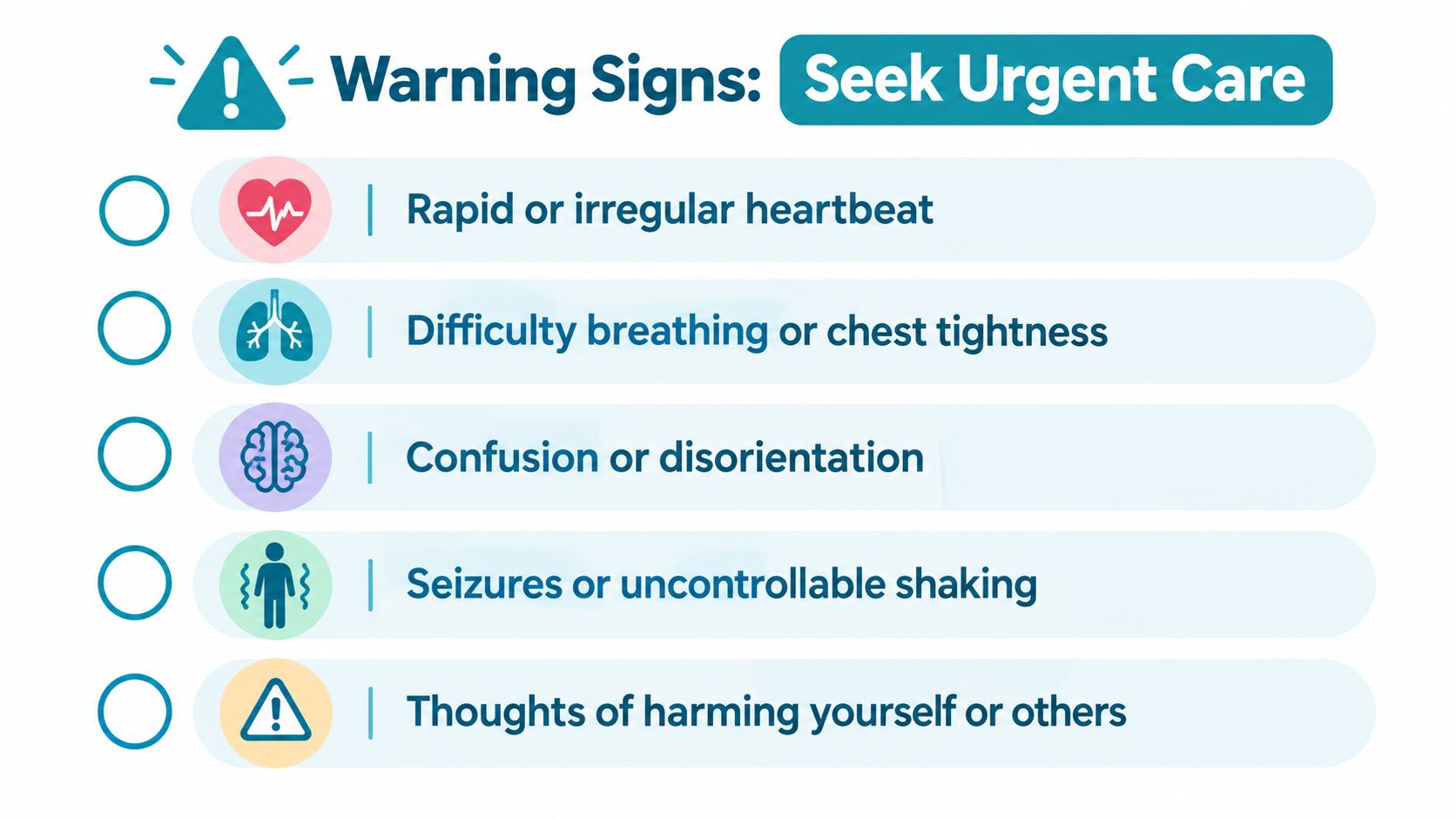
A person with withdrawal may have nausea or diarrhea, but repeated fluid loss can become dangerous. Severe dehydration, persistent vomiting or diarrhea, confusion, hallucinations, chest symptoms, trouble breathing, seizure-like symptoms, or suicidal thoughts call for urgent medical assessment. These signs need a different response from symptoms that can be discussed at a routine appointment.
Seek urgent or emergency care if someone:
- Cannot keep fluids down or shows signs of severe dehydration: Ongoing vomiting or diarrhea can lead to a serious medical problem.
- Develops confusion or hallucinations: New changes in awareness or perception need prompt assessment.
- Has chest symptoms or trouble breathing: These may have causes other than withdrawal.
- Has a seizure or uncontrolled shaking: Seek urgent medical evaluation.
- Has suicidal thoughts or may harm themselves or someone else: Contact emergency or crisis support now.
A case report describes neurologic changes and hyponatremia, meaning an abnormally low sodium level, one week after abrupt cessation in a long-term daily user. One case cannot show how often this happens or predict another person's outcome. It does show why serious or rapidly worsening symptoms should not be dismissed. The case report and clinical guidance distinguish urgent concerns from symptoms to raise during routine follow-up.
Why Withdrawal Varies So Much Between People
Two people can use products sold as kratom and have very different experiences after stopping. Dried leaf powder used briefly differs from a concentrated product used regularly over a longer period. Product contents may also be uncertain, so packaging alone may not tell the whole story.
A clinician may consider several factors:
- Product type: Dried leaf powder and concentrated 7-hydroxymitragynine products may involve different compositions and levels of exposure.
- Use pattern: Dose, frequency, and duration can shape how the body adapts.
- Other substances: Opioids, alcohol, sedatives, stimulants, and prescription medications can affect symptoms and safety.
- Individual health factors: Medical conditions and overall health can influence how symptoms should be assessed.
A randomized, placebo-controlled study in healthy adults who had not previously used kratom found no clinically meaningful opioid withdrawal after short-term use of dried leaf powder. One participant reported brief, mild diarrhea after stopping. That result applies to the study's specific conditions. It cannot predict what happens after prolonged daily use, with concentrated products, or when other substances are involved. Clinical reports describe substantial symptoms after prolonged daily use or abrupt cessation. The controlled study and case reports described earlier help show why product and exposure matter.
Research has not established which combination of product, use pattern, duration, and co-use best predicts withdrawal. A clear description of the product and any co-use gives a clinician a better starting point than a product label or a general timeline.
What a Physician-Led Outpatient Evaluation Can Offer
When symptoms begin after a change in kratom use, a clinician can help sort out whether withdrawal may be part of the picture or whether another health concern needs attention. An outpatient evaluation may cover the product, approximate amount, frequency, duration, symptom timing, other substances, medications, and relevant medical or mental health history. This gives the clinician context for discussing appropriate next steps.
The visit can also help determine whether outpatient follow-up seems suitable or whether a higher level of care is needed. Outpatient assessment is not emergency care or detoxification, and it cannot replace urgent evaluation for severe symptoms. The practice's addiction medicine specialist information describes its medical assessment and outpatient care model.
NIDA reports that no medical therapies are approved specifically for kratom withdrawal or kratom-related substance-use conditions. The practice does not offer therapies specifically for kratom withdrawal or kratom use disorder, but a physician can still assess symptoms, discuss monitoring, and coordinate outside care when appropriate. NIDA's kratom information also describes limits in current knowledge.

A physician may discuss recovery planning or coordination with other clinicians and programs, with the patient's permission. Empire Medical Wellness provides outpatient care only. It is not an emergency service, detox facility, or inpatient program.
Practical First Steps and Questions to Bring to a Clinician
A product label, a rough timeline, and an honest account of other substances can give a clinician useful context. You do not need a perfect record. If details are uncertain, say so.
Before an appointment, consider writing down:
- Product details: Bring the packaging or product name if available. Note whether it was leaf powder, a capsule, or a concentrated product.
- Use pattern: Record the approximate amount, frequency, and duration. Mark any details you are unsure about.
- Symptom timing: Note when symptoms began in relation to a missed, delayed, reduced, or last dose, and whether they have changed.
- Other substances and medications: List opioids, alcohol, sedatives, stimulants, prescriptions, and over-the-counter products. Co-use can change what a clinician needs to assess.
- Symptoms that felt severe or unusual: Include these in your account. If urgent symptoms are happening now, seek urgent care rather than waiting for a routine appointment.
Questions to consider asking include:
- Could these symptoms relate to withdrawal, another medical condition, or both?
- Could the product type or pattern of use affect the assessment?
- Could other substances or medications add risks?
- What changes should prompt urgent or emergency care?
- What monitoring or outside support might be appropriate?
NIDA, cited earlier, describes kratom withdrawal as generally mild to moderate and notes that evidence on assessment and treatment remains limited. That broad description cannot predict an individual's experience.
Frequently asked questions
How long do kratom withdrawal symptoms last?
Symptoms may begin within about 12 hours of a last dose. Clinical observations described earlier report resolution within one to three days for most participants in one group of dependent users, but individual courses vary.
Is it safe to manage symptoms at home?
This cannot be determined from a general article. The warning signs listed earlier call for urgent evaluation rather than home management.
Are there FDA-approved medicines specifically for kratom withdrawal?
There are no medicines approved specifically for kratom withdrawal. A clinician can discuss the person's circumstances and appropriate next steps; do not start, stop, or change medication based on this article.
Is kratom withdrawal the same as opioid withdrawal?
Kratom compounds interact with opioid receptors, so some symptoms may resemble opioid withdrawal. Similarities do not make the conditions identical. Product composition, exposure, other substances, and individual health all shape an assessment.
For practical details about preparing for a visit, read about what to expect at a first addiction medicine appointment. Do not create a self-directed taper or change medication in response to this article. Adults considering outpatient care can review fees and appointment information.
Adults seeking a physician-led outpatient assessment can visit Empire Medical Wellness to learn about its addiction medicine services and decide whether to arrange a clinical conversation. This article is educational and is not personal medical advice.