
Losing 5% to 7% of your starting weight and adding regular resistance training are foundational steps that can improve insulin sensitivity and lower diabetes risk. When lifestyle changes aren't enough, an individualized medical assessment can identify whether medication, closer monitoring, or a different strategy is appropriate.
That answer sounds simple, but insulin resistance changes the equation. It can make hunger, weight regulation, glucose control, and long-term maintenance harder for some adults. The solution isn't a crash diet or a judgment about willpower. It's a sustainable plan that addresses nutrition, muscle, sleep, stress, risk factors, and medical treatment when clinically appropriate.
Byline: Empire Medical Wellness Editorial Team
Published: September 27, 2026
Updated: September 27, 2026
Table of Contents
- What Insulin Resistance Means for Weight Loss
- Understanding Insulin Resistance Versus Prediabetes and Metabolic Syndrome
- Dietary Steps That Improve Insulin Sensitivity
- Exercise, Sleep, Stress, and Alcohol Considerations
- Medical Evaluation, Anti-Obesity Medication, and Monitoring
- Setting Realistic Goals and Planning Follow-Up Care
What Insulin Resistance Means for Weight Loss
Insulin resistance means the body doesn't respond to insulin as effectively as it should. Insulin helps move glucose from the bloodstream into cells for energy. When cells respond poorly, the body may compensate by producing more insulin, while blood glucose can rise. NIDDK explains that insulin resistance can contribute to higher blood glucose and weight gain, and that healthy lifestyle changes and weight management can help prevent or reverse it. NIDDK's overview of insulin resistance and weight management provides the clinical foundation.
Higher insulin levels can also make stored energy less available for breakdown. That doesn't mean fat loss is impossible, and it doesn't mean every person with a larger body has insulin resistance. It means the metabolic environment may make appetite regulation and weight reduction more difficult, especially when sleep, liver fat, stress, medications, or other health factors are also involved.
Practical rule: Treat weight management as metabolic care, not as a test of character.
Why modest loss still matters
A small, sustained reduction can produce meaningful metabolic benefit. NIH-based guidance reports that as little as 5% weight loss can improve insulin sensitivity in the liver, skeletal muscle, and adipose tissue. Loss beyond that may improve blood glucose, lipids, blood pressure, and some liver-related outcomes in adults with overweight or obesity. The NIH clinical review on weight loss and insulin sensitivity also describes a dose-responsive pattern, meaning benefits aren't all-or-nothing.
The response may differ by tissue. In one intervention, average loss of 11 ± 1 kilograms, or about 15%, improved insulin sensitivity in proportion to the amount lost. Another study found that liver and adipose tissue insulin sensitivity improved at 5% loss and then plateaued, while muscle insulin sensitivity continued improving at 11% and 16% loss. These findings support a measured goal: partial progress can matter, while additional loss may provide further benefit for some adults.
Insulin resistance is not confirmed by fatigue, abdominal weight gain, or difficulty losing weight. A clinician may use glucose or A1c testing and review blood pressure, lipids, waist measurement, medications, and liver-related factors. Adults looking for context on overcoming insulin resistance weight loss plateau may find it useful to focus on why plateaus happen rather than treating them as personal failure. A physician-led insulin resistance evaluation can help separate symptoms, risk factors, and confirmed findings.
Understanding Insulin Resistance Versus Prediabetes and Metabolic Syndrome
These terms overlap, but they aren't interchangeable. Insulin resistance describes impaired response to insulin. Prediabetes is defined through validated glucose or A1c testing. Type 2 diabetes requires glucose-based diagnostic criteria, while metabolic syndrome describes a cluster of cardiometabolic abnormalities.
Symptoms alone can't establish any of these conditions. A person can have insulin resistance without meeting criteria for prediabetes, and someone can have metabolic syndrome with or without a diabetes diagnosis. The table below summarizes the distinctions using NIDDK diabetes and insulin-resistance guidance, CDC Diabetes Prevention Program resources, NHLBI metabolic-syndrome guidance, and the ADA Standards of Care.
A clinical comparison
| Condition | Defining features | Typical assessment |
|---|---|---|
| Insulin resistance | Cells respond less effectively to insulin. The body may compensate with higher insulin production, and glucose regulation can worsen. | Clinical history, glucose testing, A1c, metabolic risk review, and sometimes additional testing selected by a clinician. There isn't one symptom that confirms it. |
| Prediabetes | Blood glucose is higher than normal but below the diagnostic range for diabetes. | Validated A1c, fasting plasma glucose, or oral glucose tolerance testing, interpreted according to current clinical criteria. |
| Type 2 diabetes | Glucose regulation has reached the diabetes range because insulin action and production are insufficient for normal control. | Confirmatory glucose-based testing or A1c assessment, with repeat or corroborating testing when required. |
| Metabolic syndrome | A cluster involving central adiposity or waist measurement, blood pressure, triglycerides, HDL cholesterol, and glucose abnormalities. | Measurement of the component risk factors. The cluster is not synonymous with insulin resistance or diabetes. |
The exact interpretation depends on the test, timing, clinical context, and whether a result needs confirmation. This is why a home glucose reading or a symptom search shouldn't replace medical assessment. If you want to understand how a clinician approaches abnormal glucose findings, the prediabetes care overview is a relevant starting point.
Matching risk patterns to practical action
| Risk pattern | Useful action to discuss with a clinician |
|---|---|
| Abnormal A1c or glucose | Confirm the finding when appropriate, clarify whether it indicates prediabetes or diabetes, and establish a follow-up plan. |
| Elevated blood pressure | Track readings consistently and address cardiovascular risk alongside weight management. |
| High triglycerides or low HDL cholesterol | Review dietary pattern, alcohol intake, physical activity, medications, and overall cardiovascular risk. |
| Increased waist measurement or suspected liver fat | Discuss broader metabolic assessment rather than relying on body weight alone. |
| Persistent difficulty losing weight | Review sleep, stress, medications, eating pattern, activity, and whether physician-led obesity treatment may be appropriate. |
| Symptoms of severe hyperglycemia or acute illness | Seek prompt medical care rather than waiting for a routine weight-management visit. |
A useful evaluation looks for the abnormality that needs attention, not just a target number on the scale. The same body mass index can accompany different distributions of liver, visceral, and subcutaneous fat, and those differences can affect response.
Dietary Steps That Improve Insulin Sensitivity
The first dietary change I'd prioritize is not eliminating an entire food group. It's building meals around high-fiber carbohydrates, adequate protein, and minimally processed foods, then reducing the refined foods and sugary drinks that make the pattern harder to sustain.
A practical plate might include non-starchy vegetables, a protein source, a fiber-rich carbohydrate such as beans or a whole grain, and a moderate amount of unsaturated fat. This structure can slow digestion, improve fullness, and reduce the chance that a meal becomes mostly rapidly absorbed carbohydrate. It also leaves room for personal preferences, culture, budget, and medical needs.
Build the pattern before chasing perfection
Start with the changes that affect the entire week:
- Choose carbohydrate quality: Favor vegetables, legumes, fruit, and whole grains more often than refined grains and sugar-sweetened foods.
- Pair carbohydrates with protein and fiber: Beans with vegetables, Greek yogurt with fruit, or fish with lentils can be more satisfying than a carbohydrate eaten alone.
- Use fats deliberately: Nuts, seeds, olive oil, and avocado can support satiety, but portions still matter because fats are energy-dense.
- Create predictable meals: Long periods of restriction followed by one very large meal often make hunger and glucose management harder.
- Reduce liquid calories: Sweetened drinks provide little fullness and can make a calorie deficit difficult to maintain.
- Adjust rather than ban: A smaller portion of a preferred starch may fit better than an all-or-nothing rule that doesn't last.
There isn't one insulin-resistance diet that works for every adult. Someone with substantial liver fat, poor sleep, gastrointestinal symptoms, diabetes medication, or a history of disordered eating may need a different plan from someone without those factors. A clinician or qualified nutrition professional can help adapt the pattern without turning food into a moral issue. Empire's balanced diet and weight loss guidance offers a framework for thinking about food quality and sustainable weight management.
What to track for useful feedback
A food journal doesn't need to be elaborate. Record meals, hunger, sleep, activity, and any glucose data your clinician has asked you to collect. Look for repeated patterns, such as evening overeating after inadequate daytime intake or stronger hunger after short sleep.
Meal timing may matter, but consistency is usually more useful than rigid rules. Some adults do well with evenly distributed meals, while others need a plan that accounts for work schedules, medications, exercise, or cultural eating patterns. A very restrictive approach that produces rapid loss but cannot be maintained doesn't address the central problem.
Nutrition remains foundational if medication becomes part of care. Anti-obesity medication may reduce appetite for some patients, but it doesn't replace adequate protein, fiber, movement, sleep, or follow-up. The aim is a pattern you can maintain while clinical markers improve.
Exercise, Sleep, Stress, and Alcohol Considerations
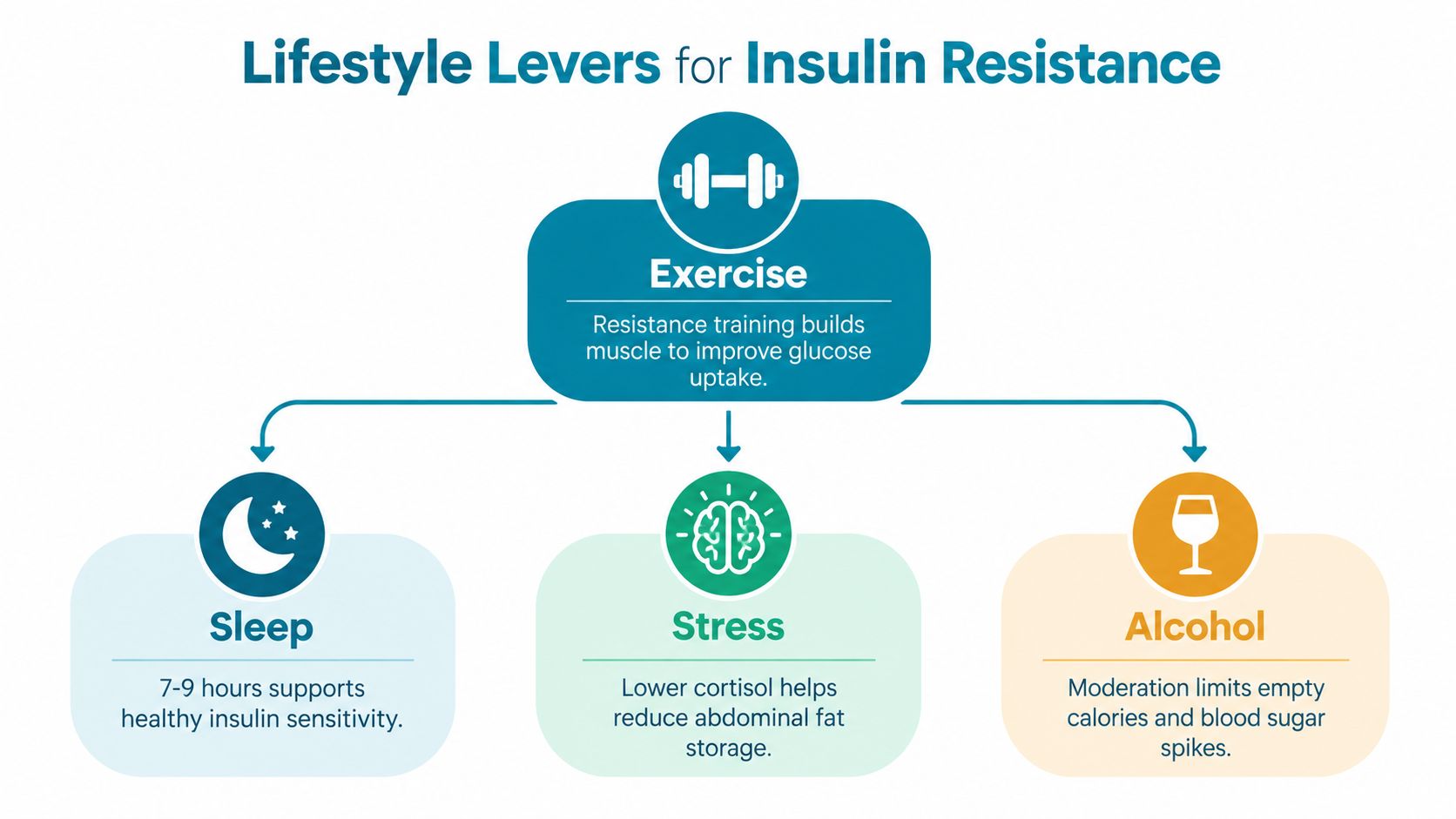
Weight loss doesn't have to depend on intense workouts. Resistance training deserves special attention because working muscle can take up glucose and because preserving lean mass matters during weight reduction. Walking, cycling, swimming, or other aerobic activity supports cardiovascular fitness and glucose control, while resistance work adds a distinct stimulus.
Make the routine repeatable
Begin at a level that fits current conditioning, joint comfort, schedule, and safety considerations. A short walk after meals may be more practical than an ambitious program that ends after a week. Resistance exercise can use machines, bands, free weights, or body weight, with progression guided by ability and, when needed, a qualified professional.
Sleep is part of metabolic care, not an optional wellness add-on. Irregular or insufficient sleep can increase hunger, worsen energy, and make planned food choices harder. Screen for loud snoring, witnessed breathing pauses, or persistent daytime sleepiness with a clinician, since sleep disorders may need specific evaluation.
Stress can influence eating behavior, sleep, and glucose regulation. Choose a method you can repeat, such as breathing practice, walking outdoors, journaling, counseling with an outside professional, or social connection. The best method is the one that reduces strain without adding another demanding task.
Alcohol can add calories and affect liver metabolism and triglycerides. If you drink, discuss how it fits with your health conditions and medications. Practical science-backed sleep tips from SleepHabits may help readers build a calmer evening routine, but sleep advice doesn't replace assessment for a suspected sleep disorder.
Sustainable activity beats heroic effort. A routine that fits ordinary weeks is more useful than a demanding plan that only works under ideal conditions.
Lifestyle changes remain important when medication is prescribed. The treatment may make appetite or weight management more manageable, but muscle use, sleep, nutrition, and alcohol decisions still shape metabolic health. See resistance exercise for weight loss for a focused discussion of why strength work belongs in a weight-management plan.
Medical Evaluation, Anti-Obesity Medication, and Monitoring
Lifestyle changes are the starting point, but they aren't the entire treatment conversation for every adult. A physician-led evaluation can review glucose or A1c, lipids, blood pressure, waist measurement, liver-related factors, weight history, sleep, medications, and barriers that may be limiting progress.

Comparing the main components of care
| Approach | What it can address | Trade-offs and monitoring needs |
|---|---|---|
| Nutrition and activity | Food quality, energy intake, glucose use, cardiovascular fitness, sleep-related habits, and lean-mass preservation. | Requires adaptation when hunger, pain, work demands, medications, or medical conditions interfere. |
| FDA-approved anti-obesity medication | Appetite, weight regulation, and, depending on the medication and indication, related metabolic risk. | Eligibility, contraindications, adverse effects, interactions, access, and continuation planning require clinician oversight. |
| Follow-up monitoring | Whether weight, glucose, blood pressure, lipids, symptoms, and function are moving in a safer direction. | A single metric can mislead. Results need interpretation over time, with adjustments based on response and tolerability. |
GLP-1-based treatments are an emerging part of obesity and metabolic care. In a U.S. clinical review, semaglutide 2.4 mg produced mean placebo-subtracted weight loss of 12.4%, while tirzepatide produced 17.8% in trials. The same review reported that 86.4% of participants receiving semaglutide and 91% receiving tirzepatide achieved at least 5% weight loss, compared with 31.5% and 35% with placebo, respectively. These are trial results, not guarantees for an individual. The Cleveland Clinic review of weight-loss medications provides the cited comparison.
Approval depends on the specific product, indication, and patient context. A diabetes medication isn't automatically an FDA-approved obesity treatment, and prescribing a medication for a different purpose can involve off-label use. Compounded medication shouldn't be treated as interchangeable with an FDA-approved product. A clinician should explain the rationale, expected monitoring, adverse effects, and what happens if treatment is paused or stopped.
Long-term follow-up matters because the initial loss is only one part of metabolic care. At visits, the useful questions include whether appetite is manageable, whether nutrition remains adequate, whether resistance training is preserving function, whether glucose and blood pressure are improving, and whether side effects or other barriers need attention. Empire Medical Wellness describes physician-led GLP-1 weight-management care as one possible topic for evaluation, without implying a specific medication or outcome for any individual.
Seek prompt medical attention for severe symptoms such as confusion, fainting, severe dehydration, chest pain, or difficulty breathing. Those concerns aren't routine weight-management issues.
Setting Realistic Goals and Planning Follow-Up Care
A realistic plan starts with measurable habits and clinically relevant markers, not a promise of fast scale changes. NIH guidance supports the value of modest sustained loss, while intervention data show that additional loss may deepen muscle insulin-sensitivity improvements for some adults. Maintenance deserves the same attention as the initial reduction.
Use a simple review cycle:
- Build meals around fiber-rich carbohydrates and protein.
- Add resistance training and sustainable aerobic movement.
- Protect sleep and address stress or alcohol patterns that interfere with progress.
- Review glucose, A1c, lipids, blood pressure, waist measurement, and liver-related factors with a qualified clinician when appropriate.
- Adjust the plan based on response, safety, and long-term feasibility.
The most common stumbling block isn't a lack of effort. It's a plan that ignores hunger, sleep, medications, muscle preservation, or the underlying risk pattern. Private, physician-led obesity care can help adults evaluate those factors without assuming that symptoms alone reveal a diagnosis.
This article is educational and isn't personal medical advice. Consult a qualified clinician for individualized evaluation, testing, and treatment decisions.
Empire Medical Wellness provides private, physician-led obesity medicine evaluations that may include metabolic assessment, individualized weight-management planning, anti-obesity medication when clinically appropriate, and follow-up focused on response and maintenance. Visit Empire Medical Wellness to learn more about the practice and request information about care.