
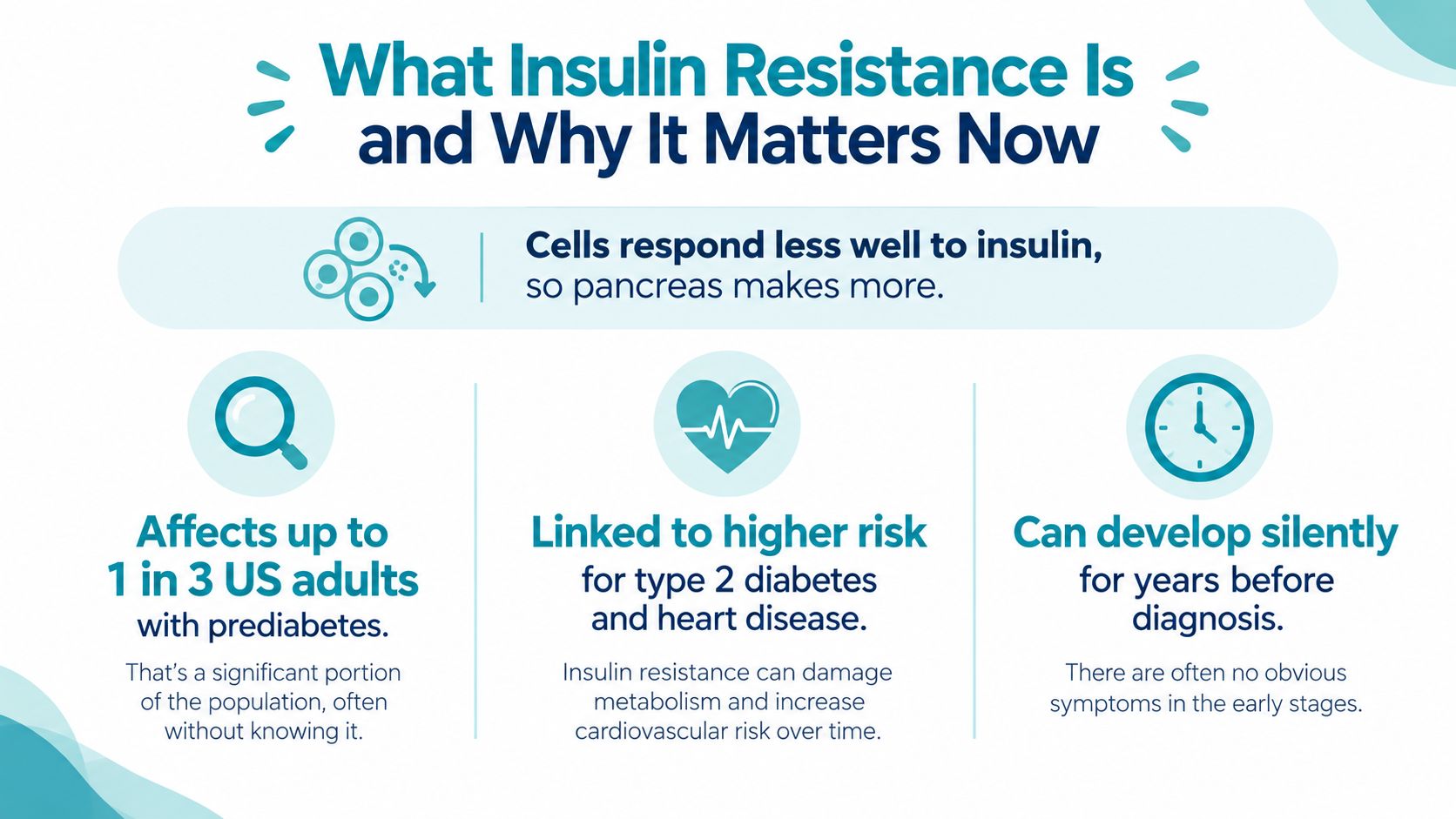
Insulin resistance means the body's cells respond poorly to insulin, so the pancreas has to make more of it to keep blood glucose normal. It often causes no symptoms, and a 2025 systematic review estimated that it affects 26.53% of adults worldwide, roughly 1 in 4 adults.
That makes insulin resistance common, but it doesn't make it simple. There's no single symptom, body shape, or laboratory cutoff that proves it. A thoughtful evaluation considers glucose testing, blood pressure, lipids, sleep, medications, family history, physical activity, and other health factors together.
Table of Contents
- What Insulin Resistance Is and Why It Matters Now
- How Insulin Normally Works and What Changes With Resistance
- Why Insulin Resistance Develops From Cells to Daily Life
- Risk Factors Symptoms and How Clinicians Evaluate Insulin Resistance
- Health Consequences Linked to Insulin Resistance Over Time
- Evidence Based Approaches to Prevent and Manage Insulin Resistance
- When to Seek Physician Led Care and What to Ask Next
- Sources
What Insulin Resistance Is and Why It Matters Now
Insulin resistance is a common, often silent metabolic risk state. Insulin is a hormone made by the pancreas. After eating, carbohydrates are broken down into glucose, which enters the bloodstream. Insulin helps muscle and other cells take up glucose for energy or storage, while signaling the liver to reduce its glucose release.
With insulin resistance, cells respond less effectively to insulin's signal. The pancreas may compensate by releasing more insulin, allowing blood glucose to stay within a usual range for a time. If that compensation becomes insufficient, glucose can rise and prediabetes or type 2 diabetes may develop. The National Institute of Diabetes and Digestive and Kidney Diseases describes links between insulin resistance and factors such as overweight, obesity, and a large waist size.
Body shape cannot establish whether someone has insulin resistance. The CDC explains that insulin resistance may exist without visible signs, so assessment should rely on health history and appropriate testing rather than appearance.
Why the prevalence estimate matters
A 2025 systematic review included 87 studies and 235,148 adults. Its pooled global estimate was 26.53%, with a 95% confidence interval of 24.10% to 29.03%. Estimates generally ranged from 26% to 30%, but results differed by population and diagnostic method, particularly the HOMA-IR cutoff used (systematic review in BMC Endocrine Disorders).
The estimate supports a practical conclusion: insulin resistance is not limited to a narrow group. It can occur with weight-related concerns, abnormal lipids, high blood pressure, fatty liver risk, or a family history of diabetes, yet no single universal test cutoff confirms it in every setting.
For concerns about high blood glucose or possible prediabetes, the Empire Medical Wellness prediabetes resource provides related patient education. A clinician can help decide which questions and tests fit your circumstances.
How Insulin Normally Works and What Changes With Resistance
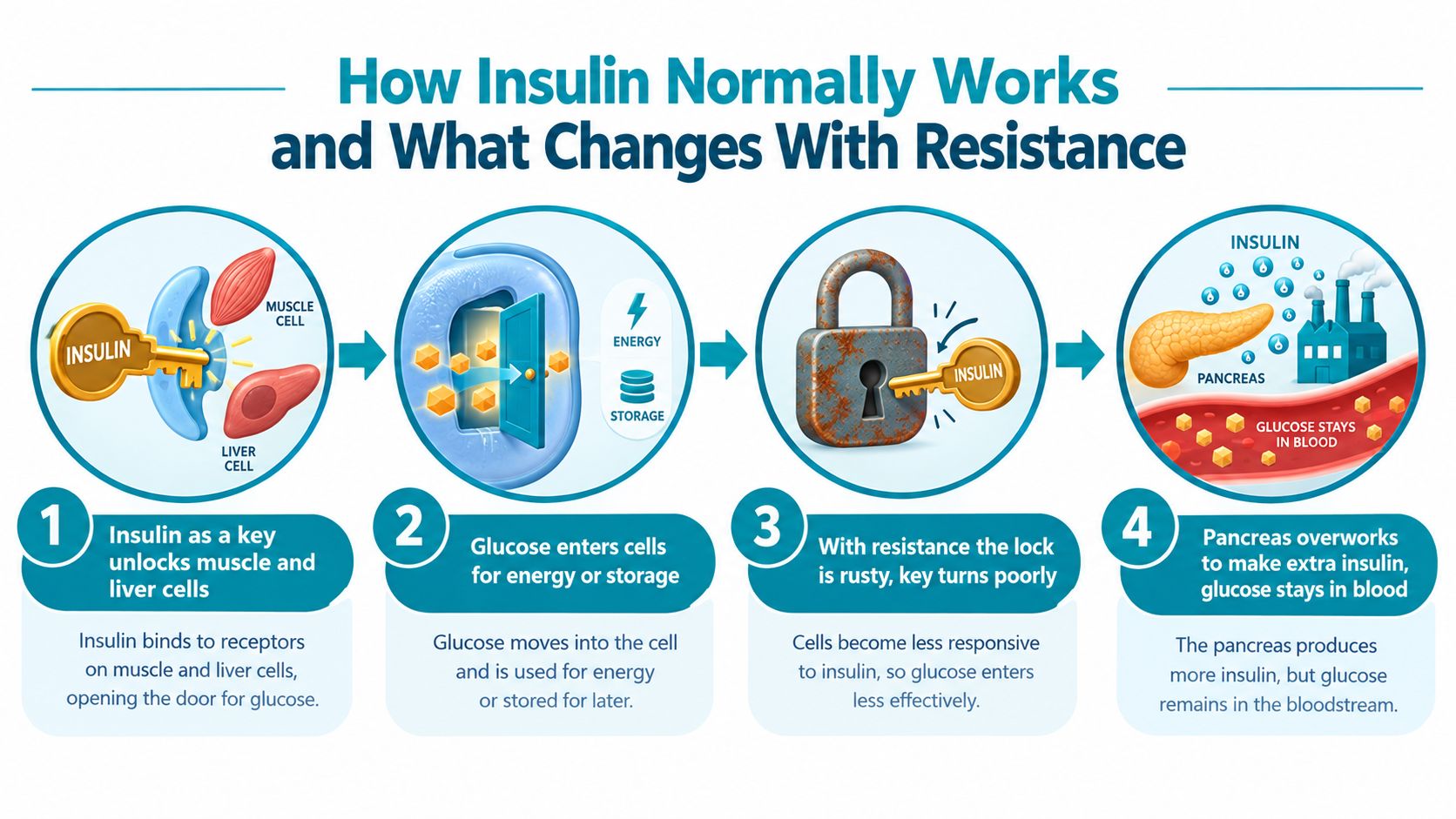
A simple analogy can make the biology easier to follow. Think of insulin as a key and a muscle cell as a locked door.
After glucose enters the bloodstream, insulin binds to receptors on the cell. That signal helps the cell move glucose inside, where the body can use it or store it. In the liver, insulin also communicates that incoming energy is available and that glucose production should slow.
Core concept: Insulin resistance doesn't necessarily mean the body has no insulin. It means the signal produces less of the expected response.
When cells become less responsive, the pancreas may release more insulin to achieve a similar effect. This compensatory state is sometimes called hyperinsulinemia, meaning insulin levels are higher than they would otherwise need to be. Blood glucose can remain normal for a period because the pancreas is working harder and because not all glucose disposal depends equally on insulin.
That's why insulin resistance, prediabetes, and diabetes aren't interchangeable terms:
- Insulin resistance describes reduced cellular responsiveness to insulin.
- Prediabetes describes blood glucose levels that are higher than usual but not in the diabetes range.
- Type 2 diabetes occurs when blood glucose reaches the diagnostic range and the body's insulin production and action can't keep glucose controlled adequately.
A person may have insulin resistance before developing prediabetes. A person can also have metabolic risk without one obvious symptom. A normal fasting glucose result doesn't automatically answer every question, particularly when other risk factors or laboratory findings point in a different direction.
The history of this field helps explain why testing remains nuanced. Harold Himsworth introduced the concept of insulin resistance in 1936. Rosalyn Yalow and Solomon Berson's radioimmunoassay, developed in 1959 to 1960, made direct insulin measurement possible. The euglycemic clamp arrived in 1979, and HOMA-IR was introduced in 1985. In 1988, Gerald Reaven connected insulin resistance with cardiovascular risk in his Banting Lecture, helping establish its place in cardiometabolic medicine (historical review).
The following video provides another visual explanation of insulin action:
Why Insulin Resistance Develops From Cells to Daily Life
Insulin resistance develops through interacting changes in the liver, skeletal muscle, fat tissue, and cellular energy systems. There is no single universal defect, and the same outward risk pattern can arise through different biological pathways.
One important mechanism is ectopic lipid accumulation. This means fat is stored in organs such as the liver and skeletal muscle instead of remaining mainly in dedicated fat-storage tissue. Endoplasmic reticulum stress and chronic inflammation may also affect insulin signaling. Lipid intermediates, including diacylglycerol and ceramides, can interfere with the pathway by which insulin directs cells to handle glucose. In the liver and muscle, diacylglycerol may activate protein kinase C enzymes, reducing glucose uptake and increasing glucose production by the liver, as described in this mechanistic review.
These cellular changes are not a moral judgment about food, body size, or exercise. Genetics, sleep, medications, medical conditions, physical activity, and the surrounding environment can all shape risk. High triglycerides, low HDL cholesterol, limited physical activity, and a family history of type 2 diabetes are among the factors clinicians may consider.
Factors clinicians consider
A clinical conversation may cover:
- Waist and weight trends: Changes over time can add context, but appearance or weight alone cannot diagnose insulin resistance.
- Movement: Regular muscle activity helps the body handle glucose. Low activity can reduce that stimulus.
- Food pattern: Highly processed foods and refined carbohydrates may matter, yet individualized nutrition is more useful than treating every carbohydrate as a problem.
- Sleep: Short or irregular sleep, along with untreated sleep apnea, can affect appetite, activity, weight, and glucose regulation. Sleep belongs on the monitoring checklist, even when glucose results appear reassuring.
- Medical history: Polycystic ovary syndrome, fatty liver, hypertension, and lipid abnormalities can change the overall risk picture.
- Medications and substances: Some medicines and smoking may influence metabolic health and deserve a careful review.
- Stress and daily demands: Stress can affect sleep, eating patterns, movement, and the ability to follow a care plan, without being the sole biological cause.
Research continues to identify differences in mitochondrial function, liver metabolism, and molecular patterns associated with insulin resistance and type 2 diabetes. These findings support biological variation among patients. They do not replace routine clinical assessment.

Nutrition is one part of the wider picture. The Empire Medical Wellness nutrition resource discusses individualized food choices without presenting diet as the only explanation or solution.
Risk Factors Symptoms and How Clinicians Evaluate Insulin Resistance
Insulin resistance is often silent. A person may feel entirely well while the body needs more insulin to keep blood glucose within range. Fatigue, cravings, difficulty concentrating, skin tags, and weight changes can occur, but each has many possible causes. None should be used alone to label someone as insulin resistant.
Clinicians usually look for a risk pattern, then choose appropriate glucose tests. Relevant clues can include a large waist or meaningful weight change, a family history of type 2 diabetes, previous gestational diabetes, polycystic ovary syndrome, sleep apnea, certain medicines, high triglycerides, low HDL cholesterol, hypertension, or fatty liver risk. Sleep belongs in the review even when a glucose result seems reassuring.
Comparing common tests with research measures
The distinction between glucose tests and insulin measures prevents a common misunderstanding. A1C, fasting glucose, and the oral glucose tolerance test assess glucose exposure or the body's response to glucose. Insulin measurements may add context, but direct insulin-resistance testing is used mainly in research. HOMA-IR also has no universal cutoff that applies to every person.
| Test or measure | What it assesses | Clinical use | Interpretation note |
|---|---|---|---|
| A1C | Average blood glucose over time | Common screening test for prediabetes and diabetes | It reflects glucose exposure, not insulin resistance directly. |
| Fasting glucose | Blood glucose after fasting | Common screening test for prediabetes and diabetes | A normal result does not necessarily exclude earlier metabolic risk. |
| Oral glucose tolerance test, or OGTT | The body's glucose response after a glucose challenge | Used when additional information is needed or results are discordant | Interpretation depends on the protocol and clinical context. |
| Fasting insulin | Insulin concentration while fasting | An indirect marker that may support clinical reasoning | It is not a standalone diagnosis. |
| HOMA-IR | An index calculated from fasting glucose and fasting insulin | Used widely in research and sometimes discussed clinically | Cutoffs vary by age, population, assay, and study design. |
| Hyperinsulinemic-euglycemic clamp | Glucose infusion needed to maintain normal glucose during fixed insulin infusion | Reference method for quantifying insulin sensitivity, primarily in research | Higher glucose infusion rates indicate better insulin sensitivity, but the test is complex and not routine screening. |
The Endocrine Society review of insulin sensitivity measurement describes the clamp as the reference method and fasting insulin as an indirect marker. An adolescent study reported HOMA-IR thresholds above 3.22 for pubertal youth and above 2.91 for postpubertal youth. Those findings illustrate why a result needs age, pubertal, population, and laboratory context.
For a basic body-size screening tool, the Empire Medical Wellness BMI calculator can provide one starting point. BMI is only one piece of information. It does not diagnose insulin resistance or replace laboratory testing.
A hypothetical composite example
Hypothetical composite, not an Empire patient: An adult attributes fatigue to “high insulin.” A1C and fasting glucose are normal, while the history suggests possible untreated sleep apnea and triglycerides are high. A careful assessment would review sleep, medicines, waist trend, blood pressure, lipids, liver risk, activity, and future glycemic testing rather than making decisions from a fasting-insulin value alone.
Symptoms are nonspecific, and metabolic risk can appear before prediabetes or without obvious symptoms. A clinician therefore interprets trends and the whole pattern, not one isolated measurement.
Health Consequences Linked to Insulin Resistance Over Time
Persistent insulin resistance can raise the likelihood of prediabetes and type 2 diabetes, especially when the pancreas can no longer produce enough insulin to compensate. It may also occur within a wider cardiometabolic pattern that includes high blood pressure, atherogenic lipid changes, fatty liver, and cardiovascular risk.
Risk is not destiny. Early findings can prompt a review of sleep, activity, nutrition, medications, blood pressure, and laboratory trends before glucose reaches the diabetes range. For broader background, Vitamin Planet on diabetes offers supplementary information about diabetes terminology and related concerns. It does not replace advice from a qualified clinician or official medical source.
The relationship with cardiovascular health gained attention after Gerald Reaven's 1988 Banting Lecture linked insulin resistance with cardiovascular risk and the concept later known as Syndrome X, as described in this historical review. Clinical interpretation should still focus on the whole pattern rather than treating one marker as a prediction of an individual's future.
Why the risk can be present before diabetes
Insulin resistance may develop while fasting glucose remains normal. The pancreas can increase insulin output and preserve glucose control for a time, so meaningful metabolic risk may exist without a diabetes diagnosis or obvious symptoms.
Research continues to examine the gut microbiota, lipid dysregulation, inflammation, mitochondrial biology, and molecular subtypes. These mechanisms may eventually support more personalized care, but research findings do not automatically create validated home tests or routine treatment decisions.
If blood glucose is already abnormal, the Empire Medical Wellness type 2 diabetes resource provides related educational context. A clinician can distinguish a risk state from an established diagnosis and decide which follow-up is appropriate.
Evidence Based Approaches to Prevent and Manage Insulin Resistance
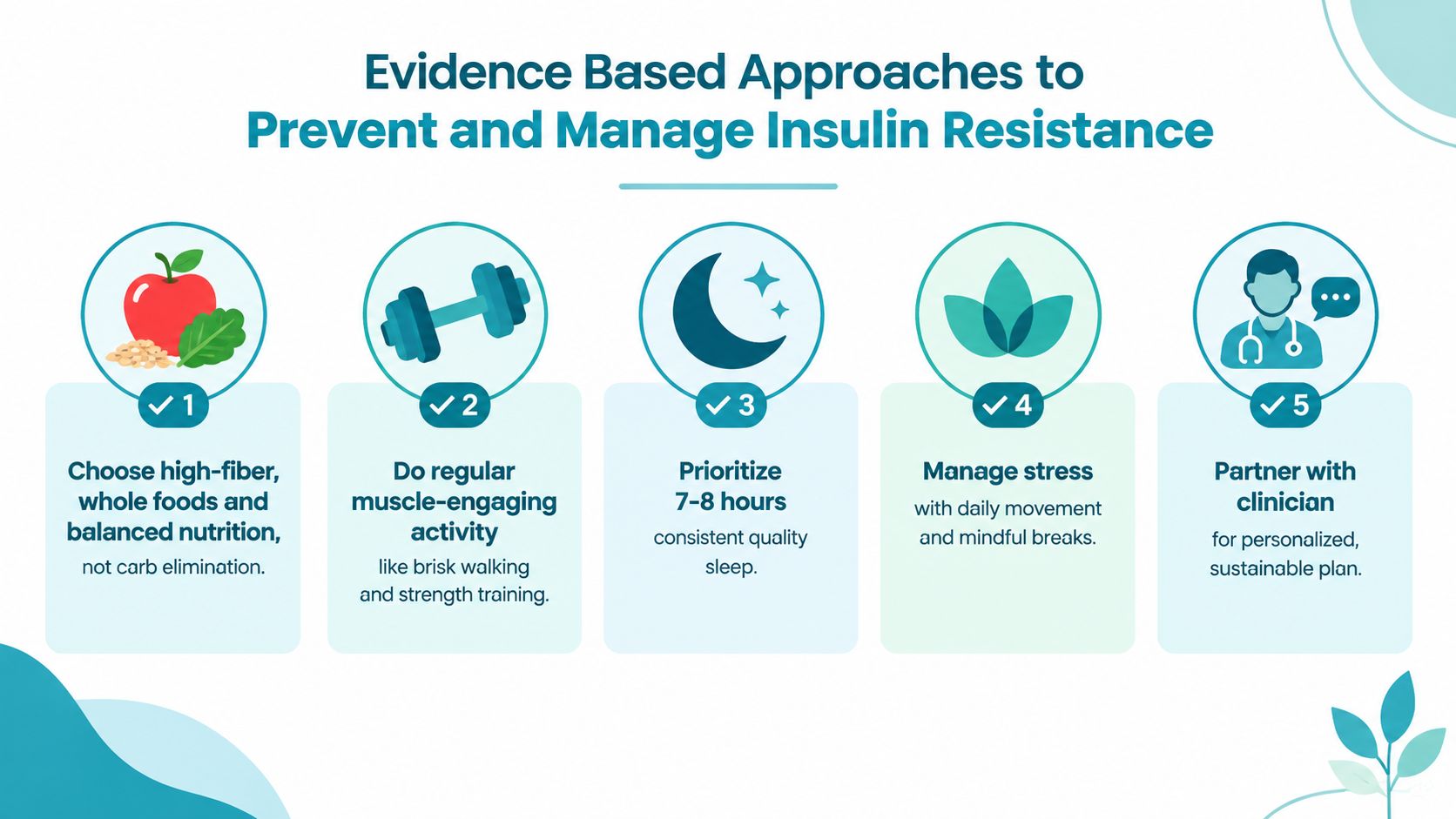
Care should focus on sustainable changes and validated outcomes, not punishment or extreme restriction. Insulin resistance doesn't require eliminating all carbohydrates. Food quality, fiber, activity, sleep, smoking cessation, stress support, medication review, and weight management may all matter, with priorities chosen according to the individual.
Muscle activity is especially relevant because active muscle can take up glucose. Walking, resistance exercise, and other regular movement can be considered within a person's abilities and medical context. Nutrition plans may emphasize fiber-rich foods and balanced meals rather than a rigid list of forbidden foods.
Sleep deserves equal attention. Short or irregular sleep and untreated sleep apnea may make appetite regulation, activity, weight management, and glucose control harder. A clinician may ask about loud snoring, witnessed breathing pauses, morning headaches, or unrefreshing sleep when the broader pattern suggests sleep-disordered breathing.
A practical one-week monitoring checklist
A short log can reveal patterns without turning health into a numbers competition:
- Sleep: Record bedtime, wake time, regularity, perceived restfulness, snoring, and possible breathing pauses.
- Activity: Note walking, strength-focused movement, prolonged sitting, and how activity affects energy or function.
- Meals: Record meal timing, fiber-rich foods, beverages, highly processed foods, and hunger patterns without moral labels.
- Symptoms: Note fatigue or cravings, but treat them as observations rather than proof of insulin resistance.
- Clinical markers: Ask which follow-up measures are appropriate, such as A1C, fasting glucose, blood pressure, lipids, waist trend, weight trend, activity, sleep, and function.
Practical rule: Track outcomes that clinicians can validate. Don't chase insulin resistance with an unvalidated home insulin test.
Medication may be considered in some situations, but it requires individualized clinical judgment. FDA-approved medicines have specific indications, contraindications, and monitoring requirements. Off-label use is different from FDA-approved use, and a physician should explain the evidence and purpose before recommending it. This article doesn't provide dosing or instructions to start, stop, or change medication.
Modest, sustained weight loss may improve metabolic risk when it's clinically appropriate, but it's one tool among several. The central goal is better health and function, not a particular appearance or guaranteed result.
When to Seek Physician Led Care and What to Ask Next
Insulin resistance can remain silent, so consider a clinical discussion even without clear symptoms. Reasons to seek evaluation include repeated abnormal glucose results, high triglycerides, low HDL cholesterol, hypertension, a family history of type 2 diabetes, polycystic ovary syndrome, possible sleep apnea, fatty liver concerns, or previous gestational diabetes. Fatigue and other nonspecific symptoms may have several causes and should not be treated as proof by themselves.
Bring a short record of relevant results, medicines, sleep concerns, and health changes. Ask:
- Which validated glucose test fits my situation?
- How should glucose, lipids, blood pressure, sleep, and medication history be interpreted together?
- Could sleep apnea or another condition help explain my fatigue?
- Which change is most practical to address first?
- Which measures should we follow, and when should they be reassessed?
There is no single universal cutoff that confirms insulin resistance in every person. Validated glycemic tests, such as A1C or glucose testing, are used to assess prediabetes and diabetes. Fasting insulin and calculated insulin-resistance measures can provide context in research or selected clinical settings, but their interpretation varies with the assay and clinical situation. A clinician can explain which results are actionable rather than encouraging repeated, unvalidated home testing.
Physician-led obesity medicine may include medical and metabolic assessment, review of relevant health factors, individualized weight-management planning, medication management when appropriate, and follow-up based on response and progress. Learn more about physician-led weight-management care to decide whether this type of evaluation suits your needs.
Frequently asked questions
Do I need to stop eating carbohydrates?
No. A sustainable eating pattern can include carbohydrates while considering food quality, fiber, portions, meal timing, and personal response. Extreme restriction is not automatically safer or more effective.
Why include sleep in a metabolic evaluation?
Sleep influences appetite, activity, weight regulation, and glucose regulation. Untreated sleep apnea may also increase metabolic risk, making sleep history an important part of assessment rather than a diet-only review.
Empire Medical Wellness provides physician-led obesity medicine evaluations that may include medical and metabolic assessment, individualized planning, and follow-up for adults concerned about insulin resistance and related risks. This article is educational and does not diagnose insulin resistance or replace evaluation by a qualified healthcare professional.