
For short-acting opioids, withdrawal manifestations can begin 8 to 24 hours after the last dose, often moving from yawning, tearing, and sweating to gastrointestinal and affective symptoms. Withdrawal is usually not fatal by itself, but dehydration, co-occurring illness, severe psychiatric symptoms, or return to use can make the situation dangerous.
You may be searching this while feeling restless, unable to sleep, anxious, achy, nauseated, or pulled strongly toward another dose. Those symptoms can feel alarming, especially when they arrive in waves. Opioid withdrawal is a recognizable rebound syndrome, not a moral failing, and its pattern can help clinicians decide how urgently you need care.
The most useful distinction is between withdrawal and overdose. Withdrawal usually causes an activated state, with sweating, dilated pupils, restlessness, diarrhea, and a fast pulse. Slow or absent breathing, unresponsiveness, or inability to awaken someone suggest overdose, not ordinary withdrawal. Give naloxone if available and call 911 in that situation.
Table of Contents
- What Opioid Withdrawal Manifestations Are and When They Begin
- Early, Peak, and Late Phases of Opioid Withdrawal
- Physical, Affective, and Cognitive Symptoms Beyond the Flu-Like Picture
- How Opioid Type, Dose History, and Patient Factors Change the Timeline
- How Clinicians Measure and Monitor Withdrawal Severity
- Red Flags That Require Urgent Medical Attention
- Why Physician-Led Outpatient Care Is Safer Than Unsupervised Detox
What Opioid Withdrawal Manifestations Are and When They Begin
After the body adapts to regular opioid exposure, a substantial reduction or interruption can trigger withdrawal. Opioids dampen autonomic activity and slow movement through the gastrointestinal tract. Removing that effect allows both systems to rebound, creating the recognizable syndrome described in the NCBI clinical overview of opioid withdrawal. The process resembles a thermostat overshooting after prolonged suppression: several body systems may become overactive at once.
With a short-acting opioid, early manifestations may begin 8 to 24 hours after the last use, according to SAMHSA TIP 63. Individual timing varies, so treat this range as approximate rather than exact. The opioid's duration of action matters most, while exposure history, physical health, and other medications can shift the onset.
Why the symptoms feel so broad
Withdrawal extends beyond a “flu-like” picture. Early autonomic manifestations may include watery eyes, runny nose, yawning, sweating, gooseflesh, dilated pupils, insomnia, muscle aches, and anxiety. As the syndrome develops, a person may experience a rapid heart rate, raised blood pressure, chills, fever, abdominal cramps, nausea, vomiting, or diarrhea. Irritability, agitation, and difficulty concentrating can add a neuropsychiatric burden that is easy to overlook.
Visible findings and personal distress do not always match. Someone can feel profoundly unwell before examination findings become obvious. Another person may underreport symptoms despite marked autonomic activation or significant gastrointestinal fluid loss. Clinicians therefore combine the history with observed signs and vital measurements when judging severity.
Practical rule: Vomiting or diarrhea changes the safety assessment because fluid loss can become medically significant.
Withdrawal is often intensely uncomfortable, while danger usually comes from complications or the surrounding circumstances. Dehydration, pregnancy, serious illness, infection, confusion, suicidal thoughts, sedative or stimulant use, and plans to resume opioids after tolerance falls all warrant medical assessment. A confidential outpatient addiction medicine evaluation can distinguish expected withdrawal from complications and connect symptoms with treatment for opioid use disorder.
Early, Peak, and Late Phases of Opioid Withdrawal
Withdrawal usually develops in stages rather than arriving as one abrupt event. The sequence is fairly recognizable, but its speed and intensity depend on the opioid, duration of use, and individual physiology. Early changes often reflect increased autonomic activity. As that rebound builds, gastrointestinal symptoms, temperature changes, sleep disruption, and emotional distress may become more prominent.
A practical symptom timeline
| Phase | Common manifestations | How to interpret the pattern |
|---|---|---|
| Early | Lacrimation, rhinorrhea, yawning, sweating, gooseflesh, dilated pupils, insomnia, anxiety, and muscle aches | The nervous system is rebounding after opioid suppression |
| Peak or escalating | Restlessness, stronger body aches, tachycardia, elevated blood pressure, chills, abdominal cramps, nausea, vomiting, and diarrhea | Autonomic and gastrointestinal activation may become more prominent |
| Later or residual | Fatigue, disrupted sleep, low mood, heightened pain, irritability, and craving | Physical symptoms may ease while affective symptoms continue |
With short-acting opioids, withdrawal may begin within the 8 to 24 hour range discussed earlier. Long-acting opioids generally produce a later onset because the medication remains active for longer. A clock can provide context, but it cannot determine whether symptoms are safe to manage at home. The person's examination, hydration, mental state, and other substances used matter more than timing alone.
The order reflects changing body systems. Early autonomic rebound may disturb sleep and create restlessness before intestinal activity becomes more pronounced. Symptoms can overlap, appear in a different order, or intensify quickly, so the table describes a pattern rather than a schedule.
A labeled composite example
Hypothetical composite: An adult stops a short-acting opioid and first develops yawning, tearing, sweating, insomnia, and restlessness. Later, dilated pupils, muscle or bone pain, abdominal cramps, nausea, vomiting, or diarrhea appear. This example illustrates a typical sequence, not a prediction for any individual and not an Empire patient story.
The physical peak is not necessarily the end of withdrawal. Craving, low mood, insomnia, fatigue, and increased pain may continue after gastrointestinal symptoms improve. These residual manifestations can affect work, relationships, sleep, and recovery decisions. A person who returns to opioid use after tolerance has fallen also faces a different risk profile, so persistent symptoms should prompt clinical guidance rather than unsupervised dose changes.
Physical, Affective, and Cognitive Symptoms Beyond the Flu-Like Picture
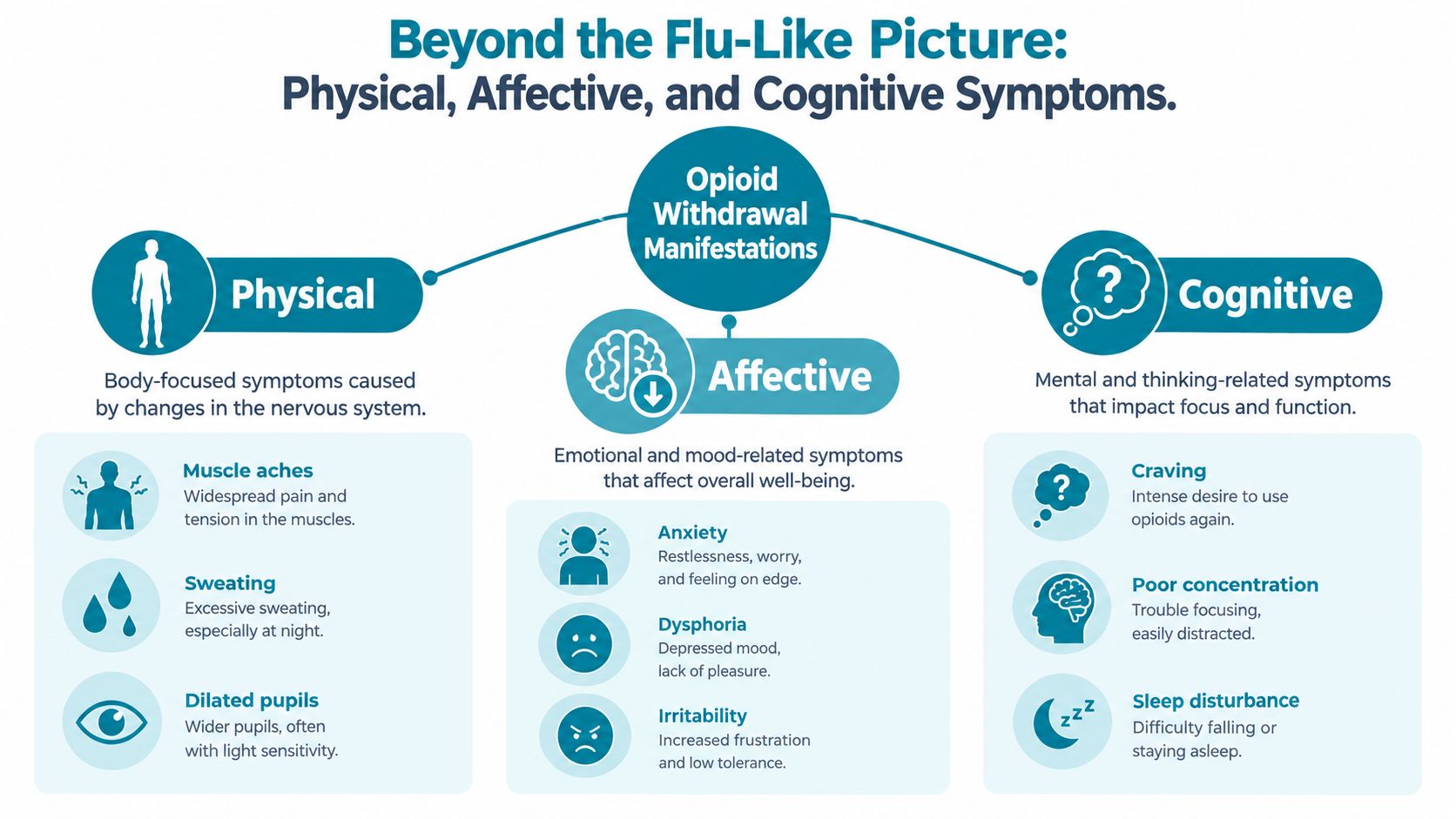
A person may come to a clinic expecting flu-like symptoms, yet describe something broader: pain feels sharper, sleep has become impossible, thoughts are scattered, and craving dominates attention. Opioid withdrawal affects physical, affective, and cognitive manifestations, so the experience can change how someone feels, thinks, sleeps, and responds to stress.
Physical symptoms are only one part
Physical manifestations may include increased pain, muscle aches, headaches, dizziness, fatigue, sweating, dilated pupils, chills, gastrointestinal upset, and severe sleep disruption. Pain can be especially confusing when opioids were first used for another painful condition. The return of pain may reflect withdrawal-related sensitivity, the underlying condition, or both. Clinical assessment helps separate these possibilities.
Affective symptoms include anxiety, irritability, dysphoria, low mood, reduced ability to experience pleasure, and intense craving. These feelings can make another dose seem like the only dependable route back to normal. That reaction is understandable, but repeated short-term relief can reinforce physical dependence and lead to another withdrawal episode.
Cognitive symptoms may include poor concentration, memory problems, mental fog, and difficulty organizing ordinary tasks. Sleep loss can amplify all of them. Someone who appears distracted, unusually irritable, or unable to follow a conversation may be experiencing withdrawal together with exhaustion, anxiety, medication effects, or another medical condition.
The NCBI review of opioid withdrawal discusses these less visible features, including atypical neuropsychiatric presentations. Fluctuating consciousness, disorientation, perceptual disturbances, and psychomotor changes fall outside the usual uncomplicated pattern. They call for prompt clinical assessment rather than reassurance alone.
When mental and neurologic symptoms need escalation
Withdrawal can resemble a psychiatric or neurologic disorder, so severe mood or cognitive changes should not automatically be assigned to withdrawal. Confusion, altered consciousness, hallucination-like experiences, inability to remain safe, or suicidal thoughts require urgent evaluation.
A mental-health evaluation may help when mood symptoms are severe, persistent, or difficult to distinguish from a primary psychiatric condition. Safety and medical assessment come first. Clinicians may also consider infection, intoxication, medication interactions, sleep deprivation, head injury, or another neurologic cause.
How Opioid Type, Dose History, and Patient Factors Change the Timeline
A person who stops a short-acting opioid may feel withdrawal within hours, while someone stopping a long-acting drug may feel well at first and worsen later. The opioid's half-life, meaning how long the body takes to reduce the active drug, helps explain this difference. It affects both the time to onset and how long symptoms persist.
| Factor | Typical effect on withdrawal |
|---|---|
| Short-acting opioid | Withdrawal may begin sooner, with early signs appearing in the 8 to 24 hour range after the last use |
| Long-acting opioid | Onset may be delayed, and symptoms may continue longer because the drug remains active |
| Amount and duration of exposure | Greater physical dependence can produce more substantial withdrawal, although individual experiences vary |
| Tapering context | A gradual, clinician-guided reduction may produce a different pattern from abrupt interruption |
| Pregnancy, pain, infection, or organ dysfunction | These factors can alter symptoms, risks, and the need for medical supervision |
| Sedative or stimulant co-use | Other substances can change alertness, vital signs, mental status, and overdose risk |
| Uncertain illicit supply | The last dose and opioid type may be unclear, particularly when illicit fentanyl may be involved |
Methadone and other long-acting opioids may produce later, more prolonged withdrawal than short-acting agents. Immediate-release oxycodone and similar formulations generally produce an earlier response. Illicit fentanyl adds uncertainty because a person may not know the product's contents, potency, or duration of action. The fentanyl education page from Empire Medical Wellness explains related risks, but no webpage can identify what was present in an unregulated product.
Dose history matters too. Longer exposure and greater physical dependence can increase intensity, while the route of administration may influence how quickly effects fade. Liver or kidney dysfunction, pregnancy, chronic pain, infection, poor sleep, psychiatric illness, and sedative or stimulant co-use can change the symptoms and their risks. A reported last dose may be incomplete or inaccurate, so clinicians compare the timeline with current symptoms and objective findings.
Tolerance can fall during abstinence. Returning to a previously familiar amount can therefore create a serious overdose risk, even if the person believes the amount is “normal” for them.
Use these comparisons to understand why timelines differ, and bring your specific history to a clinician rather than self-scheduling a detox.
How Clinicians Measure and Monitor Withdrawal Severity
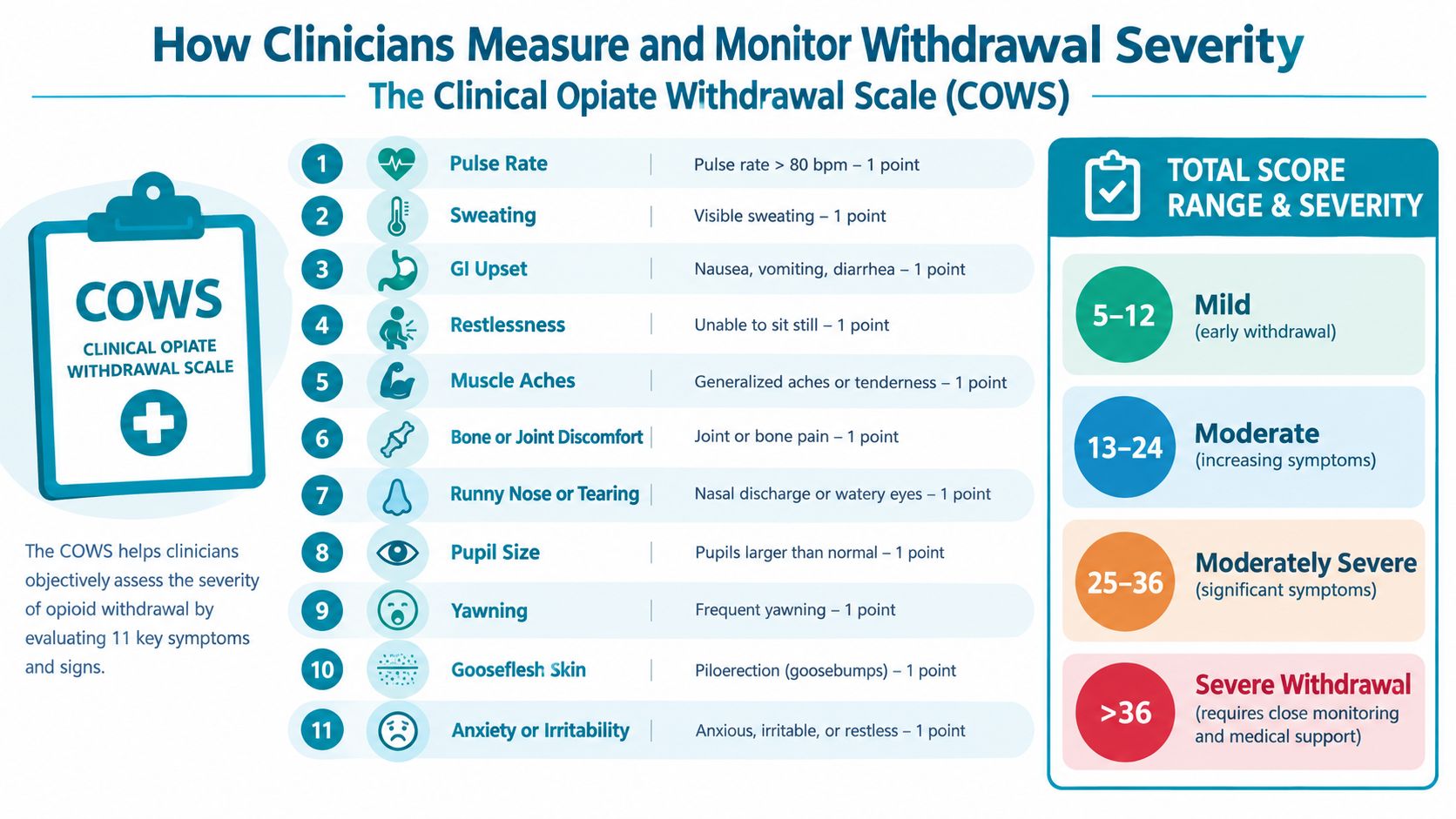
A clinician can turn a changing symptom picture into a trackable pattern. The Clinical Opiate Withdrawal Scale, or COWS, is an 11-item clinician-rated tool that estimates withdrawal severity over time. It includes findings that can be observed or reported, such as pulse elevation, sweating, restlessness, pupil size, bone or joint aches, gastrointestinal symptoms, tremor, yawning, anxiety, and gooseflesh.
What the COWS bands mean
The NIDA COWS tool groups scores into these severity bands:
- 5 to 12: Mild withdrawal.
- 13 to 24: Moderate withdrawal.
- 25 to 36: Moderately severe withdrawal.
- More than 36: Severe withdrawal.
A COWS score supports clinical assessment, while the full picture still includes the person's history, examination, vital signs, mental status, and safety needs. Scores may rise or fall as symptoms develop, so clinicians can repeat the assessment to see whether withdrawal is escalating, improving, or responding to treatment.
A safety-focused outpatient checklist
Outpatient monitoring also examines:
- Substance and medication history: The opioid, formulation, amount, duration, route, last known use, prescribed medications, and other substances.
- Vitals and hydration: Pulse, blood pressure, temperature, vomiting, diarrhea, fluid intake, and urine output show how much physiologic strain is developing.
- Mental status: Anxiety, mood, confusion, perceptual changes, suicidal thoughts, and the person's ability to remain safe require direct discussion.
- Pregnancy and medical conditions: Pregnancy, cardiovascular disease, infection, chronic pain, and organ dysfunction can change treatment planning and urgency.
- Overdose prevention: Clinicians assess return-to-use risk and access to naloxone.
- Ongoing care: Monitoring can lead to evaluation for buprenorphine, methadone, or naltrexone when clinically appropriate, alongside continuing opioid use disorder care.
Severe vomiting or diarrhea, dehydration, chest pain, confusion, pregnancy concerns, suicidal thoughts, or inability to remain safe warrant same-day escalation. Every COWS score should prompt a concrete next step, such as continued observation, medication initiation, or a higher level of care.
Red Flags That Require Urgent Medical Attention
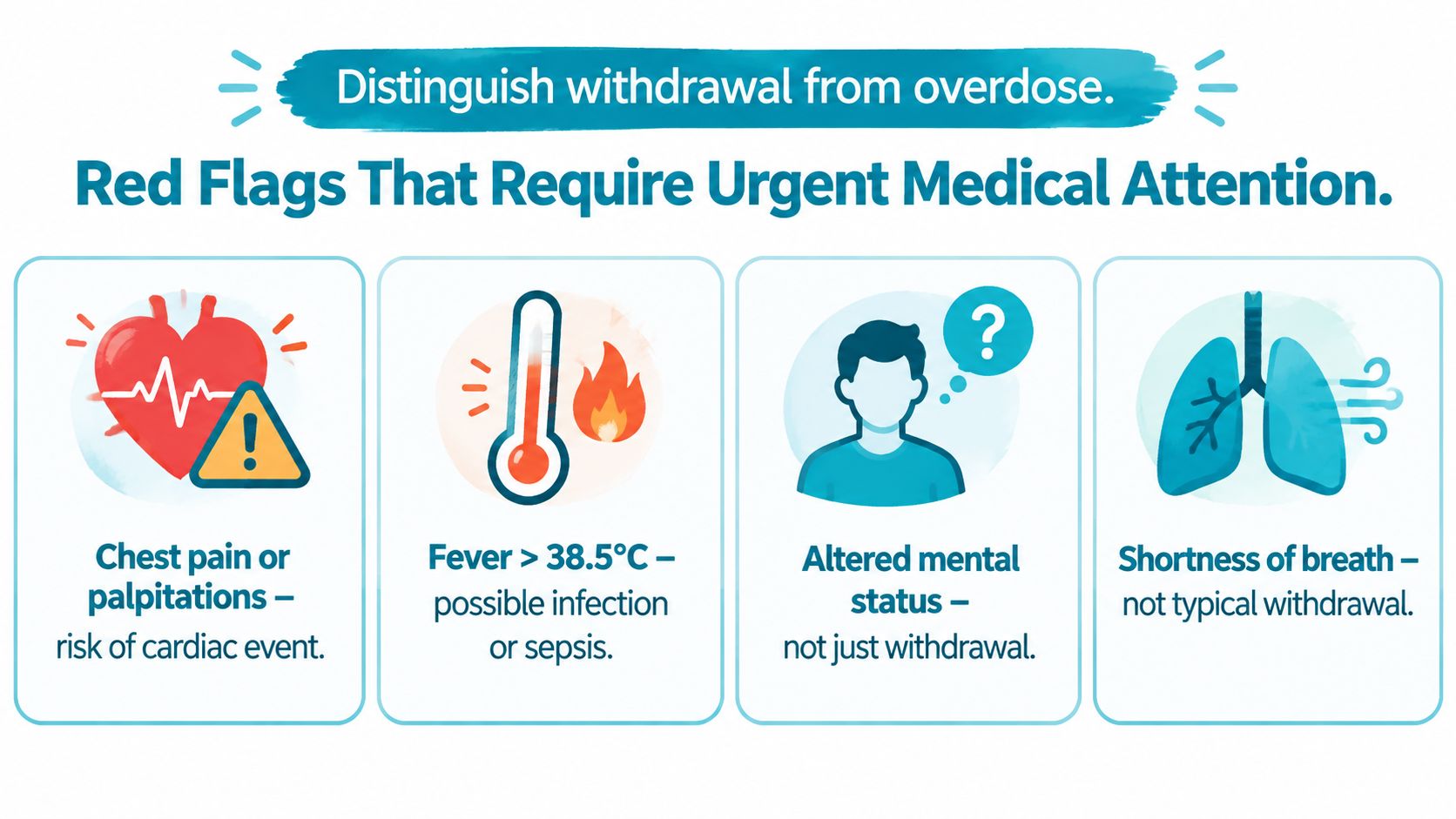
A person may be awake, uncomfortable, and experiencing ordinary opioid withdrawal, yet still need prompt medical assessment. Severe vomiting and diarrhea can cause extreme dehydration, and fluid loss may become life-threatening. Body aches, diarrhea, restlessness, irritability, craving, yawning, gooseflesh, and insomnia can occur during withdrawal, as described in the SAMHSA overdose prevention and response toolkit.
Use this escalation framework
Contact a physician the same day when symptoms are worsening quickly, fluids cannot be kept down, pregnancy is possible, a significant medical condition is present, or anxiety, depression, craving, or insomnia is making it hard to remain safe.
Seek urgent medical attention for repeated vomiting or diarrhea, signs of severe dehydration, chest pain, severe palpitations, high fever, new confusion, altered consciousness, unusual perceptual experiences, or severe weakness. These findings can indicate a complication or another illness alongside withdrawal.
Call 911 immediately for slow or absent breathing, blue or gray lips, unresponsiveness, or inability to awaken someone. Give naloxone if available, follow its instructions, and remain with the person until emergency help arrives. These signs point to a possible overdose and require an emergency response. Guidance on obtaining and using naloxone is available through Empire's naloxone resource.
Most withdrawal symptoms, while intensely uncomfortable, do not require emergency care. Slow breathing, blue lips, or unresponsiveness signal a possible overdose and demand immediate action.
Withdrawal may coexist with infection, pregnancy-related complications, dehydration, medication interactions, intoxication with another substance, or a psychiatric emergency. A clinician should consider the entire presentation, especially when symptoms are unusual, severe, or progressing faster than expected.
Why Physician-Led Outpatient Care Is Safer Than Unsupervised Detox
Unsupervised detox can end when the acute symptoms ease, even though opioid use disorder care continues. Craving, disrupted sleep, low mood, and increased pain may persist for weeks. Lost tolerance can also make a return to opioid use more dangerous, because a previously familiar amount may now cause overdose.
A physician-led outpatient assessment connects the withdrawal timeline with the longer recovery plan. It can review substance exposure, medical history, mental health, pregnancy possibility, overdose risk, and treatment goals. When appropriate, shared decision-making may consider buprenorphine, methadone, or naltrexone, with monitoring during treatment changes and coordination with outside clinicians or programs when authorized.
Empire Medical Wellness provides confidential outpatient addiction medicine assessment, medication management, monitoring, and recovery planning for adults in New York, New Jersey, Connecticut, Pennsylvania, and Virginia, through telemedicine and in-person appointments. The practice does not provide emergency, detoxification, inpatient, residential, partial-hospitalization, or intensive-outpatient services. Information about buprenorphine care for opioid use disorder should be discussed with a qualified clinician, not used as a self-directed medication plan.
This approach helps address both the acute phase and the weeks that follow, when relapse-prevention planning and support remain relevant.