
Nearly 30,000 overdose deaths in the United States involved cocaine in 2023, representing about 28% of all overdose deaths, according to the Centers for Disease Control and Prevention. That figure reflects two overlapping dangers: cocaine's direct effects on the heart and brain, and an unpredictable drug supply in which fentanyl or other substances may be present. Cocaine use isn't a moral failure. It's a medical and public-health concern that deserves accurate information, prompt attention to emergencies, and nonjudgmental care.
Byline: Empire Medical Wellness Editorial Team
Published: August 25, 2026
Updated: August 25, 2026
Table of Contents
- Understanding Cocaine Use and Overdose Trends
- How Cocaine Affects the Brain and Body
- Short-Term and Long-Term Health Consequences
- The Fentanyl Contamination Risk
- Recognizing Warning Signs and Emergency Symptoms
- Evidence-Based Outpatient Assessment and Treatment
- Harm Reduction, Recovery Planning, and Next Steps
- Sources
Understanding Cocaine Use and Overdose Trends
The current cocaine situation is more complicated than a simple question of whether someone uses “a lot” or “only occasionally.” The United Nations Office on Drugs and Crime estimated that about 25 million people worldwide used cocaine in 2024, equal to 0.47% of the population aged 15 to 64. Use was higher among men, at 0.7%, than women, at 0.24%. The same UNODC data reported record global illicit cocaine manufacture of 4,100 tons in 2024, with coca cultivation reaching 385,100 hectares, almost triple its 2014 level.
In the United States, cocaine-involved overdose deaths have become part of a broader overdose crisis. A CDC analysis found that overdose death rates involving cocaine more than doubled from 2016 to 2021. The CDC also reported that rates were higher in males than females in 2021. These trends don't prove that every local supply has changed in the same way, but they do show why personal experience with a familiar source can't establish safety.
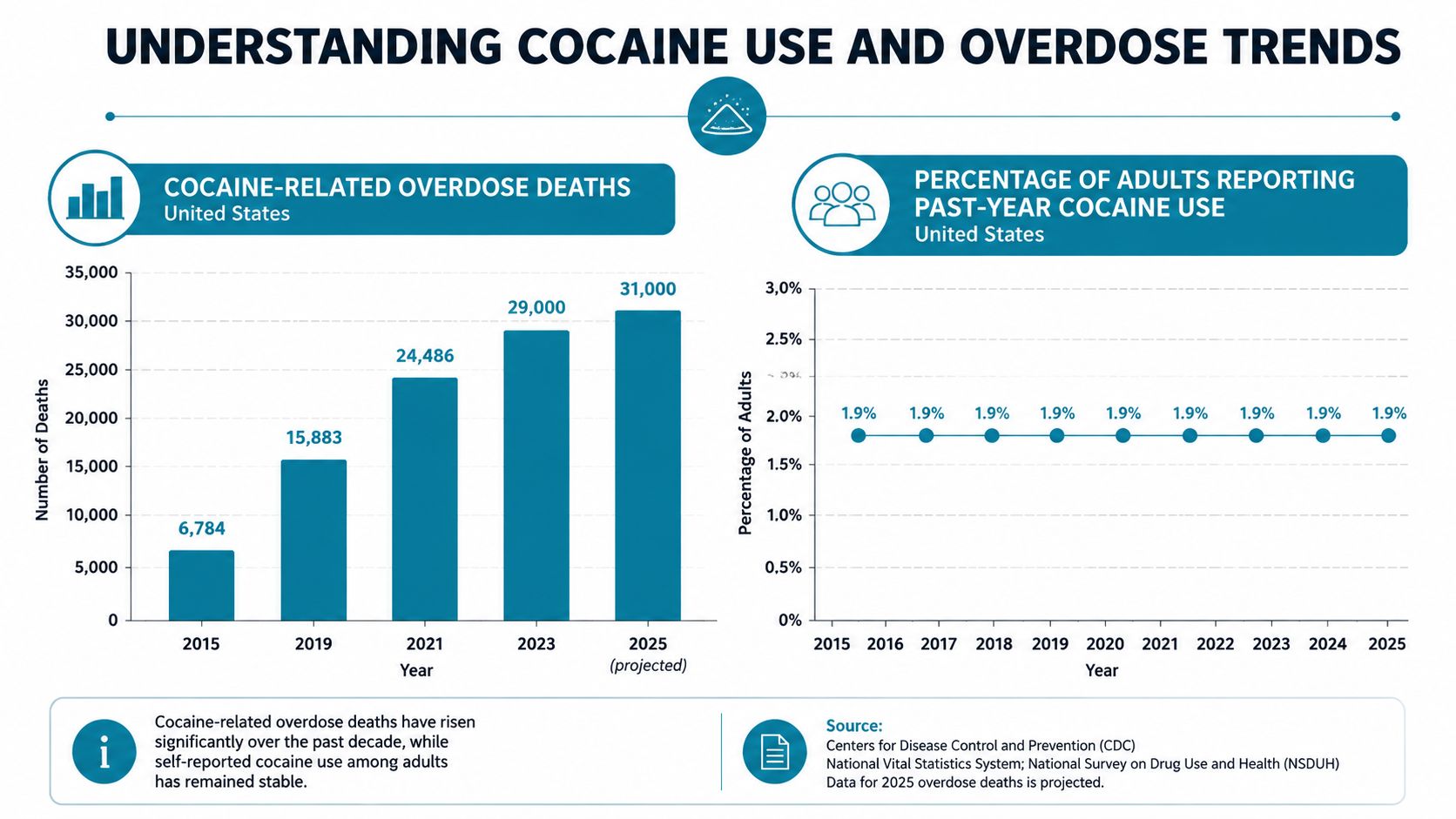
Two separate risk pathways
Intrinsic cocaine toxicity can produce severe cardiovascular and neurologic complications even when fentanyl isn't involved. Cocaine increases sympathetic nervous system activity, raising the heart's workload while narrowing blood vessels. It can also contribute to seizures, dangerous agitation, stroke, and impaired judgment.
Contamination-related toxicity creates a different pathway. Illegally manufactured fentanyl may be present without reliable visual, odor, or taste clues. CDC clinical drug-testing data showed a 38.0% increase in urine specimens positive for cocaine without fentanyl or heroin from October to December 2024 to the same period in 2025, while cocaine-with-fentanyl-or-heroin positives fell 39.0% over that period, as reported in the CDC Clinical Drug Testing and Toxicosurveillance findings. Cocaine-only detection doesn't mean cocaine itself is safe, and a change in testing patterns doesn't eliminate regional variation.
Practical rule: Treat cocaine-related risk as both a direct stimulant problem and a possible mixed-drug exposure. One explanation doesn't cancel the other.
Readers researching the medical use and regulated availability of cocaine hydrochloride should distinguish that narrow prescription context from illicit cocaine use. A pharmacy stock guide for cocaine hydrochloride may help explain the product name, but it isn't a safety guide for nonmedical use. For broader prevention information, see Empire Medical Wellness overdose-prevention resources.
How Cocaine Affects the Brain and Body
Cocaine's central effect is easier to understand if you think of dopamine as a chemical signal involved in motivation and reward. Cocaine blocks monoamine transporters, especially the dopamine transporter, so dopamine isn't cleared from the synapse as it normally would be. Dopamine then accumulates, amplifying reward signaling in mesolimbic pathways, according to the National Institute on Drug Abuse overview of cocaine.
Cocaine also inhibits serotonin and norepinephrine transporters. That broader action helps explain why the experience can include not only euphoria, but also alertness, restlessness, anxiety, increased heart rate, sweating, and other autonomic effects. The same biology that makes the drug reinforcing can increase physical strain.
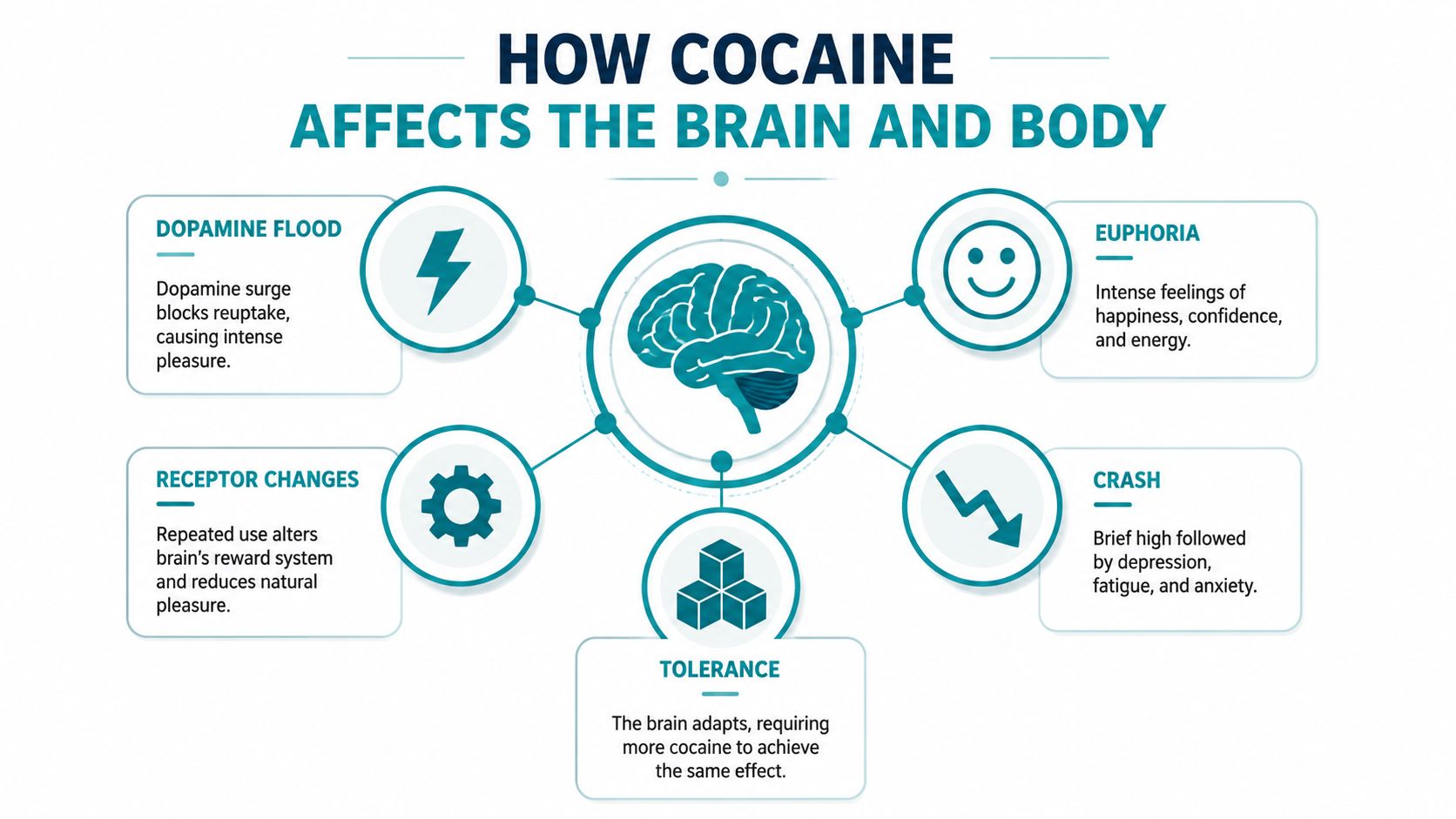
From reward to crash
The high is often followed by a crash, which may involve fatigue, low mood, irritability, anxiety, sleep changes, and renewed cravings. A person may use again not to feel euphoric, but to escape the unpleasant contrast that follows. That cycle can make cocaine seem like a short-term solution while reinforcing a longer-term pattern.
Repeated exposure can alter the brain's reward system and change how strongly ordinary activities compete with cocaine-related cues. Tolerance, craving, and loss of control aren't signs of weak character. They are clinical concerns that a qualified clinician should assess in the context of a person's history, mental health, other substances, and physical safety.
Observable signs can include unusually rapid or pressured speech, marked agitation, reduced sleep, suspiciousness, or a noticeable shift between stimulation and exhaustion. None of these signs proves cocaine use or establishes a diagnosis. They should be treated as reasons for a calm conversation, especially if the person also reports chest symptoms, severe anxiety, or thoughts of self-harm.
A physician will look beyond a single symptom. The relevant questions include what substance was used, when it was used, whether other drugs or medications were involved, and whether the person has a history of heart disease, seizures, mood symptoms, or psychosis.
Short-Term and Long-Term Health Consequences
Cocaine can create an acute medical emergency within a short period, while repeated use can contribute to persistent cardiovascular, psychiatric, and neurologic problems. The distinction matters because chest pain or confusion after cocaine isn't something to monitor casually at home.
The cardiovascular danger reflects a mismatch between oxygen demand and oxygen supply. Sympathetic activation increases heart rate and contractility, which raises demand. At the same time, vasoconstriction narrows blood vessels and limits supply. Human and animal data summarized in NCBI Bookshelf's clinical review of cocaine toxicity describe an early fall in coronary perfusion pressure of 13% to 68%, followed by sustained narrowing of major coronary arteries of about 5% to 30%. Distal microvascular effects, endothelin-1 elevation, reduced nitric-oxide activity, and platelet activation can further contribute to ischemia and thrombosis.
Cocaine health effects by timeframe
| Timeframe | Cardiovascular effects | Neurological and psychiatric effects | When to seek emergency care |
|---|---|---|---|
| During or soon after use | Rapid heart rate, increased contractility, vasoconstriction, ischemia, rhythm disturbance | Agitation, anxiety, paranoia, confusion, seizure risk | Chest pain, fainting, severe shortness of breath, seizure, collapse, or severe confusion |
| After the immediate effects | Ongoing cardiovascular strain may persist, especially with additional substances or underlying disease | Crash, exhaustion, depressed mood, irritability, intense craving | Any worsening chest or neurologic symptom, inability to stay awake, or concern for self-harm |
| Repeated use over time | Recurrent ischemic stress, rhythm problems, and other cardiovascular complications | Persistent mood changes, impaired judgment, anxiety, paranoia, or substance-related functional problems | Emergency symptoms can occur at any stage and shouldn't be attributed to anxiety without evaluation |
The longer-term picture
Repeated cocaine use can affect sleep, appetite, mood, relationships, work, and financial stability. It may also worsen an existing anxiety disorder, depression, trauma-related condition, or psychotic illness. When cocaine is combined with alcohol, opioids, sedatives, or prescription medications, the clinical picture becomes harder to interpret and may become more dangerous.
A person can look outwardly well and still have serious internal cardiovascular risk. Conversely, a symptom such as anxiety can have several causes, including stimulant effects, panic, arrhythmia, or reduced oxygen delivery. A medical evaluation is safer than guessing.
The Fentanyl Contamination Risk
The statement “cocaine is safe if it doesn't contain fentanyl” confuses two different questions. Cocaine without fentanyl can still cause heart attack, dangerous rhythm disturbances, stroke, seizure, severe agitation, and other complications. Fentanyl contamination adds a separate opioid-overdose pathway, particularly because a person who expects a stimulant may not recognize opioid toxicity quickly.
Testing trends support a nuanced interpretation. As noted above, CDC data found a 38.0% increase in specimens positive for cocaine without fentanyl or heroin between the specified late-2024 and late-2025 periods, while cocaine-with-fentanyl-or-heroin positives fell 39.0%. These findings don't establish the contents of every individual sample, and they don't show that a person can identify contamination by examining a substance. They do show why “cocaine-only” and “cocaine plus fentanyl” should be discussed as related but distinct risks.
What harm reduction can and can't do
People who aren't ready to stop using still deserve practical, respectful safety information. Avoiding use alone can make it more likely that someone notices a medical emergency and calls for help. Fentanyl test strips may identify fentanyl in some samples, but test results can have limitations, and a negative result doesn't remove cocaine's intrinsic toxicity or guarantee safety. No testing approach can make illicit cocaine predictable.
Naloxone can reverse opioid overdose, but it doesn't reverse cocaine toxicity. If a person is unresponsive or breathing abnormally, call emergency services immediately and use naloxone if it's available and opioid exposure is possible. The CDC's overdose prevention guidance explains the role of naloxone and emergency response, while Empire Medical Wellness fentanyl information offers additional educational context.
Remember: A stimulant overdose and an opioid overdose can overlap. Unresponsiveness or abnormal breathing requires emergency action, regardless of what the person intended to take.
Recognizing Warning Signs and Emergency Symptoms
The most useful decision is often the simplest one. If someone has chest pain, severe difficulty breathing, a seizure, collapse, extreme overheating, severe confusion, or cannot be awakened, call 911. Don't wait for the person to “sleep it off,” and don't assume that a known history of anxiety explains a new or severe symptom.
Cocaine use red flags and response guide
| Symptom or behavior | Severity level | Immediate action | Follow-up recommendation |
|---|---|---|---|
| Chest pain, pressure, fainting, or severe shortness of breath | Emergency | Call 911 and stay with the person if safe | Medical evaluation is needed before outpatient planning |
| Seizure, collapse, severe confusion, or inability to awaken | Emergency | Call 911; provide naloxone if opioid exposure is possible and it's available | Emergency clinicians should assess mixed-drug exposure and complications |
| Extreme agitation, dangerous behavior, or very high body temperature | Emergency | Call 911; keep distance if the environment is unsafe | Psychiatric and medical follow-up after stabilization |
| New weakness, trouble speaking, severe headache, or loss of coordination | Emergency | Call 911 because stroke or another neurologic emergency is possible | Urgent medical assessment is required |
| Increasing frequency, cravings, loss of control, or inability to meet responsibilities | Concerning, not necessarily emergent | Discuss care when the person is calm and sober | Arrange an addiction-medicine or behavioral-health assessment |
| Recurrent low mood, panic, insomnia, or thoughts of self-harm | Urgent to emergency depending on immediacy | Call 911 or seek crisis help when immediate danger is present | Arrange prompt mental-health and substance-use evaluation |
A calm response from family and friends
Start with observations rather than accusations. “I'm worried because you've had chest symptoms and haven't been sleeping” is more useful than a label or confrontation. Ask whether the person is safe now, whether they used anything else, and whether they're willing to speak with a clinician.
Don't search through belongings, threaten consequences, or attempt to manage a medical crisis alone. If the person expresses an immediate intent to harm themselves or someone else, or can't remain safe, treat that as an emergency. For opioid-overdose preparedness, naloxone education from Empire Medical Wellness can supplement, but not replace, emergency services.
Evidence-Based Outpatient Assessment and Treatment
A careful outpatient assessment begins with substance and timing, not judgment. The clinician may ask what was used, how it was taken, when it was last used, how often use occurs, and whether alcohol, opioids, sedatives, prescriptions, or other substances are involved. The assessment should also include sleep, mood, anxiety, psychosis symptoms, suicidal thinking, medical history, medications, allergies, and prior treatment.
The next step is safety screening. A clinician considers chest pain, neurologic symptoms, temperature concerns, breathing, mental status, vital signs, and relevant physical findings. Depending on the history and examination, the clinician may consider electrocardiography, toxicology testing, or laboratory evaluation, but the appropriate tests and timing depend on the clinical question. A test doesn't replace a conversation, and a normal result at one moment doesn't establish long-term safety.
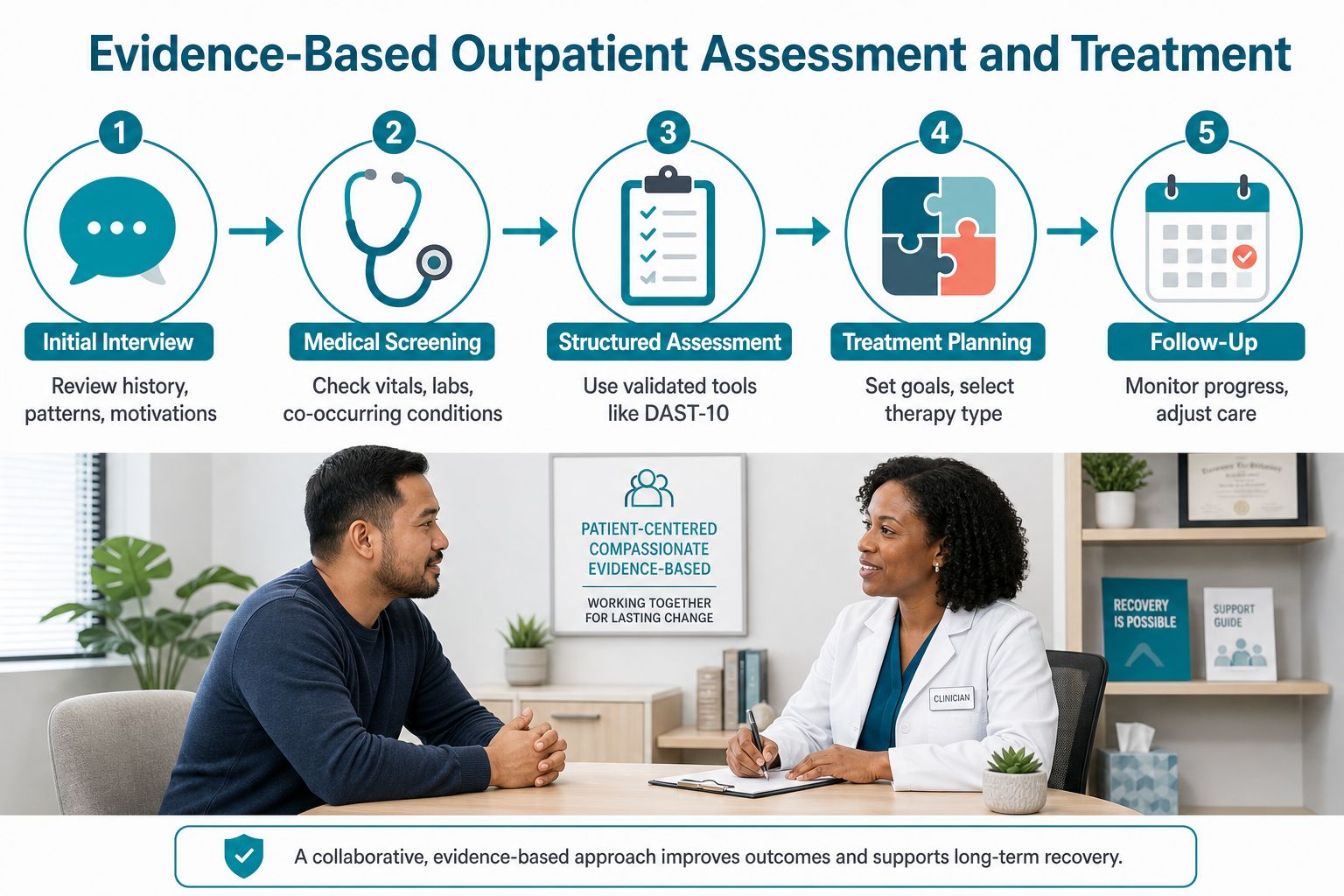
A labeled hypothetical example
Hypothetical example, not an Empire patient: An adult reports recurrent cocaine use, several nights of poor sleep, and episodes of racing heartbeat. The clinician first identifies the substance and timing, then asks directly about chest pain, fainting, shortness of breath, weakness, severe headache, seizures, temperature concerns, and suicidal thoughts.
If an emergency warning sign is present, outpatient planning pauses while emergency evaluation takes priority. If no urgent sign is present, the clinician can review cardiovascular history, mental-health symptoms, other substances and medications, relevant measurements, and whether laboratory or cardiac testing is appropriate. The plan should include shared decisions about treatment goals, follow-up, outside referrals, and what symptoms require escalation.
What recovery care may include
Behavioral treatment is central to care for cocaine-related problems. NIDA describes behavioral approaches, including cognitive behavioral therapy and contingency management, as important evidence-based options. Treatment planning may also address housing, relationships, sleep, transportation, work demands, trauma, depression, anxiety, and access to naloxone when opioid exposure is possible.
There isn't an FDA-approved medication specifically established as a universal treatment for cocaine use disorder. Medication decisions require individualized assessment, particularly when cardiovascular disease, psychiatric symptoms, or other substance use is present. SAMHSA's treatment guidance can help readers understand treatment pathways and referral options.
A private outpatient addiction-medicine visit, such as the care described by Empire Medical Wellness addiction medicine services, may focus on medical assessment, evidence-based treatment planning, monitoring, recovery planning, and coordination with outside clinicians when authorized. It doesn't provide emergency or inpatient detoxification care.
Harm Reduction, Recovery Planning, and Next Steps
Recovery doesn't require a person to solve every problem before contacting a clinician. A first conversation can focus on immediate safety, what the person wants to change, and which barriers make care difficult. Some people want abstinence, while others first need help reducing risk, understanding their symptoms, or deciding whether a higher level of care is necessary.
A practical recovery plan has several parts:
- Safety baseline: Record the symptoms, substances, medications, vital signs, and urgent concerns that matter to the clinician.
- Clear escalation rules: Decide in advance what will prompt 911, urgent evaluation, or a same-week outpatient contact.
- Treatment fit: Discuss behavioral therapies, contingency management, peer support, mental-health care, and referrals to more structured services when outpatient care isn't sufficient.
- Follow-up measures: Reassess goals, cravings, sleep, mood, cardiovascular symptoms, substance exposure, and functioning. A clinician should define what will be measured, when it will be reviewed, how missing information will be handled, and what threshold changes the plan.
- Support network: With permission, involve a trusted person or outside clinician who can help notice safety changes and support follow-through.
Stigma can delay care, but cocaine-related problems are medical concerns, not character judgments. A clinician may not be able to promise confidentiality across every circumstance, so patients should ask how records, coordination, emergencies, and telemedicine privacy are handled. Adults considering a physician-led addiction medicine specialist can prepare by bringing an accurate medication list and writing down recent symptoms and questions.
If someone is in immediate danger, call 911. For urgent emotional distress or suicidal thoughts, contact emergency services or the 988 Suicide & Crisis Lifeline in the United States. Don't leave an unresponsive person alone while waiting for help.
Sources
- UNODC World Drug Report 2026 data on cocaine use, manufacture, and cultivation
- National Institute on Drug Abuse cocaine research overview
- CDC overdose prevention and mortality information
- CDC Clinical Drug Testing and Toxicosurveillance findings
- NCBI Bookshelf review of cocaine toxicity
This article is educational and isn't personal medical advice. If you have emergency symptoms, call 911 rather than waiting for an outpatient appointment.
Empire Medical Wellness provides physician-led outpatient addiction medicine evaluations, individualized recovery planning, monitoring, and coordination with outside care when clinically appropriate and authorized. Visit Empire Medical Wellness to learn about private-pay care and request information about an appointment.