
By Empire Medical Wellness Editorial Team
The most confident advice a newly pregnant patient often hears is also the most dangerous: stop everything. Stopping treats medication as the only risk on the scale, while untreated illness, relapse, and withdrawal carry risks of their own. Both sides belong in the same calculation.
Some psychiatric medicines, including commonly used antidepressants, have reassuring pregnancy evidence, but no medicine is universally safe or universally unsafe. The appropriate choice depends on the specific medication, the diagnosis, how reliably past treatment has controlled symptoms, the stage of pregnancy, and the risks of leaving the illness untreated.
For adults asking "what psychiatric medications are safe during pregnancy?" the most useful answer is a shared treatment plan rather than a blanket safe list. The prescribing clinician and obstetric team weigh medication exposure against the consequences of relapse, withdrawal, or an unsuccessful switch, and that weighing should happen before any change is made.
Table of Contents
- Why No Psychiatric Medication Is Automatically Safe
- Evidence Summary by Medication Class
- Timing Across Pregnancy, Delivery and Breastfeeding
- Planning Before Pregnancy and Before Any Switch
- Monitoring Needs That Change During Pregnancy
- Confirm Your Medication Plan With Your Clinician Before Any Change
Why No Psychiatric Medication Is Automatically Safe
Pregnancy changes the treatment discussion. It doesn't automatically make treatment inappropriate. A medication decision needs to account for the specific drug, dose, timing of exposure, illness severity, and how reliably treatment has kept symptoms controlled.
The American College of Obstetricians and Gynecologists clinical guideline advises against withholding or discontinuing mental health medication solely because of pregnancy or lactation. Its approach considers the risks of untreated or recurring illness alongside medication-specific risks, including the importance of continuing effective pharmacotherapy for bipolar disorder.
What the relapse comparison shows
In a prospective study summarized by the Massachusetts General Hospital Center for Women's Mental Health, relapse occurred in 21 of 82 pregnant patients who continued antidepressants, or 26%, compared with 44 of 65 who discontinued, or 68%, a difference of 42 percentage points.
Relapse in pregnant patients with prior major depression, by antidepressant status
| Group | Relapsed | Total | Relapse rate |
|---|---|---|---|
| Continued antidepressant | 21 | 82 | 26% |
| Discontinued antidepressant | 44 | 65 | 68% |
| Difference | Not applicable | Not applicable | 42 percentage points |
These findings describe pregnant patients with prior major depression. They don't predict an individual patient's outcome, and they shouldn't be applied automatically to other diagnoses.
The study was observational: researchers followed treatment decisions rather than randomly assigning patients to continue or discontinue medication. Patients who stopped may have differed from those who continued in ways that also affected relapse risk. The comparison still makes an essential point: stopping treatment isn't a risk-free alternative to taking it.
Untreated illness belongs in the discussion
Depression, severe anxiety, bipolar disorder, and psychosis require different assessments. Clinicians consider not just symptom labels but whether illness interferes with sleep, eating, work, prenatal appointments, relationships, or basic self-care.
A history of severe episodes, hospitalization, or deterioration after previous medication changes can make continuity especially important. A discussion of mental illness medication benefits and drawbacks should therefore include both treatment burden and the protection effective treatment provides.
Decision principle: The meaningful comparison is a medicine's specific risk against the risk of the illness without effective treatment.
Hypothetical example: An adult who has remained stable on a single medication for years becomes pregnant. Switching to a better-known pregnancy option may sound reassuring, but the clinician must also consider whether the replacement will work, whether symptoms could return during the transition, and whether the change would introduce another exposure.
Thoughts of self-harm, mania, psychosis, or severe inability to function require urgent assessment rather than a routine medication discussion. Mania can involve unusually high or irritable mood, markedly reduced need for sleep, and unsafe behavior; psychosis can involve hallucinations or loss of contact with reality.
Evidence Summary by Medication Class
Pregnancy evidence and key cautions by psychiatric medicine group
| Medicine group | Pregnancy evidence summary | Key caution |
|---|---|---|
| SSRIs, with sertraline as a well-described example | Extensive pregnancy experience; most sertraline studies haven't found increased birth-defect risk above background | Late exposure can be associated with temporary newborn adaptation symptoms; persistent pulmonary hypertension is a rare concern |
| Paroxetine | First-trimester cardiac malformation concerns require a drug-specific discussion | Alternatives may be considered, but an established treatment shouldn't be stopped independently |
| Lamotrigine | Comparatively reassuring observational evidence; an early oral-cleft signal wasn't confirmed by other studies | Reassuring findings don't establish zero risk |
| Lithium | May be used when clinically indicated with careful monitoring | Blood levels and dose requirements can change during pregnancy |
| Valproic acid | Generally avoided during pregnancy because of substantial fetal risk | Alternatives need early discussion with the prescribing clinician |
| Benzodiazepines, including lorazepam, diazepam, and clonazepam | FDA labeling describes possible newborn effects after late-pregnancy use; clonazepam birth-defect evidence is inconclusive | Sedation, feeding difficulty, low muscle tone, breathing problems, and withdrawal may occur |
| Antipsychotics, including haloperidol, olanzapine, and quetiapine | These medicines have substantial pregnancy experience relative to less-studied antipsychotics; evidence is largely observational | Sedation, blood pressure, blood glucose, and weight may need monitoring |
This is a conversation aid, not a prescribing list. Medicines within the same group aren't interchangeable, and a reassuring birth-defect finding doesn't answer every question about delivery, newborn health, or breastfeeding.
Understanding background risk
Every pregnancy has an estimated 3–5% background chance of a birth defect, and MotherToBaby's sertraline fact sheet summarizes more than 25,000 exposed pregnancies, with most studies finding no increased birth-defect risk and overall evidence not suggesting a risk above background.
Background risk means that birth defects can occur without medication exposure. When clinicians evaluate a medicine, they ask whether exposure increases that existing risk, not whether every exposed pregnancy has a healthy outcome.
Selective serotonin reuptake inhibitors, or SSRIs, are antidepressants also used for some anxiety conditions. For someone starting treatment without a previous medication history, sertraline and escitalopram are commonly considered initial options under ACOG guidance. That doesn't mean an adult doing well on a different medicine should automatically switch.
Paroxetine warrants a more specific discussion about first-trimester cardiac findings. An absolute-risk estimate needs to distinguish total risk from additional risk attributed to exposure; those measures shouldn't be treated as interchangeable.
What limited evidence actually means
Pregnancy studies commonly use medical records, cohorts, and pregnancy registries rather than randomized medication trials. Researchers must account for differences in illness severity, other medications, and health conditions, and uncertainty may remain even after careful analysis.
For lamotrigine, an early concern about oral clefts, openings involving the lip or roof of the mouth, wasn't consistently reproduced. That is more reassuring than a repeatedly confirmed signal, but it isn't proof of no possible harm.
Antipsychotic evidence is also medication-specific. A finding about quetiapine cannot automatically establish the safety of every newer antipsychotic.
The antidepressant overview provides broader medication context. During pregnancy, the caution column must be interpreted alongside the patient's diagnosis and treatment history, not used as a reason to select or reject a medicine without evaluation.
Timing Across Pregnancy, Delivery and Breastfeeding
The same medication can raise different questions before conception, during fetal development, and after birth. A useful plan follows those stages without assuming that a medication must change at each one.
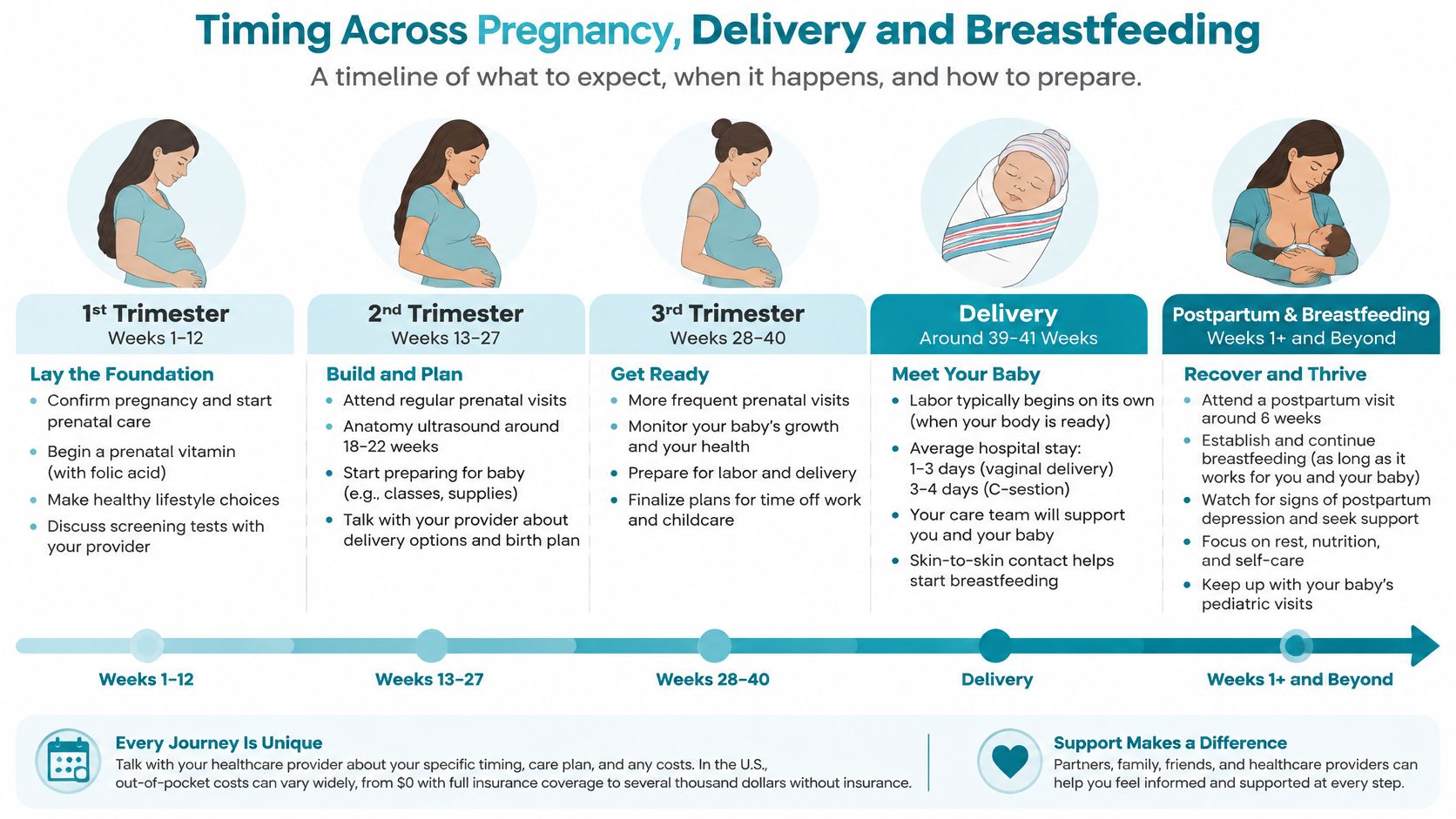
Before conception and during pregnancy
Before conception, the prescribing clinician can review treatment while there is time to consider alternatives and assess stability. Pregnancy planning should include the intended treatment approach, not just whether a medication appears on a reassuring list.
During the first trimester, medication-specific developmental questions receive particular attention. Paroxetine's cardiac concern is one example, but a positive pregnancy test isn't an instruction to make a rushed switch.
During later pregnancy, clinicians continue to assess symptom control and side effects while preparing for possible newborn effects. The purpose is to anticipate care needs rather than assume an exposed infant will develop a problem.
Delivery planning and newborn observation
The FDA clonazepam labeling describes possible newborn sedation, respiratory depression, low muscle tone, feeding difficulty, low body temperature, and withdrawal after late-pregnancy benzodiazepine exposure. It also describes human birth-defect evidence for clonazepam as inconclusive and evidence about neurodevelopmental effects as insufficient.
Similarly, FDA lorazepam labeling identifies possible newborn sedation or withdrawal, including irritability, tremors, restlessness, inconsolable crying, and feeding difficulties. These warnings concern a particular medication family, not every psychiatric treatment.
The delivery team needs an accurate medication list, including medicines taken only occasionally. That information helps newborn clinicians interpret symptoms and decide what observation is appropriate.
A delivery plan should name the medications involved and the team responsible for newborn assessment, rather than simply record that psychiatric treatment occurred.
After birth and during breastfeeding
Breastfeeding requires a separate exposure assessment. A medicine's pregnancy evidence doesn't automatically establish that it is appropriate during lactation.
For example, FDA diazepam labeling states that diazepam passes into breast milk and that breastfeeding isn't recommended during treatment. That warning calls for prompt discussion of the medication and feeding plan, not independent discontinuation.
Postpartum planning should address treatment continuity, sleep, feeding, and early signs of recurrence together. These timing questions are reasons for advance coordination, not reasons to stop medication without medical guidance.
Planning Before Pregnancy and Before Any Switch
A completed worksheet can make a preconception visit or medication review more productive. Its purpose is to capture the history and unanswered questions that a short medication list alone won't show.
Planning worksheet for a medication conversation
| Question to answer | Why it matters | Your notes |
|---|---|---|
| Which diagnosis is being treated, and how severe was it before treatment? | Shows how much relapse risk weighs into the decision | ________ |
| Which medicine has worked best in the past, and at what dose? | A previously effective option may be preferable to an unfamiliar one | ________ |
| Is pregnancy planned, and roughly when? | Preconception review needs time for any planned changes | ________ |
| Which medicines, supplements, and side effects have been noticed? | The full list informs interaction review and monitoring | ________ |
| Which other clinicians are involved, such as a therapist or obstetric team? | Coordination helps maintain a shared plan | ________ |
| What is the plan if symptoms return or pregnancy is confirmed? | Clarifies routine follow-up versus urgent care | ________ |
Recording the treatment history
The diagnosis row should include what illness looked like before effective treatment. Useful details include disrupted sleep, missed work, difficulty with self-care, or previous urgent treatment, without requiring the patient to assign a medical risk score.
The medication row should distinguish what worked from what was merely tried. Records of past side effects, unsuccessful alternatives, and symptoms after previous changes help clinicians avoid repeating an unsuitable approach.
At Empire Medical Wellness, the physician reviews medical history, other medicines, pregnancy plans, and potential side effects before prescribing. The psychiatric medication management worksheet can support preparation for that discussion.

Avoiding an unnecessary switching cycle
The ACOG treatment and management guideline document supports individualized planning rather than automatic discontinuation. A change after conception can introduce exposure to another medicine while also risking destabilization.
Preconception review gives clinicians an opportunity to simplify unnecessary combinations and consider medicines with more reproductive-safety experience. However, older doesn't automatically mean better, and fewer medicines isn't a useful goal if essential treatment becomes ineffective.
Planning safeguard: A proposed switch needs a clinical reason, an agreed transition plan, and a way to detect returning symptoms.
For an unplanned pregnancy, prompt contact with the prescribing clinician is more useful than an unsupervised medication change. The coordination row should identify who will communicate with the obstetric team and whether a clinician with perinatal mental health expertise is needed.
The final row should record whom to contact, what changes warrant urgent assessment, and how routine questions will be handled. The worksheet supports an evaluation; it doesn't replace one.
Monitoring Needs That Change During Pregnancy
Monitoring checks both sides of treatment: whether symptoms remain controlled and whether adverse effects need attention. The treating clinician sets the frequency of visits and testing rather than relying on a universal pregnancy schedule.
Monitoring by medicine family during pregnancy and after birth
| Medicine family | What is checked | Why | Who sets the plan |
|---|---|---|---|
| Lithium | Blood levels and dose requirements | Pregnancy-related physiological changes can alter medication levels | Prescribing clinician |
| Antipsychotics | Sedation, blood pressure, blood glucose, and weight | Treatment and pregnancy can affect these measures | Prescribing clinician with obstetric team |
| Benzodiazepines | Newborn sedation, breathing, muscle tone, and feeding after birth | FDA labeling describes newborn effects after late-pregnancy exposure | Delivery and newborn teams with the prescriber |
| SSRIs | Newborn adaptation symptoms after late exposure | Temporary adaptation effects have been described | Newborn care team |
| Lamotrigine and other medicines | Whether medication-specific checks are needed | Monitoring follows the particular medicine and clinical circumstances | Prescribing clinician |
Medication-specific checks
A peer-reviewed review of psychiatric treatment in pregnancy describes lithium's need for blood-level and dose review as pregnancy physiology changes, with closer monitoring near delivery. It also highlights antipsychotic monitoring involving sedation, blood pressure, glucose, and weight, alongside preparation for delivery and lactation.
A blood test isn't a pass-or-fail assessment. The prescriber interprets the result alongside symptoms, side effects, pregnancy stage, and other medicines.
Antipsychotic follow-up also needs practical questions. Daytime sleepiness, dizziness, or changes in functioning may matter even when a patient feels mentally stable.
Keeping the monitoring plan usable
At Empire Medical Wellness, follow-up assesses response and tolerability, meaning how well treatment is helping and how manageable its side effects are. The physician determines whether treatment needs adjustment.
A written plan should identify:
- The responsible clinician: Who orders and reviews each test or assessment.
- The communication route: How obstetric, prescribing, delivery, and newborn teams receive relevant updates.
- The complete medication list: Prescription medicines, occasional medicines, nonprescription products, and supplements.
- The postpartum handoff: Who manages treatment after delivery and who assesses feeding-related concerns.
The guide to psychiatric drug interactions provides context for maintaining a complete medication list. A newly added prescription or supplement belongs in the review even if the psychiatric medicine hasn't changed.
Monitoring shouldn't become an informal reason for patients to adjust doses themselves. Results need interpretation and a clinician-directed response.
Confirm Your Medication Plan With Your Clinician Before Any Change
Psychiatric medication shouldn't be stopped, switched, or reduced independently during pregnancy. A planned discussion with the prescribing clinician should establish the reason for any change, the alternatives, and the follow-up needed.
For a first visit, patients should bring an updated medication list, including supplements and side effects they have noticed. At Empire Medical Wellness, the discussion includes symptoms, treatment history, medication response, and side effects; recommendations are individualized, and a visit doesn't guarantee a particular medication.
Questions for the clinician visit
The completed worksheet can accompany these questions:
- Evidence: Which current medicine has the most relevant pregnancy evidence for the diagnosis being treated?
- Relapse: What does the treatment history suggest about the risk of stopping or changing it?
- Monitoring: What assessments are needed during pregnancy and after birth?
- Newborn care: How will medication information reach the delivery and newborn teams?
- Breastfeeding: What does the specific medication's labeling say, and what feeding concerns need review?
- Coordination: Which clinician will communicate with the obstetric team or outside therapist?
- Unexpected pregnancy: What contact plan applies if pregnancy is confirmed before the next scheduled visit?
The clinician should also clarify whether consultation with a perinatal mental health specialist is appropriate. This article doesn't establish that every medicine or psychiatric condition discussed can be managed in a particular outpatient practice.
Urgent care is different from routine review
Call 911 or go to the nearest emergency department for thoughts of harming oneself or someone else, severe confusion, fainting, seizures, trouble breathing, or a newborn who is hard to rouse or feed. Suspected mania or psychosis also requires urgent assessment.
For a mental health crisis, call or text 988, the Suicide & Crisis Lifeline. A routine appointment request isn't a substitute for emergency help.
Nonurgent questions about effectiveness, side effects, or pregnancy planning can be addressed through a mental health medication review. Empire provides physician-led outpatient care, and its mental health medication management service page offers practice-specific information; routine appointment requests can be made through the appointment scheduling page.
Sources
The clinical references linked throughout include ACOG's treatment guideline, MotherToBaby's sertraline fact sheet, the Massachusetts General Hospital summary of antidepressant relapse findings, FDA benzodiazepine labeling, and a peer-reviewed pregnancy treatment review. Drug-specific decisions require current labeling and individualized clinical assessment.
This article is educational and isn't personal medical advice.
Empire Medical Wellness offers physician-led mental health evaluation, medication review, and ongoing medication management, with attention to pregnancy plans and coordination with outside treating clinicians when useful and authorized. Adults seeking a planned discussion about psychiatric treatment before or during pregnancy can visit Empire Medical Wellness to learn about its outpatient care and prepare for an individualized evaluation.