
Mood stabilizers are not routine first-line treatment for a primary anxiety disorder. They are mainly established for mood episodes, especially bipolar disorder. Popular lists still file lithium, valproate, lamotrigine, and similar medicines under mood stabilizers for anxiety, as if worry itself were the approved target. That shortcut mixes two problems. Everyday anxiety and anxiety wrapped around bipolar illness do not call for the same first medicine, and asking for a mood stabilizer because anxiety feels severe can add lab work and side effects without a matching benefit.
A clinician may still raise one of these medicines. The usual reasons are a bipolar diagnosis, mixed mood features, or a narrow off-label discussion after suitable standard care has already been reviewed. Off-label means a clinician uses an approved medicine for a purpose that is not listed in its FDA labeling. It is a prescribing decision, not a category a person should start on their own.
Table of Contents
- When a Mood Stabilizer Enters an Anxiety Plan
- What Mood Stabilizers Do and Do Not Treat
- Anxiety Alone Compared With Bipolar Illness
- What the Evidence Says About Each Medicine
- Safety Checks Before and During Treatment
- When Anxiety Stays After Mood Treatment
- Questions to Bring to a Physician Visit
When a Mood Stabilizer Enters an Anxiety Plan
The useful first split is the diagnosis, not the drug name. Nonspecific anxiety can ease when a mood episode is treated. Evidence for treating a separate anxiety disorder inside bipolar illness stays limited, and a review of that overlap places anxiety-focused psychotherapy ahead of another medicine when that is feasible, as discussed in guidance on nonspecific anxiety in bipolar disorder. Classic mood stabilizers remain medicines for mood episodes and relapse prevention. They are not a universal anxiety class.
How the situation changes the priority
| Situation | Usual priority | Mood-stabilizer role |
|---|---|---|
| Primary generalized anxiety, no bipolar features | Therapy and, when medication is used, an SSRI or SNRI are the usual starting framework | Not routine; selected anticonvulsants such as pregabalin have been studied, but U.S. approval and risks differ |
| Panic or another primary anxiety disorder without bipolar features | Treat the specific anxiety disorder; do not infer a mood stabilizer from anxiety alone | Classic agents such as lithium or valproate are not established first-line anxiety medicines |
| Bipolar disorder plus an anxiety disorder | Stabilize mood and treat the anxiety disorder with its own evidence, watching interactions | A mood stabilizer can be central for bipolar illness but may not clear every anxiety symptom |
| PTSD | Use PTSD-specific guidance rather than a blanket mood-stabilizer class | 2023 VA/DoD guidance does not recommend the class routinely |
| Anxiety that remains after a mood stabilizer starts | Reassess diagnosis, adherence, sleep, substances, side effects, and mood state | Do not assume a higher dose or an added antidepressant is automatically the safest next step |
Read the rows as preparation for a physician visit. They are not a reason to start, stop, or request a drug.
Say someone has years of muscle tension, worry, and poor sleep, with no history of mania or hypomania. The table puts therapy, and often an SSRI or SNRI if medicine is used, ahead of lithium or valproate. Say instead that anxiety spikes with reduced sleep, racing thoughts, and past manic or hypomanic periods. Mood treatment becomes part of the plan, and the anxiety disorder still needs its own care.
Practical rule: Match the medicine to the illness pattern, not to the loudest symptom on the intake form.
Panic, trauma-related distress, depression, medication effects, and substance use can all look like "anxiety" in a short visit. Sorting those patterns is the work of an evaluation. Self-starting a mood stabilizer, or requesting one only because anxiety has been hard to treat, can expose someone to monitoring and adverse effects without established benefit for that diagnosis.
What Mood Stabilizers Do and Do Not Treat
Think of a mood stabilizer as a guardrail for mood swings, not a switch that turns anxiety off. In practical terms, it is a medicine used to treat or help prevent mood episodes such as mania, hypomania, or bipolar depression. It was not invented for ordinary worry, work stress, or a primary anxiety disorder.
Readers usually meet a short list. Lithium is the classic mineral salt used for bipolar episodes and maintenance. Valproate or divalproex, lamotrigine, and carbamazepine are anticonvulsants that also have bipolar roles. Some atypical antipsychotics are used for bipolar illness too, though each drug's approval is its own. None of that list is the same thing as an SSRI or SNRI, the antidepressant classes most often discussed first when medicine is considered for primary anxiety. Cognitive behavioral therapy is a common non-drug starting point for anxiety, including through anxiety medication discussions that separate when a medicine is even on the table.
Why the shared nickname misleads
Lithium, anticonvulsants, and antipsychotics reached this conversation through different approved uses. Benefit in seizures, nerve pain, or mania does not transfer to every anxiety diagnosis. Gabapentinoids such as gabapentin and pregabalin sometimes get grouped with mood stabilizers in popular writing. They are not established long-term antimanic maintenance treatments, so borrowing the nickname does not give them that job.
Three statuses get mixed up in the same sentence.
- FDA approval: The U.S. label names specific uses, such as seizures or bipolar maintenance, after the agency's review.
- A European indication: A medicine can be indicated for adult generalized anxiety in the European Union and still lack that U.S. anxiety approval.
- Off-label clinical use: A clinician may consider an approved medicine for an unlisted purpose. That decision is individualized. It is not proof the medicine is a routine anxiety treatment.
A guardrail keeps a road from dropping off. It does not flatten every bump in the pavement.
The next distinction is medicine by medicine. Approval, trial results, and bipolar roles do not travel as a class.
Anxiety Alone Compared With Bipolar Illness
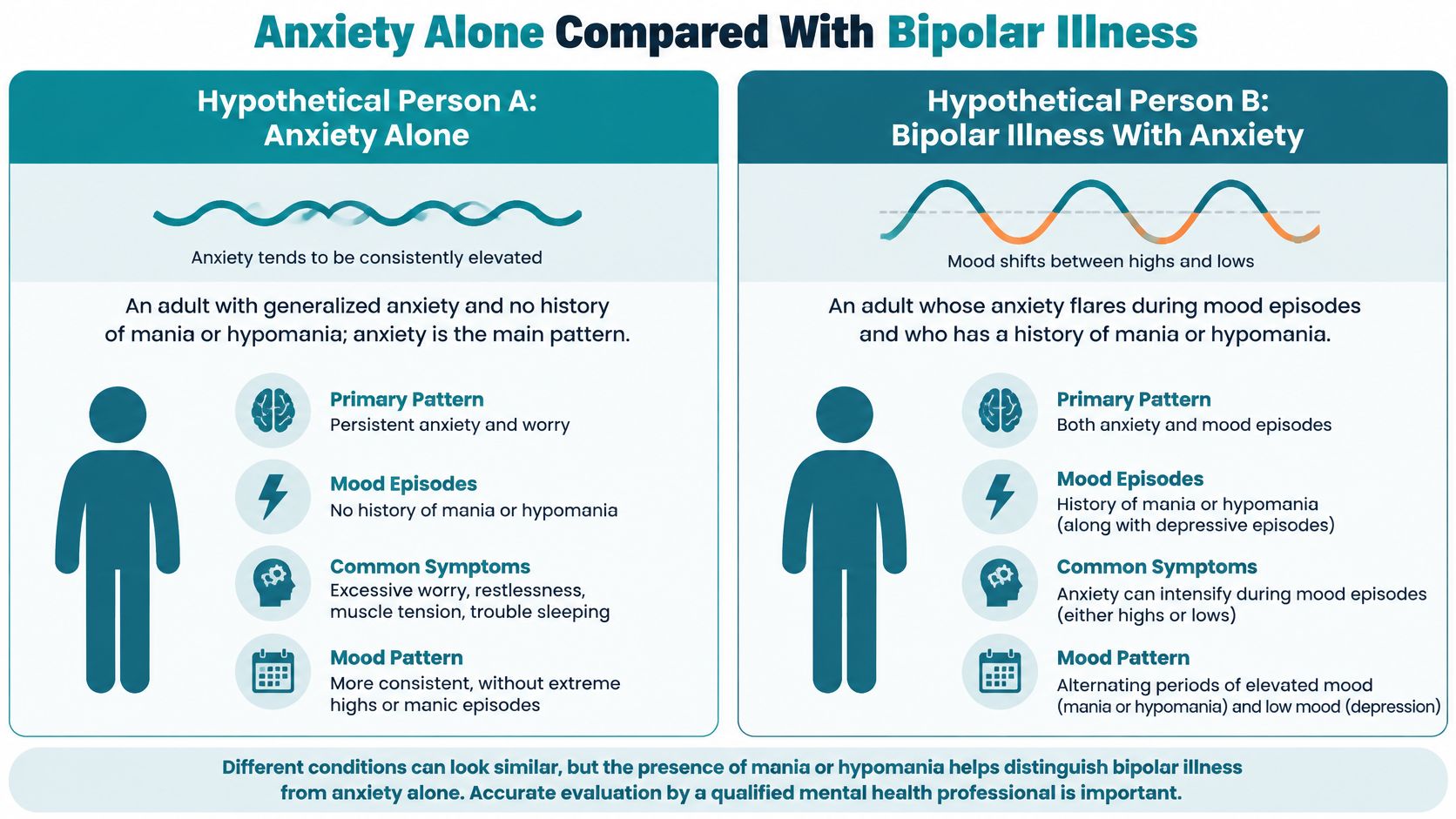
Two clearly hypothetical adults show why the same word, anxiety, leads to different plans. Neither description is a real patient, and neither is a diagnosis.
Hypothetical Person A is an adult with generalized anxiety and no history of mania or hypomania. Worry, tension, and poor sleep are the main pattern. That picture does not, by itself, justify a classic mood stabilizer.
Hypothetical Person B is an adult whose anxiety flares around bipolar episodes and who has a history of mania or hypomania. Here a mood stabilizer can be central for the bipolar illness. It still may not erase every anxiety symptom.
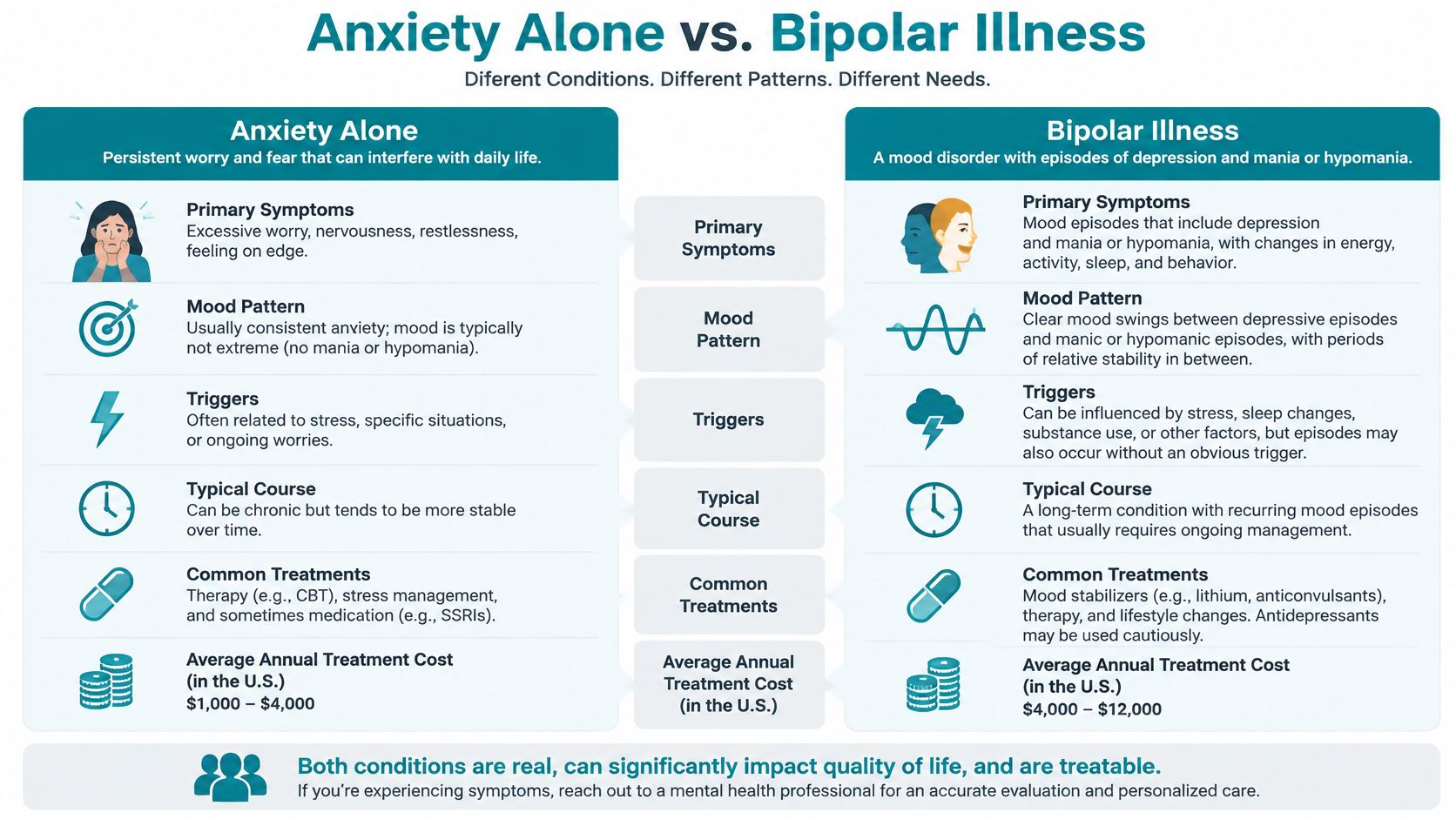
What changes once bipolar illness is in the picture
A 2012 Canadian Network for Mood and Anxiety Treatments task force said mood stabilization should generally be established before adding other medication for anxiety in people with both bipolar disorder and an anxiety disorder. The reason is clinical. Antidepressant treatment, commonly used for anxiety, can carry a risk of worsening bipolar illness or triggering a manic switch. The same review notes that lithium may be more protective against manic switching than some other mood stabilizers. It also stresses a hard limit: direct trials of anxiety treatment in people with both conditions are limited.
Coexisting anxiety still deserves anxiety-specific care. NICE bipolar disorder guidance recommends treating coexisting anxiety disorders according to the relevant anxiety guidance, in addition to bipolar treatment, while watching drug interactions and using clinical judgment. VA/DoD bipolar guidance suggests cognitive behavioral therapy for residual anxiety when bipolar disorder is fully or partly remitted. More on how bipolar care is framed sits on this bipolar disorder overview. Naming that diagnosis is not a claim that any one clinic supplies every medicine discussed.
What assessment has to separate
Before a mood stabilizer is even a candidate, a clinician tries to tell these apart:
- Generalized anxiety: Ongoing worry and tension as the main pattern.
- Panic: Sudden surges with physical alarm, not the same as a mood episode.
- Trauma-related distress: Anxiety tied to PTSD or a related condition, which follows its own guidance.
- Depression, hypomania, or mixed features: Low mood, heightened or irritable energy, or both at once.
- Medication effects: Activation, restlessness, or sedation from a current drug.
- Substance use: Alcohol, cannabis, stimulants, or withdrawal that can mimic anxiety or mood shifts.
If bipolarity is not supported, the most appropriate mood-stabilizer decision may be not to use one.
That is a physician's call after a history of episodes, family pattern, sleep, safety, and past medication responses. Treating anxiety symptoms in isolation skips that step.
What the Evidence Says About Each Medicine
Anxiety is not an FDA-approved use for lithium, valproate or divalproex, lamotrigine, or carbamazepine. Primary-anxiety evidence does not make them routine first-line options. NIMH's overview of mental health medications is a plain starting point for what psychiatric medicines are for. Current FDA labeling, or the matching MedlinePlus drug page, is the place to check a specific product's approved uses. This is not a dose chart, and it is not a suggestion to request any drug.
Lamotrigine is not FDA-approved for any anxiety disorder. Its established roles include seizure disorders and maintenance treatment of bipolar I disorder, where it helps delay the time to mood episodes. Using it only for anxiety is off-label, and stand-alone evidence for primary anxiety is too limited for routine first-line use.
PTSD is not a stand-in for every anxiety disorder
The 2023 VA/DoD clinical practice guideline does not recommend routine use of mood stabilizers as a broad class for PTSD. It suggests neither for nor against lamotrigine or topiramate because the evidence is insufficient. It recommends against divalproex and tiagabine. A small lamotrigine trial involving 15 people with PTSD suggested possible benefit, which was not enough for a treatment recommendation. Anxiety can occur in PTSD. A thin finding in one trauma-related condition does not generalize to all anxiety disorders.
Where an anticonvulsant signal actually shows up
The stronger anticonvulsant signal in primary anxiety is pregabalin in generalized anxiety disorder, not lithium or valproate. A systematic review of randomized controlled trials found that seven pregabalin studies involving 2,021 participants showed a statistically significant improvement over placebo in treatment response. The risk ratio was 1.35, with a 95% confidence interval of 1.21 to 1.50. Symptom severity on the Hamilton Anxiety Rating Scale also favored pregabalin, with a mean difference of −2.86 points and a 95% confidence interval from −3.52 to −2.21.
Tiagabine did not show a statistically significant benefit in that same review. Its treatment-response risk ratio was 1.09, with a 95% confidence interval of 0.98 to 1.22. Those figures are medication-specific. They should not be stretched across every drug nicknamed a mood stabilizer.
Pregabalin is indicated for adult generalized anxiety disorder in the European Union. It is not FDA-approved for anxiety in the United States. A later standardized mean difference versus placebo belongs with monitoring and misuse risk, not with a claim that pregabalin maintains bipolar mood. Atypical antipsychotics are a separate group. Approvals vary by drug, often for psychosis or bipolar illness, and an anxiety benefit is not a class effect. Questions about that group belong with antipsychotics for anxiety, not with a blanket mood-stabilizer recommendation.
Mood medicines and anxiety evidence
| Medicine | Established use | U.S. anxiety approval | Evidence to keep separate |
|---|---|---|---|
| Lithium | Bipolar mood episodes and maintenance | Not approved for an anxiety disorder | May be relevant when preventing manic switching matters; direct anxiety trials in bipolar comorbidity are limited |
| Valproate or divalproex | Seizures and bipolar mania | Not an anxiety indication | VA/DoD 2023 recommends against divalproex for PTSD |
| Lamotrigine | Seizures and bipolar I maintenance | Not FDA-approved for any anxiety disorder | PTSD evidence insufficient; a 15-person trial did not support a recommendation |
| Carbamazepine | Seizures, trigeminal neuralgia, and bipolar mania | Not approved for anxiety | Primary-anxiety evidence is limited; interaction and blood-count monitoring belong to its established use |
| Pregabalin | U.S. uses include nerve pain, fibromyalgia, and seizures; EU indication includes adult GAD | Not FDA-approved for anxiety | GAD response RR 1.35 (2,021 people); symptom mean difference −2.86 on HAM-A |
| Gabapentin | Seizures and postherpetic neuralgia | Not approved for anxiety | Off-label discussion is not evidence of antimanic maintenance |
| Tiagabine | Seizures | Not an anxiety treatment | GAD response RR 1.09 was not significant; VA/DoD recommends against it for PTSD |
| Atypical antipsychotics as a class | Approvals vary by drug, often psychosis or bipolar illness | No class approval for anxiety disorders | Metabolic and movement-related monitoring applies; benefit cannot be assumed across drugs |
Clinical decisions still turn on diagnosis, other conditions, past treatment response, adverse-effect risk, and local regulatory status. A favorable trial average is not a personal result.
Safety Checks Before and During Treatment
These medicines can require laboratory tests, interaction reviews, and follow-up even when anxiety is the symptom that prompted the visit. Nothing here is an instruction to start, stop, taper, or change a medicine. Bring an updated list of prescriptions, over-the-counter products, supplements, and side effects already noticed, and ask which items on that list change the plan.
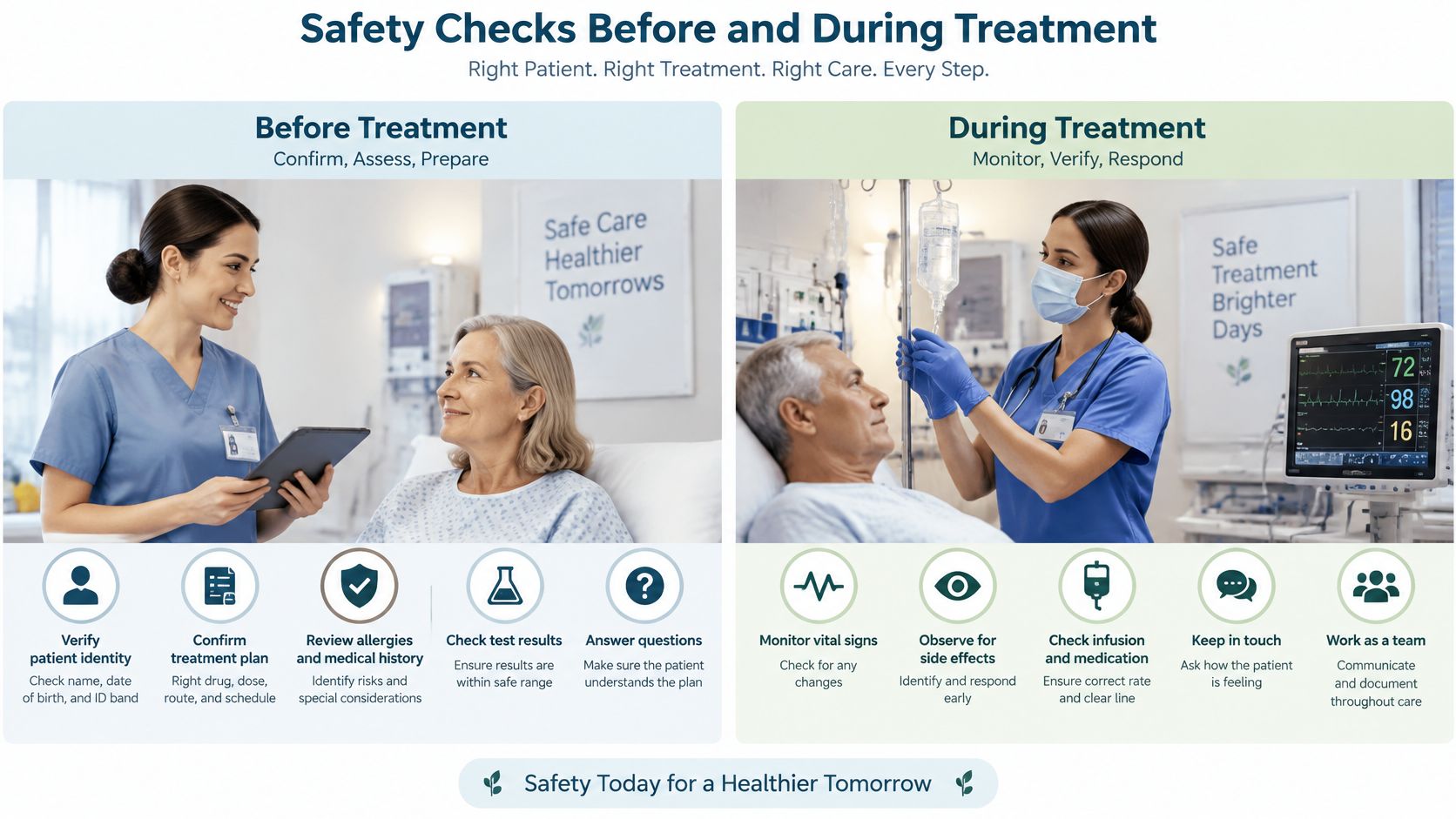
Questions to raise, grouped by concern
Lithium. Ask about kidney and thyroid monitoring, hydration, and illnesses or medicines that can change the blood level, including some blood pressure drugs and NSAIDs such as ibuprofen. A level that was steady can shift with dehydration.
Valproate, divalproex, and carbamazepine. Ask about liver tests, blood counts, drug interactions, pregnancy prevention, and teratogenic risk. Those risks have to be individualized. Carbamazepine can speed the breakdown of many other drugs, including some contraceptives, which is why an interaction check is part of its established use. A fuller interaction walk-through is in this guide to psychiatric drug interactions.
Lamotrigine. Ask about rash, including rare serious skin reactions, and about any medicine that raises or lowers the lamotrigine level. A new rash is not a "wait for the next routine visit" symptom.
Atypical antipsychotics. Ask about weight, glucose, lipids, movement symptoms, and sedation. Those checks apply because of the drug class, not because anxiety was the complaint.
Pregabalin. NICE guidance on generalized anxiety disorder discusses considering pregabalin when an SSRI or SNRI is not tolerated, with a careful look at past drug misuse and monitoring for abuse or dependence. A systematic review in that same discussion found moderate evidence across some anxiety states, with pregabalin producing a standardized mean difference of −0.37 versus placebo in generalized anxiety disorder. Evidence for bipolar disorder itself was minimal, so use in bipolar illness needs a strong clinical rationale. Pregabalin is not a substitute for the antimanic or long-term mood-maintenance role of established bipolar mood stabilizers.
Monitoring points for pregabalin include:
- Kidney function: Elimination is mainly renal, so reduced kidney function changes how the drug is handled.
- Sedation and dizziness: Either can impair driving or raise fall risk.
- Misuse signals: Dose escalation or drug-seeking needs a direct conversation, not a refill by habit.
- Additive depression of the nervous system: Opioids, alcohol, benzodiazepines, and other sedatives can add sedation or respiratory depression.
Routine follow-up versus urgent care
A planned visit reviews benefit and tolerability. It is not the right place to wait out an emergency.
Get urgent or emergency help for a severe rash, chest pain, severe confusion, uncontrolled movements, pregnancy concerns that cannot wait, or trouble breathing. If there are suicidal thoughts or another mental-health crisis, call or text 988 for the Suicide and Crisis Lifeline. Do not stop a prescribed medicine on the way to that help unless a clinician or emergency team directs it.
When Anxiety Stays After Mood Treatment
A mood stabilizer can be necessary for bipolar illness and still leave anxiety severe. That gap is common enough that "start the stabilizer and the anxiety will go" is the wrong expectation.
Recent observational research describes an "anxious bipolar" subgroup comprising approximately 60% of people with bipolar disorder, with lower treatment-response scores across lithium, mood-stabilizing anticonvulsants, and second-generation antipsychotics than in bipolar disorder without anxiety, as reported in observational research on anxious bipolar disorder. That subgroup was less likely to receive lithium or valproate and more likely to receive antidepressants, benzodiazepines, and gabapentinoids. 17.3% received an antidepressant without mood-stabilizer coverage.
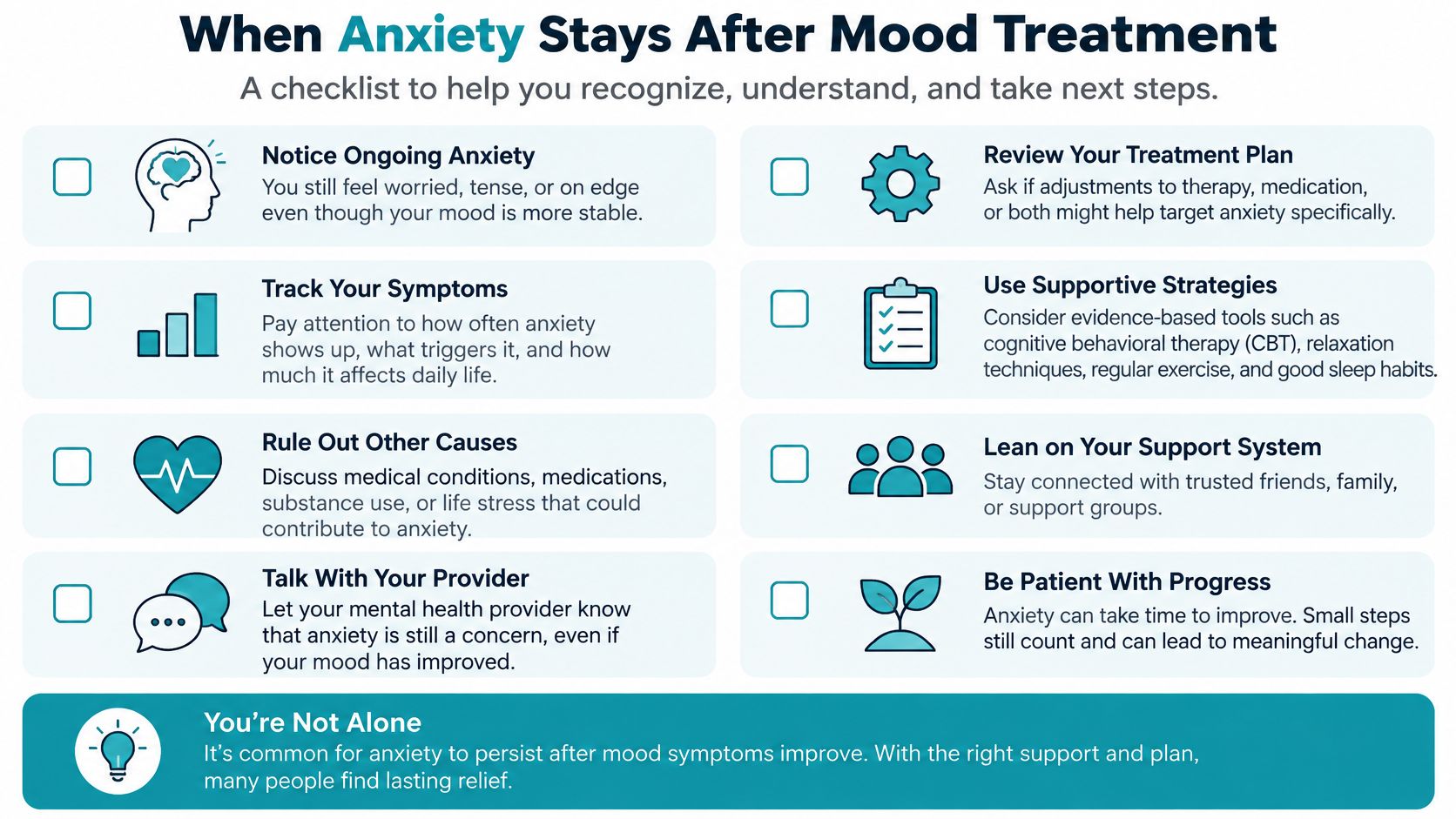
Look-alikes to separate before any change
A higher dose, or an added antidepressant, is a clinical decision. It is not an automatic next step, especially where manic switching is a risk. Before a change, a clinician tries to tell residual anxiety apart from:
- A continuing mood episode or mixed features, where anxiety is riding on an untreated or partly treated mood state.
- Activation, a sped-up, restless response that can follow an antidepressant.
- Akathisia, an inner restlessness tied to some antipsychotics, which feels like anxiety but is a movement side effect.
- Insomnia, which can mimic and worsen both anxiety and mood episodes.
- Substance-related symptoms, including alcohol, cannabis, stimulants, and withdrawal.
- Other adverse effects or missed doses, including timing that never reached a steady schedule.
- A separate anxiety disorder that needs its own plan, not only a bipolar medicine.
What is still preliminary
Anxiety-informed algorithms and add-on approaches are an emerging idea. They are not a proven sequence a person can follow at home. When another medicine can wait, anxiety-focused psychotherapy is a reasonable earlier step, and treatment of the primary condition still matters. Benefit is judged over follow-up, not over a single bad week.
Raising the dose because anxiety is still loud can miss akathisia, missed sleep, or a mood episode that was never the original target.
Questions to Bring to a Physician Visit
Four questions keep the visit on diagnosis, approval status, monitoring, and safety.
- Which diagnosis best fits these symptoms, including generalized anxiety, panic, PTSD, depression, or bipolar features?
- Is a suggested medicine FDA-approved for that use, or is it off-label?
- Which labs, interactions, pregnancy considerations, and side effects need monitoring?
- What change would count as benefit, and which symptoms need urgent care or 988?
Empire Medical Wellness provides private-pay, physician-led outpatient mental health medication management. Anxiety medication management happens in a secure telehealth visit in which the physician assesses whether medication is appropriate and explains options, monitoring, and follow-up. A mental health medication review looks at whether current treatment is helping, what side effects are present, and what concerns belong in the plan. Questions about price, insurance, and visit format belong on fees and how care works. Scheduling is a separate step at schedule an appointment.
The first mental health appointment focuses on symptoms, medical and treatment history, current medications, daily functioning, and goals. The patient gets an explanation of the clinical assessment, treatment options, and recommended follow-up. Bring an updated medication list, including supplements and side effects already noticed. A blank psychiatric medication management worksheet can help organize that list before the visit. An appointment is an evaluation, not a guaranteed prescription. Naming a medicine in this article is not a claim that Empire Medical Wellness supplies it. The practice prescribes FDA-approved medications when a medical evaluation supports their use, and medication decisions follow history, current condition, safety, and goals.
Is off-label use something a person can choose alone?
No. Off-label use is a clinician's prescribing decision after an evaluation. It is not a self-directed option, even when a medicine is already approved for a different condition.
Can a mood stabilizer be stopped or restarted without a plan?
Stopping or restarting needs a clinician's plan. Relapse and withdrawal are real risks, and the timing is individualized. This article does not give a taper or a restart schedule.
When is a symptom an emergency rather than a follow-up topic?
Routine follow-up reviews benefit and tolerability at a planned visit. Suicidal thoughts, a severe rash, chest pain, or trouble breathing need urgent or emergency care. For a mental-health crisis, call or text 988.
Empire Medical Wellness Editorial Team
Published 8 October 2026. Updated 8 October 2026.
Sources. National Institute of Mental Health, mental health medications. Current FDA labeling and MedlinePlus drug information for individual products. NICE guidelines on generalized anxiety disorder and on bipolar disorder. The 2023 VA/DoD PTSD clinical practice guideline. The 2012 Canadian Network for Mood and Anxiety Treatments task force on comorbid bipolar disorder and anxiety. A systematic review of anticonvulsants in anxiety, including pregabalin and tiagabine trial results. Observational research on an anxious-bipolar subgroup. Linked documents above are the supporting sources. This page is not a substitute for those labels or guidelines.
This article is educational. It is not personal medical advice, a diagnosis, or a prescription. If you are in a mental-health crisis, call or text 988.
Empire Medical Wellness offers private-pay, physician-led outpatient mental health evaluation and medication management for adults who want a clear look at anxiety, mood symptoms, and current medicines. That visit is a place to sort whether a mood stabilizer belongs in the plan or whether anxiety care should go in another direction. Visit Empire Medical Wellness to see how care is set up and to schedule an evaluation.