
If you're searching for Suboxone, you're probably trying to answer two questions at once. Does it work, and what does real treatment look like when you have to fit visits, pharmacy pickup, and daily life into the same week?
Suboxone is a prescription medication for opioid dependence maintenance treatment. It's also a practical, office-based option that became widely used during a period when opioid mortality was rising sharply, and it remains part of a broader medical, social, and psychological treatment framework. For many adults, the question isn't whether the medicine exists. It's whether the pathway to starting and staying on it is realistic.
Table of Contents
- Understanding Suboxone and Its Role in Treatment
- How Suboxone Works in the Body
- The Three Phases of Suboxone Treatment
- Comparing Suboxone with Other Medication Approaches
- Common Side Effects and Safety Considerations
- Access Barriers and Realistic Treatment Pathways
- Preparing for a Medication-Focused Evaluation
Understanding Suboxone and Its Role in Treatment
A person often reaches Suboxone after a few false starts. They may have tried to cut back on their own, felt withdrawal return, or decided they want treatment that is prescribed and monitored rather than improvised. In that setting, Suboxone is not a mystery medication so much as a practical option that has been part of U.S. care for years, and its early use grew quickly after introduction in the United States.
Suboxone is a fixed-dose combination of buprenorphine and naloxone. The FDA labeling identifies it as a prescription medicine indicated for the maintenance treatment of opioid dependence (FDA labeling). The European Medicines Agency describes it as substitution treatment for opioid drug dependence used within a framework of medical, social, and psychological treatment (EMA product information).
Why its history matters
Suboxone arrived during a dangerous period in U.S. public health. A 2022 review in PMC reports that overdose deaths in the United States reached more than 107,000 in 2021, including 80,816 opioid-involved deaths, and that synthetic opioids accounted for over 80% of opioid overdose deaths (PMC review). That background explains why office-based buprenorphine treatment became so important. It gave clinicians a medication that could be started and followed in outpatient care, rather than only in tightly restricted settings.
Suboxone is used to help reduce withdrawal and craving while a person works toward a steadier daily routine. In practice, that can make the first weeks feel more manageable, especially for someone who has already seen how hard it is to stop and restart on their own. The medication is one part of care, not the entire plan.
The early safety evaluation also reflected real-world use. The EMA review notes exposure data for 1,631 patients overall and 1,158 with long-term exposure during that period (EMA scientific discussion). That does not mean every patient follows the same path. It does show that Suboxone moved into routine clinical practice, where physicians had to think about follow-up, dose adjustments, refill access, and how a patient would keep treatment going after the first prescription.
If you want a broader medical overview of opioid treatment, Empire Medical Wellness's substance use disorder resources can provide that context.
How Suboxone Works in the Body
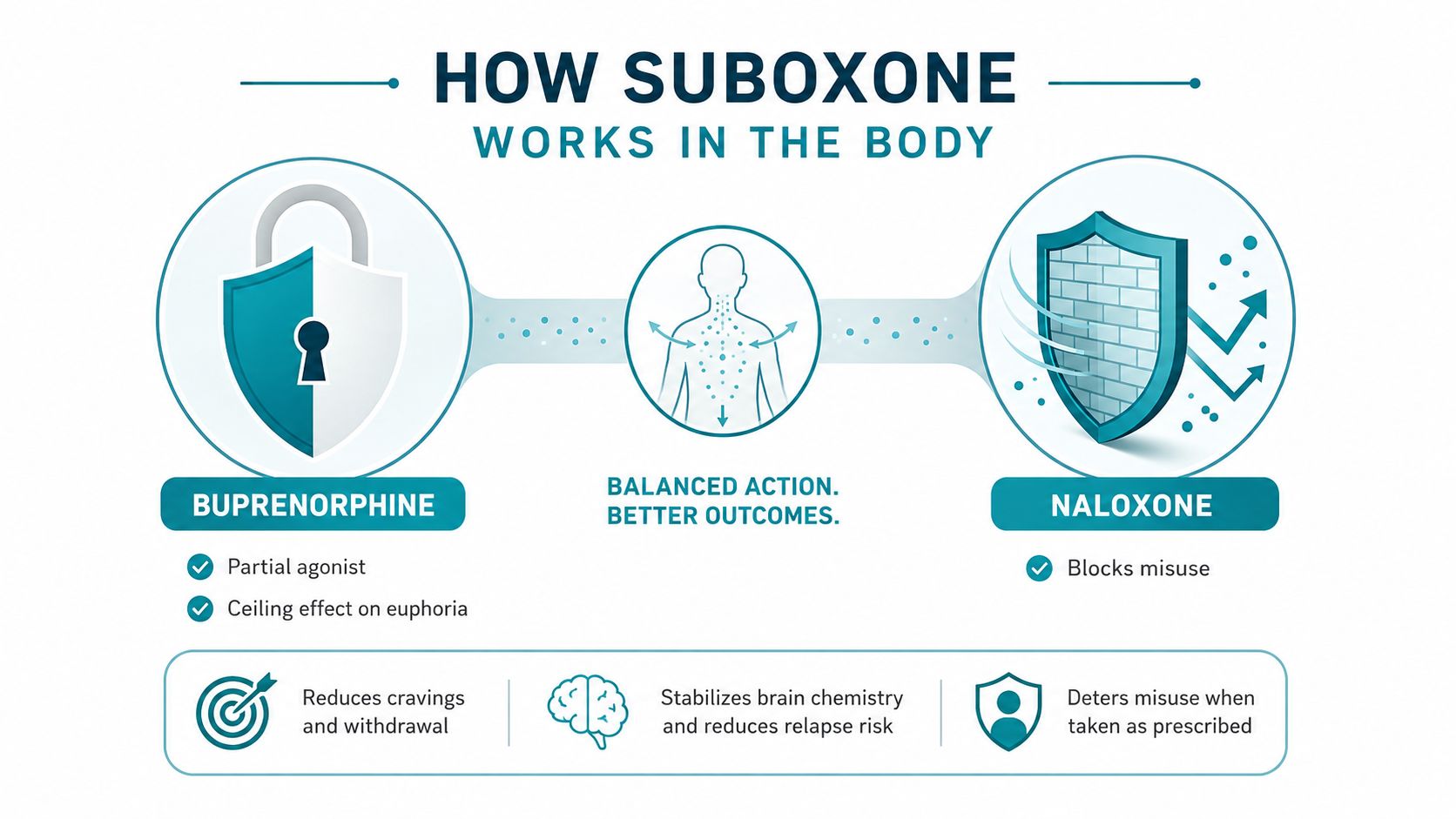
A person starting Suboxone often wants one simple answer: why does this medication calm withdrawal without feeling like a full opioid? The answer lies in its two ingredients, which do different jobs. Buprenorphine is the active opioid component, and naloxone is included to reduce misuse by injection. In the FDA label, buprenorphine is described as a high-affinity mu-opioid receptor partial agonist, while naloxone is an opioid antagonist (FDA labeling).
Partial agonist and antagonist in plain language
A partial agonist turns a receptor on, but not all the way. That matters because buprenorphine can ease withdrawal and reduce craving without producing the same opioid effect as a full agonist. It also has a built-in ceiling on opioid effects compared with full agonists, which is one reason it is used for substitution treatment rather than as a simple short-term detox product.
An antagonist blocks a receptor. Naloxone fills that role. It is there to make injection misuse less attractive and less effective. In major markets, the sublingual film is available in 2 mg/0.5 mg, 4 mg/1 mg, 8 mg/2 mg, and 12 mg/3 mg strengths, and the formulation is designed to dissolve in about 5 to 10 minutes when taken as directed under the tongue or in the cheek (FDA labeling).
Why the route of administration matters
Taken sublingually or buccally, the medicine is absorbed in a way that supports treatment. Swallowing it is not the intended route for the film or tablet, because the formulation is built to dissolve and absorb through the mouth's tissues. That design helps explain why the medication is so often used in outpatient care, where patients need a method that can fit into daily life without a clinic-based procedure.
For patients who are just beginning treatment, the practical question is often whether the medicine can be taken correctly at home. It usually can, but that depends on clear instructions, a workable schedule, and follow-up that catches problems early. If you want a broader clinical context for medication-assisted treatment, Empire Medical Wellness's medication-assisted treatment resources can help frame how Suboxone fits into outpatient care.
Suboxone is meant to work within a medical plan, not as a one-time fix. Clinicians still pay attention to symptoms, refill access, and other supports, because the medication steadies receptor activity while the rest of treatment helps a person stay on track.
The Three Phases of Suboxone Treatment
A realistic Suboxone pathway usually unfolds in three broad phases. The names can vary from practice to practice, but the clinical logic is the same. First comes induction, then stabilization and maintenance, and for some patients, a later taper if that is appropriate.
The practical reality is that the early phase is often the hardest to start. People are usually trying to avoid withdrawal, manage cravings, and fit treatment into daily life at the same time, so the first visits are about more than writing a prescription.
Induction and early stabilization
Starting treatment is usually a guided adjustment period. The EMA treatment information describes initiation at 4 mg/1 mg with titration based on withdrawal suppression and patient response. At that stage, the clinician is watching a straightforward question, whether the dose is enough to reduce withdrawal so the patient can function more normally. If symptoms continue, the explanation may be underdosing, nonadherence, or ongoing opioid exposure rather than medication intolerance.
Early follow-up matters because the first days of treatment are often where confusion shows up. A patient may think the medicine is “not working,” while the core issue is timing, incomplete absorption, or use of another substance that is complicating the picture. Careful review is more useful than guesswork.
Maintenance and the role of follow-up
Common U.S.-oriented references describe a target maintenance dose around 16 mg/4 mg once daily, while the EMA labeling sets a maximum daily dose of 24 mg buprenorphine (EMA treatment information). That range matters because it shows two things at once. There is no single dose that fits every patient, and there is a ceiling beyond which routine dose escalation is not supported by labeling.
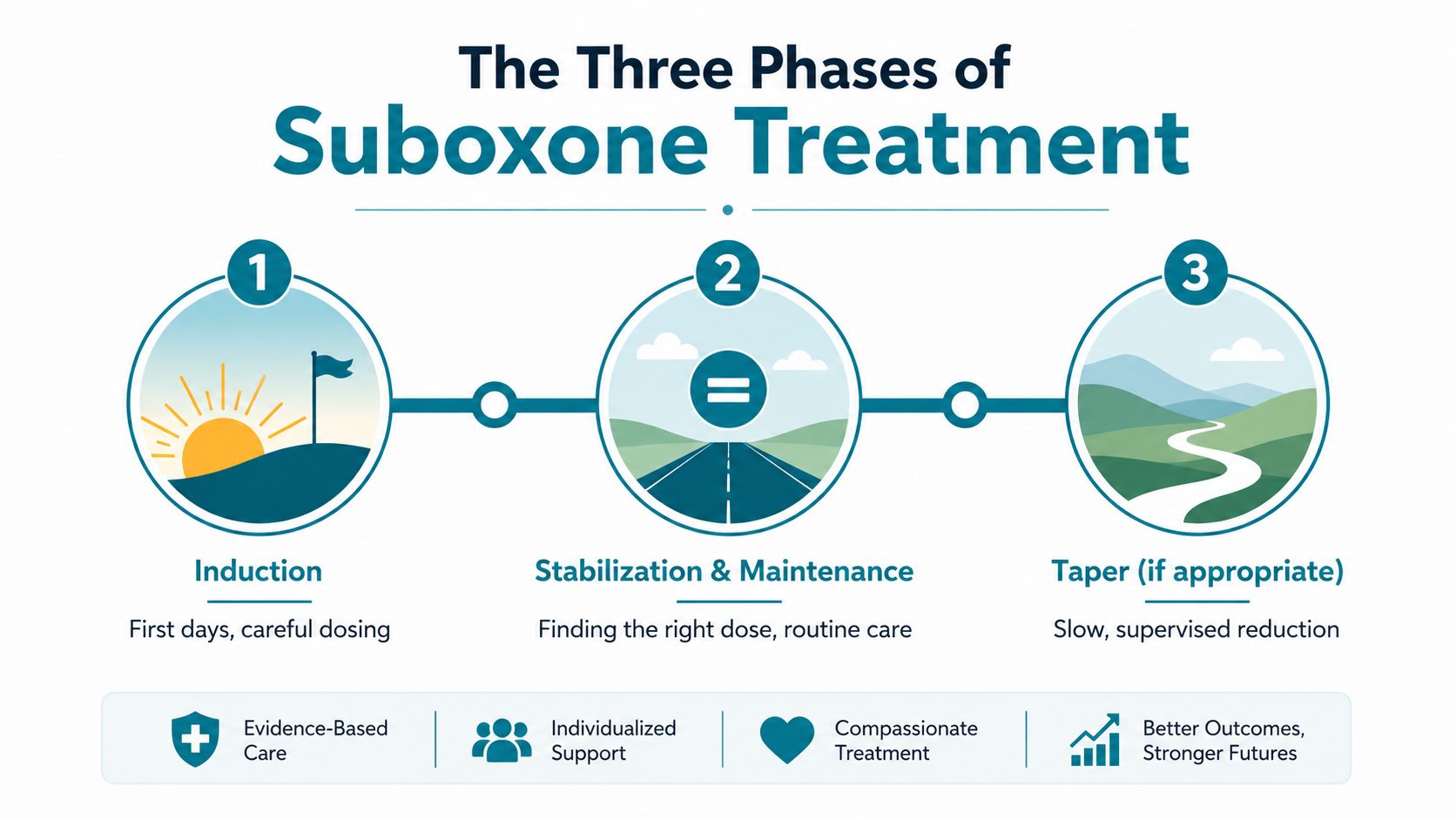
Maintenance is where outpatient care becomes more visible in everyday life. Visits may be spaced out, refills have to be coordinated, and the plan often includes checking on cravings, withdrawal, sleep, mood, and return to use. The goal is not to make treatment dramatic. It is to keep it steady enough that opioid use is no longer running the schedule.
Tapering if and when it's appropriate
A taper, when used, should be deliberate and supervised. Some patients remain on treatment for a long time, while others eventually reduce medication after a stable period. The decision depends on symptoms, supports, and the patient's own goals, not on pressure to finish treatment quickly.
Tapering should also be understood as a medical change, not a passing test of willpower. If stability is fragile, the safer course may be to continue maintenance rather than reduce dose too soon.
If you are comparing outpatient care models, Empire Medical Wellness's MAT resources can help you understand how medication treatment is discussed in practical settings.
Comparing Suboxone with Other Medication Approaches
A person starting opioid use disorder treatment is often choosing between different medications, different levels of structure, and different ways of getting care. Suboxone is one of the most common office-based options, but it is only one part of the broader medication picture. The practical questions are usually straightforward: which medication fits the patient's history, which setting is realistic, and how much follow-up can happen once treatment begins.
A summary from the Addiction Group summary reports that patients taking buprenorphine were 1.82 times more likely to stay in treatment than those not receiving medication, and that buprenorphine was associated with a 14.2% reduction in opioid-positive drug tests. The same source says buprenorphine after an opioid overdose was linked with a 38% decrease in opioid overdose deaths, and that opioid agonist medications can produce 50% or greater overdose reductions. Those findings help explain why medication treatment sits at the center of modern outpatient care.
Medication approaches for opioid use disorder
| Medication Type | How It Works | Typical Setting | Key Considerations |
|---|---|---|---|
| Buprenorphine/naloxone | Partial opioid agonist plus antagonist combination that suppresses withdrawal and reduces misuse risk | Office-based outpatient care | Fits many patients who need a more flexible treatment structure |
| Methadone | Full opioid agonist used in structured treatment | Highly regulated treatment settings | Often requires more structured daily attendance |
| Extended-release naltrexone | Opioid antagonist that blocks opioid effects | Outpatient care after detoxification | Does not relieve withdrawal the way buprenorphine does |
That comparison is easier to understand if you picture the first weeks of treatment in real life. Some patients can attend frequent office visits, manage prescriptions responsibly, and work with a clinician who adjusts care over time. Others need a tighter structure because they are still using opioids, have unstable housing, or need a setting with more supervision. The right medication is the one that matches the patient's current circumstances, not the one that sounds best on paper.
For a physician-led overview of how medication discussions are often framed, Empire Medical Wellness's mental health medication review page is a useful reference. It reflects the kind of evaluation many patients go through before a medication plan is chosen.
Suboxone is often selected when a clinician wants office-based treatment that can ease withdrawal and cravings without the daily attendance required for methadone programs. Methadone can be the better fit for patients who need more structure, while extended-release naltrexone may suit patients who have already completed detoxification and want a blocker rather than a partial agonist. The decision is rarely about one medication being universally better. It is about which approach a patient can start, sustain, and continue using safely in everyday outpatient care.
Common Side Effects and Safety Considerations
A common source of fear around Suboxone is a mistaken idea about what the medication does in the body. People hear “opioid” and assume intoxication is unavoidable. In a patient with opioid dependence who takes it as directed, that assumption does not hold. A peer-reviewed review in PMC explains that intoxication from Suboxone does not occur if a patient is opioid dependent, and that intoxication is seen when patients combine Suboxone with other substances, do not take it as directed, or use it to medicate withdrawal between episodes of full-agonist opioid abuse (PMC review).
What safety really means here
Safety starts with giving the clinician a complete picture of what is already in the mix. That includes prescribed sedatives, alcohol, over-the-counter products, and any other substance that could increase sleepiness or slow breathing. A medication can be appropriate on paper and still become unsafe if it is combined with other central nervous system depressants or used outside the intended plan.
A useful way to think about this is simple. The medicine is only one part of the risk calculation, and hidden medication use makes that calculation less reliable.
The FDA labeling also describes clinical situations where Suboxone may not be appropriate, including allergy to components and certain medical conditions that require caution or may make use unsafe. An evaluation with an addiction medicine specialist should therefore include medical history, current medications, and other health concerns before treatment starts. That kind of visit helps the prescriber match the medication to the patient's actual situation rather than the ideal one on paper.
The warning signs deserve prompt attention when they appear. Concerning sedation, breathing problems, or severe adverse effects should not wait for a routine follow-up. If symptoms are severe, urgent medical care is the safer choice.
Access Barriers and Realistic Treatment Pathways
A person may be ready to start Suboxone and still have trouble getting it. The barrier is often not a single missing appointment. It is the chain of small obstacles that can interrupt care, such as travel distance, pharmacy availability, insurance delays, stigma, and uneven follow-up. PMC access review
What gets in the way in real life
A review of access problems in opioid treatment found that availability/accessibility, unmet basic needs, and treatment-program characteristics were the barriers most often reported by consumers and providers. That fits what patients see in practice. A prescription matters, but so do the practical pieces around it, including where the medication is filled, how often visits happen, and whether the plan still works if life changes.
In lower-access settings, the review describes long travel times, fewer prescribers, pharmacy stock problems, and weak coordination with counseling or other supports. Those are everyday constraints, like trying to keep a clinic schedule when the nearest pharmacy is not nearby or when the treatment program does not communicate well with the rest of care. If the outpatient pathway is hard to use, people often fall out of it.
Questions worth asking before you start
- Visit cadence: How often are early follow-ups scheduled, and what changes later?
- Pharmacy coordination: Is the prescription expected to be filled at a local pharmacy without extra steps?
- Missed-visit planning: What happens if work, travel, or family obligations interfere with an appointment?
- Support integration: How are medication visits coordinated with counseling or other outside care when needed?
A second problem is inequity. A major U.S. analysis reported that between 2016 and 2019, just over 20% of people diagnosed with opioid use disorder received buprenorphine, and after high-risk events White patients were substantially more likely than Black or Latino patients to fill prescriptions (NYT summary of the analysis). The point is not that one barrier explains everything. Real access is shaped by stigma, provider availability, administrative friction, and how well a practice is set up to keep people connected to treatment.
If you are comparing outpatient options, an addiction medicine specialist page can help you see what a physician-led pathway should include.
Preparing for a Medication-Focused Evaluation
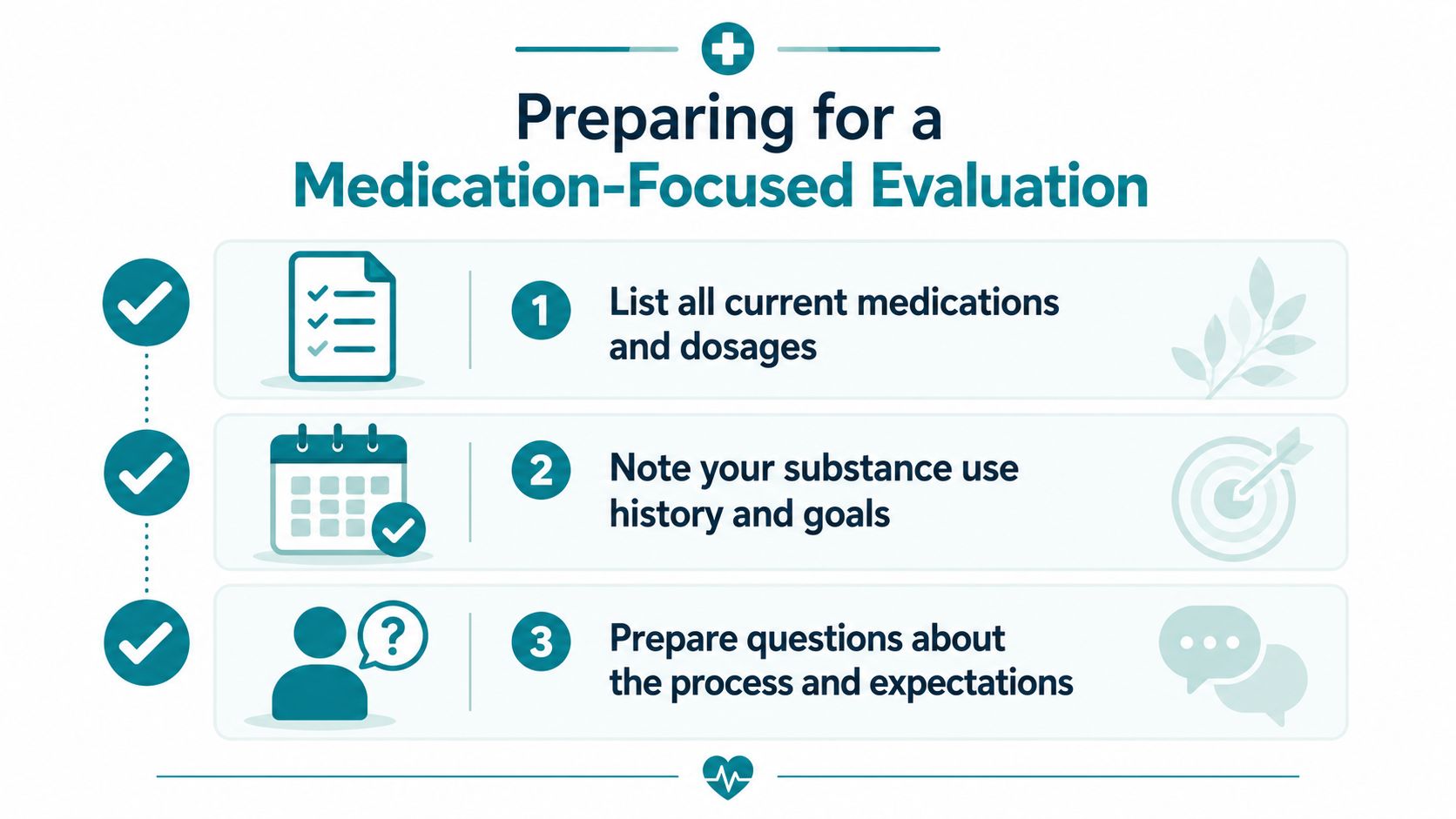
A careful evaluation usually starts before you ever sit down with a clinician. Bring a list of all current medications and dosages, a clear substance use history, and a few questions about what the practice expects from treatment. That small amount of preparation makes the visit more useful and helps the clinician judge whether Suboxone, another medication, or a different plan fits best.
What a thoughtful visit usually includes
A physician-led evaluation should review medical history, substance use history, relevant health factors, and the practical details that affect follow-through. That can include work schedule, transportation, pharmacy access, and whether telemedicine is a realistic part of care. It should also leave room for the patient's goals, because a medication plan that looks good on paper can still fail if it doesn't fit real life.
If you're comparing options, the useful question isn't “Will I definitely get Suboxone?” It's “Does this practice explain the process clearly, monitor treatment thoughtfully, and adjust care based on response?”
Empire Medical Wellness's medication evaluation resources may help you think through those questions before scheduling. If you want to explore physician-led outpatient care for opioid use disorder, you can also visit Empire Medical Wellness to learn more about the practice's approach to evaluation and follow-up.
This article is educational and isn't personal medical advice. If you're in immediate danger, call emergency services right away.