
A matching BMI does not mean two adults should leave with the same plan. Obesity medication guidelines commonly consider long-term anti-obesity medication for adults with a BMI of 30 kg/m² or higher, or 27 kg/m² or higher when an obesity-related condition is present, such as hypertension, type 2 diabetes, or obstructive sleep apnea, according to the National Institute of Diabetes and Digestive and Kidney Diseases. That threshold is a starting screen, not a prescription.
A guideline answers what a panel finds reasonable for a defined group. An FDA label answers what a product is approved to treat, and which warnings come with it. An insurance rule answers what a plan will pay. Those three questions often disagree.
Table of Contents
- Who Current Guidelines Consider for Medication
- Baseline Checks Before Any Medication Decision
- How Guidelines Compare the Medication Options
- Monitoring Checkpoints and Stopping Decisions
- Planning Maintenance Instead of Treating Regain as Failure
- Prepare Questions for a Physician-Led Visit
Who Current Guidelines Consider for Medication
BMI is weight relative to height. It screens for excess weight. It doesn't measure body fat, fitness, or whether medicine will help.
The World Health Organization defines adult overweight as a BMI of at least 25 kg/m² and obesity as a BMI of at least 30 kg/m². Clinicians may also look at waist size, ethnicity-related risk, metabolic findings, and complications. Treatment isn't based on appearance.
In commonly used U.S. guidance and labeling, adults may be considered for long-term pharmacotherapy at BMI 30 or higher, or at BMI 27 or higher with a qualifying condition. Examples include hypertension, dyslipidemia, type 2 diabetes, cardiovascular disease, and obstructive sleep apnea. Medicine is an adjunct to nutrition, activity, and behavioral care, with follow-up for effect, tolerability, and safety.
The American College of Physicians living clinical guideline, announced by the ACP, conditionally suggests semaglutide or tirzepatide as first-line options with lifestyle changes for nonpregnant adults with a BMI of 30 or higher. Certainty ratings sit in the full text. A conditional suggestion is not a rule for every patient, and it isn't the same as FDA labeling or coverage.
| BMI (kg/m²) | Guideline or labeling consideration | What the number does not decide |
|---|---|---|
| Below 25 | Not overweight under WHO classification; not a standard threshold for anti-obesity medication in the cited U.S. references | Whether a health concern needs evaluation |
| 27 to 29.9 with an obesity-related condition | Considered for long-term pharmacotherapy when hypertension, dyslipidemia, type 2 diabetes, cardiovascular disease, or obstructive sleep apnea is present | Which condition is present, how it is managed, and whether medication adds benefit |
| 30 or higher | Considered for long-term pharmacotherapy; ACP 2026 conditionally suggests semaglutide or tirzepatide first-line with lifestyle changes for nonpregnant adults | Contraindications, pregnancy status, patient preference, cost, and access |
The table describes populations, not a person. A BMI review can show where a number sits. Clinicians still weigh complications, prior treatment response, contraindications, and preference before any decision.
Practical rule: Meeting a BMI cutoff makes a conversation appropriate. It doesn't make a specific drug appropriate.
Baseline Checks Before Any Medication Decision
A general assessment covers weight, BMI, blood pressure, pulse, medical and medication history, metabolic risk, pregnancy considerations, and product-specific contraindications. Labs follow individual risk and the medicine under review, not a fixed menu.
A baseline works like the "before" photo in a renovation. Every later reading gets compared against it, so a missing or sloppy baseline makes the whole monitoring plan harder to interpret. That is also where a guideline turns into a personal plan: the recommendation describes a population, and these checks describe the one person in the room.
- Weight, BMI, and trajectory. Prior attempts and how they ended show what has already been tried.
- Waist circumference or another central-adiposity measure. BMI doesn't show where fat is carried, and two people with the same BMI can carry very different risk.
- Blood pressure and pulse. Some products affect heart rate or blood pressure, so a baseline matters before the first dose.
- Medical history. That includes diabetes risk and type 2 diabetes, dyslipidemia, cardiovascular disease, obstructive sleep apnea, kidney and liver disease, and psychiatric history. A personal or family history of medullary thyroid carcinoma or MEN 2 is relevant for some products.
- Medicines and supplements. Interactions can rule a drug in or out.
- Pregnancy status and plans. These products aren't for use in pregnancy, so contraception plans belong in the visit.
- Label contraindications. Current FDA-approved labeling, not a summary chart, lists warnings for the chosen product.
- Selected labs. Choice follows the person's risks and that medicine's monitoring needs.
- Goals, cost, and follow-up. A plan that can't be kept isn't a usable plan.
Two points get misread. First, BMI is a screening measure, not a diagnosis of health. It flags who deserves a closer look; it doesn't say what the look will find. Second, how someone looks doesn't establish obesity or rule it out, which is why the history and measurements above carry the weight.
Bring prior treatments, current medicines, supplements, and relevant family history. That packet lets the clinician match warnings to history instead of guessing from a BMI alone.
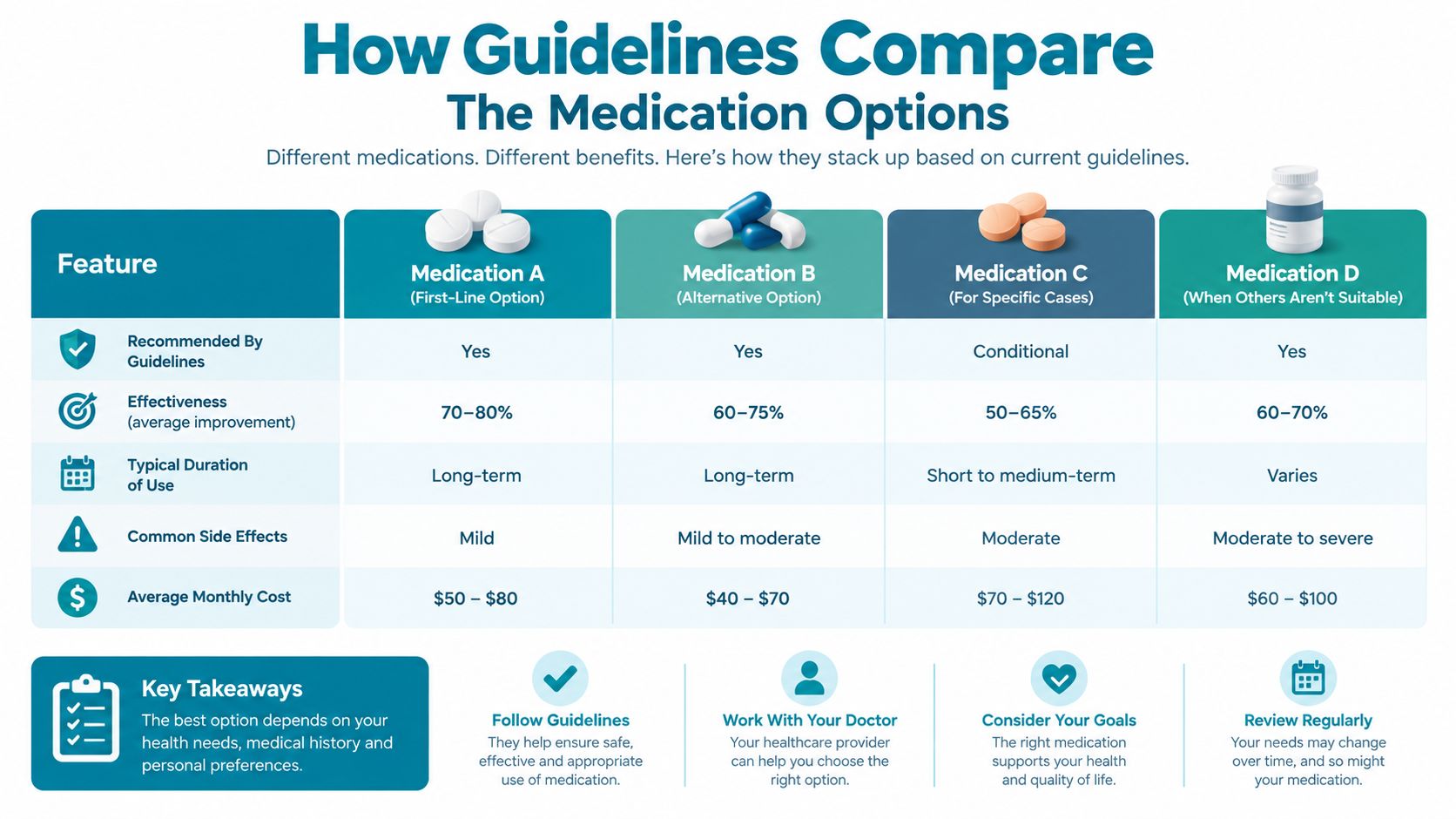
How Guidelines Compare the Medication Options
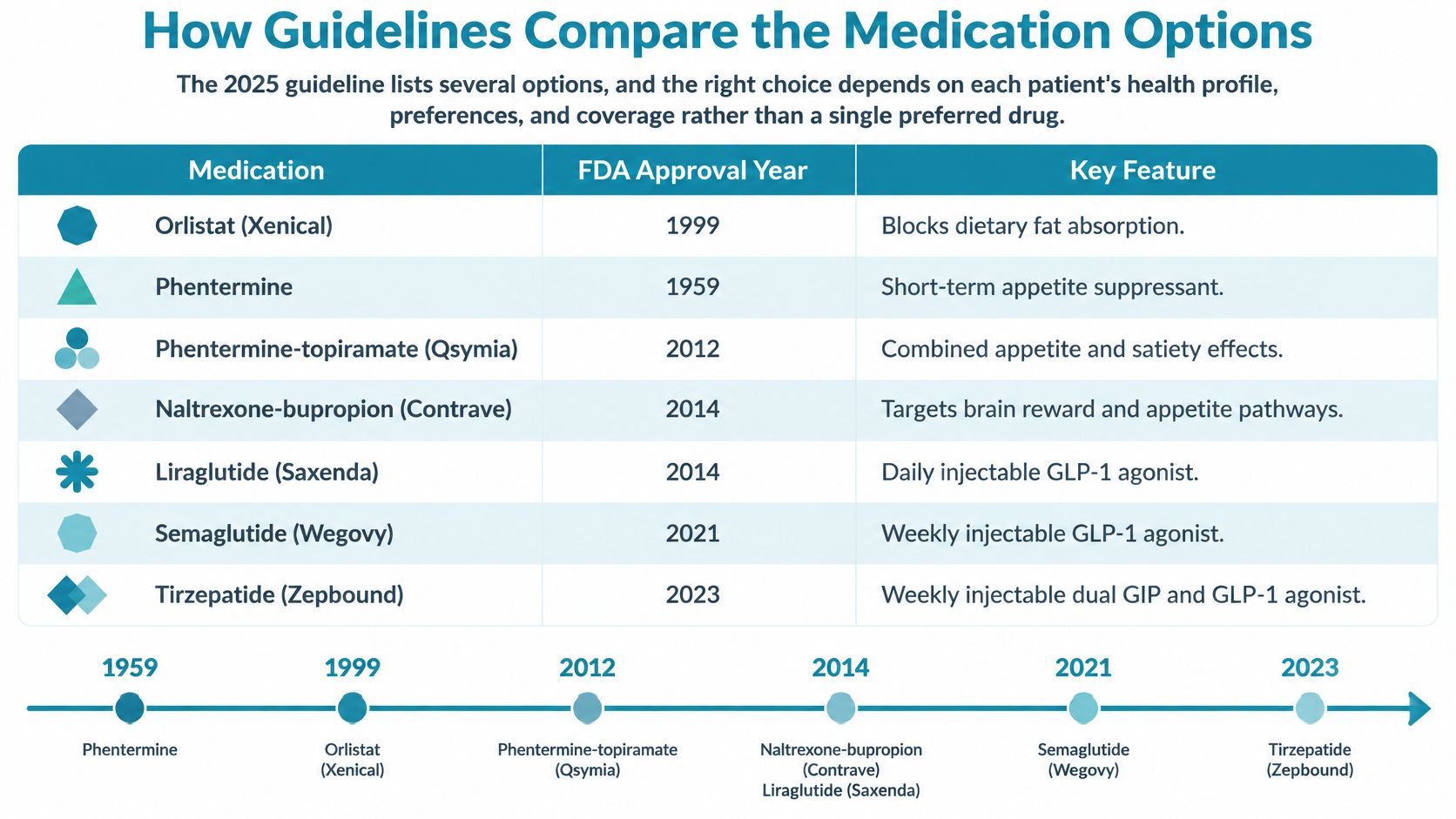
A 2025 clinical practice guideline treats medication as an adjunct to health-behavior care. It recommends offering pharmacotherapy at BMI 30 kg/m² or higher, or BMI 27 kg/m² or higher when adiposity-related complications are present. Listed options include semaglutide 2.4 mg weekly, tirzepatide, liraglutide 3 mg daily, naltrexone–bupropion, and orlistat. Choice isn't based on expected weight loss alone.
FDA obesity-approval years below come from the modern approval sequence: orlistat in 1999, phentermine/topiramate extended release in 2012, naltrexone/bupropion and liraglutide in 2014, setmelanotide in 2020, semaglutide 2.4 mg in 2021, and tirzepatide in 2023. Dosing, warnings, and contraindications belong on the current FDA-approved label, not in a blog table.
| Medication | FDA obesity approval (year) | Listed in cited 2025 guideline | Selection points to review against the label |
|---|---|---|---|
| Orlistat | 1999 | Yes | Digestive effects and fat absorption; label warnings and interactions |
| Phentermine/topiramate extended release | 2012 | No | Blood pressure and heart history; pregnancy-prevention requirements and other warnings in the label |
| Naltrexone–bupropion | 2014 | Yes | Seizure history, blood pressure, and psychiatric history per label |
| Liraglutide | 2014 | Yes | Thyroid C-cell tumor boxed warning; pancreatitis and gallbladder warnings |
| Semaglutide (2.4 mg formulation) | 2021 | Yes; ACP 2026 conditional first-line suggestion for BMI 30 or higher | Thyroid C-cell tumor boxed warning; gastrointestinal effects; pregnancy and contraception guidance |
| Tirzepatide | 2023 | Yes; ACP 2026 conditional first-line suggestion for BMI 30 or higher | Thyroid C-cell tumor boxed warning; gastrointestinal effects; glycemic effects |
| Setmelanotide | 2020 | No; approved for specific rare genetic conditions | Not a general adult weight-management option; genetic diagnosis is central |
What the comparison actually weighs
Gastrointestinal tolerability comes first for many people on incretin-based drugs, because nausea and related effects drive early stops. Glycemic effects matter when diabetes or prediabetes is already in the chart, since some agents lower glucose. Cardiovascular and psychiatric history can favor or exclude a product, especially when a label flags blood pressure, heart rate, seizures, or mood. Reproductive plans can make a drug unsuitable even when BMI fits. Route, cost, and long-term use decide whether a weekly injection or a daily tablet can be continued. A GLP-1 and phentermine comparison is one way to see how mechanisms differ before that talk.
Labeling for GLP-1-based medicines carries a thyroid C-cell tumor boxed warning. A personal or family history of medullary thyroid carcinoma or MEN 2 is a labeled contraindication for those products. Setmelanotide is for specific rare genetic conditions, not general adult obesity. Orlistat, approved in 1999, remains one of the earliest long-term options and works through fat absorption, with digestive effects that some people won't accept.
A product missing from one guideline isn't automatically unsuitable. It still needs label review and clinician judgment. Eligibility also includes complication burden, central adiposity, ethnicity-related risk, other medicines, and whether the person can follow monitoring.
Monitoring Checkpoints and Stopping Decisions
Monitoring is a series of checkpoints, not one weigh-in. BMI change alone doesn't define success. Glycemic control, blood pressure, function, side effects, and adherence belong in the same review.
| Checkpoint | What clinicians review | Guideline reference point |
|---|---|---|
| Before starting | Weight, BMI, waist measure, blood pressure, pulse, history, and contraindications | Baseline checklist |
| Early follow-up | Adverse effects, adherence, tolerability, and label instructions | Current FDA-approved labeling and clinician judgment |
| 3 months | Percent weight change, safety, tolerability, and metabolic markers | Endocrine Society: continue at 5% or more loss if safe and tolerated; otherwise discontinue and consider an alternative |
| 6 months | Percent change, benefits against risks, improvement in obesity-related conditions | NICE: consider discontinuation below 5% loss at the highest tolerated dose |
| Any time | Safety or tolerability problem | Endocrine Society: discontinue that medication and consider an alternative |
| Ongoing | Weight stability, glycemic control, blood pressure, physical function, and adherence | Long-term management and maintenance planning |
Two benchmarks that don't match
The Endocrine Society recommends judging effectiveness and safety rather than assuming every medicine continues. If a patient loses at least 5% of baseline body weight after three months and treatment is safe and tolerated, the guideline recommends continuing it. If loss is below 5% after three months, or safety or tolerability problems occur at any point, the clinician should discontinue that medication and consider an alternative. That threshold is a monitoring rule, not a promise of a set amount of weight loss.
NICE guidance advises considering discontinuation when less than 5% of initial body weight has been lost after 6 months at the highest tolerated dose, while weighing benefits and risks. The timelines differ. Neither is a universal stopping rule for U.S. care.
What gets checked before a stop
Before a change, the clinician verifies titration, adherence, tolerability, time at an effective dose, and whether the medicine is really available. Improvements in blood pressure, glucose, or sleep apnea symptoms can justify continuation even when the scale moves slowly. Semaglutide side effects are one example of why early tolerability reviews exist. Intolerance, too little exposure, nonresponse, and a good response that needs long-term care are different problems.
A modest scale change with clearer blood pressure and better sleep is a different clinical picture from slow loss and no other gains.
Here is a hypothetical example, not a real patient and not a dosing plan. An adult loses a small share of starting weight. Blood pressure readings improve, and sleep symptoms ease. That review isn't the same as slow loss with no change in those conditions. The first case may support continuation. The second may support a switch or a stop. Neither outcome is guaranteed, and neither should be copied as personal advice.
Each visit should record starting weight, current weight, percentage change, dose and titration dates, adverse effects, relevant metabolic outcomes, and the next decision point. Stopping still needs a follow-up plan. People who stop an effective medicine shouldn't be discharged without support, because later weight change reflects the chronic biology of obesity, not a failure of effort.
Planning Maintenance Instead of Treating Regain as Failure
A goal weight can mark progress without ending treatment. Obesity is a chronic disease, so maintenance means scheduled care after early loss. The 2025 VA/DoD guideline suggests against discontinuing medication because stopping is associated with weight regain. It also notes insufficient evidence on whether lowering the dose or frequency can preserve weight loss. The first is a recommendation; the second is an unresolved question.
Three boundaries need separating. A guideline weighs evidence and recommends a direction. FDA labeling defines the indicated use, warnings, and dosing directions for each product. Coverage, supply, and cost determine whether that direction remains available. The practical plan has to fit all three.
A guideline works like a route map: it shows a supported direction, while the written plan sets the next checkpoints. It should cover:
- Nutrition and activity: the habits maintained between dose decisions.
- Behavioral support and plateau checks: what gets reviewed when weight holds steady.
- Affordability and supply: whether the medicine can be obtained next month.
- Pregnancy plans, side effects, and preference: reasons to continue, switch, adjust, or stop.
A plateau can mean the current regimen is maintaining loss rather than producing more loss. Interpret it alongside benefits, tolerability, access, and goals. Weight-loss maintenance after medication becomes the practical question once early loss slows.
There is no universal maintenance dose, and continued treatment does not guarantee permanent weight stability. A written plan should name what continues, what triggers review, and whether evidence, labeling, access, or preference drives a change.
Maintenance remains an ongoing medical objective, even when the scale holds steady.
Prepare Questions for a Physician-Led Visit
Bring the blurred lines into the room as questions. Group them so comorbidity, risk, preference, access, and long-term feasibility each get a turn.
- Which of my conditions count as obesity-related? Hypertension, dyslipidemia, type 2 diabetes, cardiovascular disease, and sleep apnea are common examples, but the chart decides.
- Which baseline tests does my history call for, and why? Labs should match risk and the medicine, not a generic panel.
- Which product warnings match my history? Thyroid, pregnancy, seizure, psychiatric, and heart warnings are label items, not optional fine print.
- What would success mean, and how will it be measured? Weight percentage is one marker. Glucose, blood pressure, function, and side effects are others.
- How will we decide to continue, adjust, or switch? Ask which checkpoint applies, and what else besides the scale counts.
- What will maintenance involve if I reach a goal? Ask what continues, what might change, and what isn't promised.
- What will treatment cost, and what is included? Access and follow-up determine whether a guideline option is feasible.
Empire Medical Wellness is a physician-led outpatient practice where adults can seek obesity medicine on its own, including assessment and medication discussion when clinically appropriate. A first obesity medicine appointment is one place to see how that model is set up. Fees, billing, and visit length aren't restated here.
Severe or persistent abdominal pain, or any symptom that feels urgent, calls for prompt in-person medical care rather than a routine follow-up message.
Byline: Empire Medical Wellness Editorial Team
Sources named in this article: NIDDK prescription-medication overview; WHO obesity and overweight fact sheet; ACP living guideline (Annals of Internal Medicine, DOI 10.7326/ANNALS-25-02714) and the ACP newsroom announcement; a 2025 clinical practice guideline indexed on PubMed Central; Endocrine Society pharmacological management of obesity guideline; NICE NG246 medicines and surgery chapter; 2025 VA/DoD obesity guideline provider summary. Product-specific contraindications and monitoring should be read on current FDA-approved labeling.
This article is educational and isn't personal medical advice.
Empire Medical Wellness offers physician-led obesity medicine for adults, including medical assessment, discussion of FDA-approved anti-obesity medication when it fits the clinical picture, and follow-up aimed at monitoring and maintenance. That work follows individual history, labels, and feasibility, not a single drug for every BMI. Visit Empire Medical Wellness to see how the practice describes that care.