
An adult may reach a point where therapy, better sleep, exercise, and support from family or friends haven't eased persistent depression, anxiety, mood changes, or other distressing symptoms. The question of whether to try medication can feel both hopeful and unsettling. The most useful answer to medication for mental illness pros and cons isn't a fixed list of advantages and disadvantages. It's a careful conversation about fit, expected benefit, tolerability, monitoring, and personal priorities.
Psychiatric medication can help some adults function more safely and consistently, but it isn't a cure and it doesn't work the same way for everyone. A qualified clinician considers symptoms, diagnosis, age, medical history, prior treatment response, other medications, and treatment goals before recommending a plan. Adults seeking broader evaluation can learn more about adult mental health care while preparing for that conversation.
Table of Contents
- Why This Decision Deserves Careful Thought
- What Psychiatric Medication Can Help With
- Common Risks, Side Effects, and Safety Considerations
- How Benefits and Risks Differ by Medication and Condition
- How to Discuss Medication Options with a Clinician
- Monitoring, Adjustments, and When to Seek Help
- Next Steps for Thoughtful Medication Decision-Making
Why This Decision Deserves Careful Thought
A person who has spent months trying to keep working, maintain relationships, and manage daily responsibilities may see medication as either a last resort or a quick fix. Neither view is reliable. Medication can be one component of care, sometimes alongside psychotherapy, lifestyle changes, social support, or treatment of a coexisting medical problem. It can also be unsuitable, poorly tolerated, or aimed at the wrong symptom if the underlying clinical picture hasn't been clarified.

The decision deserves care because the potential benefit and the potential burden are both personal. An antidepressant may reduce depressive symptoms for one adult but cause sexual side effects, sleep disruption, or nausea that makes continued treatment difficult. An antipsychotic may reduce psychotic or manic symptoms while requiring close attention to sedation, movement effects, weight, glucose, and lipids. A medication that makes sense for one condition may be inappropriate for another.
What this guide can and cannot do
This guide is a decision-support resource, not a diagnosis or prescription. It doesn't identify the right medication, provide dosing advice, or tell anyone to start, stop, or change treatment. It offers a way to discuss the trade-offs with a qualified prescriber.
A sound review usually addresses:
- The target: Which symptoms or functional problems is treatment intended to address?
- The expected gain: What improvement would make treatment worthwhile?
- The cost of treatment: Which side effects, interactions, monitoring tasks, or financial burdens matter most?
- The reassessment plan: When will response and tolerability be reviewed?
- The alternative plan: What happens if the medication doesn't help or isn't acceptable?
The U.S. National Institute of Mental Health explains that mental health medications can provide substantial benefits when matched to a person's symptoms, diagnosis, medical history, and goals, while also emphasizing the need for follow-up and monitoring (NIMH Mental Health Medications).
What Psychiatric Medication Can Help With
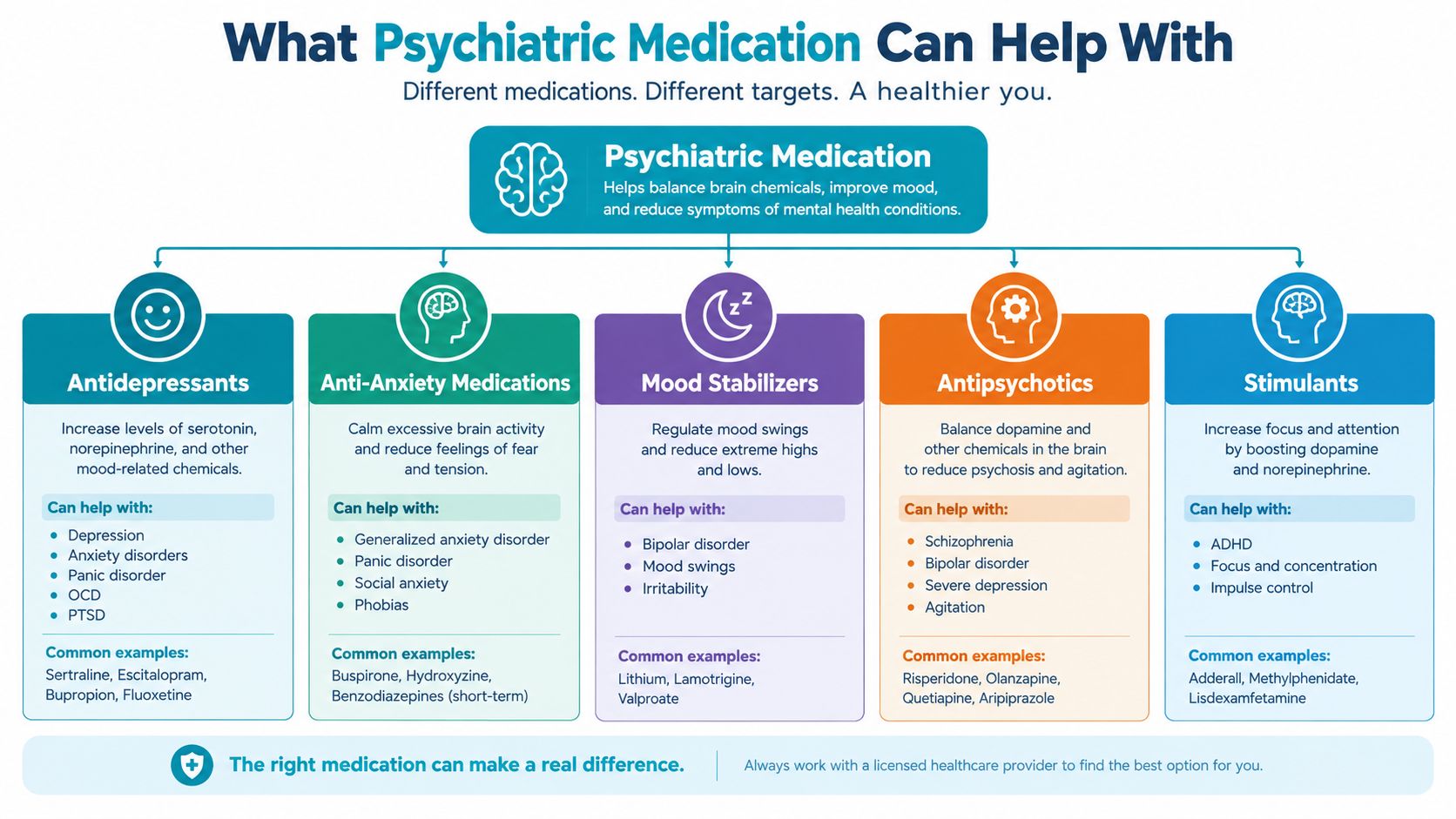
Psychiatric medication is designed to target particular symptoms and conditions. Antidepressants are used for depression, while antipsychotics are typically used for psychosis, a condition involving some loss of contact with reality. Other medication classes address different symptom patterns, including mood instability, severe anxiety, attention problems, or manic symptoms. The same drug class can have different roles depending on the diagnosis and the clinician's assessment.
The potential benefit is broader than symptom reduction. Appropriate treatment may improve concentration, sleep, energy, emotional stability, safety, and the ability to participate in work, school, relationships, or psychotherapy when that's part of the care plan. The practical question is whether a person can do more of what matters to them, with an acceptable level of treatment burden.
Average benefit isn't the same as individual benefit
A large network meta-analysis of adults with major depressive disorder found that all included antidepressants were more effective than placebo, but the pooled standardized mean difference was 0.30, a small to moderate average effect rather than a transformational one (The Lancet network meta-analysis32802-7/fulltext)). The same analysis found higher withdrawal rates because of adverse events with active drugs than with placebo, with odds ratios ranging from 1.64 to 4.44 for most medications.
Those findings don't predict what will happen to a particular person. Results vary with diagnosis, baseline severity, coexisting illness, medication class, previous response, interactions, pregnancy considerations, and willingness to continue treatment. A realistic plan therefore defines what improvement would look like and sets a point for reassessment rather than assuming the prescription will work uniformly.
Therapy and medication can serve different roles
Medication may reduce symptom intensity enough to make psychotherapy more workable. Psychotherapy may help a person develop skills, examine patterns, process experiences, and plan for recurrence. Some adults use one approach, some use both, and some need a different strategy altogether. The appropriate combination depends on the clinical situation, access, preferences, and treatment goals.
Adults concerned about persistent low mood can review the practice's information about depression care, but online material can't determine whether medication is appropriate for an individual.
Common Risks, Side Effects, and Safety Considerations
A medication may ease one problem while creating another that matters in daily life. Side effects vary with the drug class, formulation, dose, health history, and individual biology. Common concerns include nausea, dry mouth, restlessness, drowsiness, sleep changes, weight changes, and sexual dysfunction. For readers considering antidepressant treatment options, these effects should be weighed against the expected benefit. Some improve as treatment continues; others persist and affect work, relationships, driving, or willingness to continue.
NICE recommends discussing effects a patient particularly wants to avoid, including weight gain, sedation, sexual dysfunction, and withdrawal symptoms. That discussion belongs before prescribing, not only after a difficulty develops. The choice depends on the person's medical history, priorities, previous treatment experience, and tolerance for specific risks. A side effect that is manageable for one person may be unacceptable for another.
Antipsychotic monitoring is part of the treatment
Some second-generation antipsychotics carry important cardiometabolic risks. Monitoring guidance recommends checking weight, body-mass index, waist circumference, blood pressure, glucose or HbA1c, and lipid profile at baseline and during follow-up. Higher-risk agents, including clozapine, olanzapine, and quetiapine, may require more frequent monitoring early in treatment (guidance on metabolic side effects of atypical antipsychotics).
Clinical guidance identifies clozapine and olanzapine as having particularly high risks for weight gain, abnormal blood lipids, and raised blood glucose (clinical guidance on antipsychotic metabolic effects). A substantial early increase in weight, rising glucose, abnormal lipids, excessive sedation, or new abnormal movements warrants clinical review. These findings do not justify changing or stopping medication independently. They may instead prompt a discussion about monitoring, dose, alternatives, or additional support.
Withdrawal is different from relapse
Stopping medication suddenly can cause withdrawal symptoms. They may resemble a return of the underlying condition, while recurrence can also follow a reduction or discontinuation. Distinguishing the two often requires a timeline and clinical assessment.
A 2025 narrative review identified only eight studies of supportive deprescribing interventions in adult mental healthcare, with limited evidence on antipsychotic deprescribing (2025 narrative review of supportive deprescribing). The review described shared decision-making, structured tapering guidance, psychotherapy-based support, and individualized tapering tools in the available literature. There is no universal tapering schedule, so reductions should be planned with the prescriber.
Untreated symptoms also belong in the calculation. Persistent depression, psychosis, mania, severe anxiety, or impaired functioning can carry serious consequences. The practical question is whether a particular treatment plan offers a better overall outcome than available alternatives for that person.
How Benefits and Risks Differ by Medication and Condition
A medication that helps one person may create an unacceptable burden for another. Antidepressants, antipsychotics, mood stabilizers, and other psychiatric medicines address different problems, so their likely benefits, risks, and monitoring requirements cannot be treated as interchangeable.
The comparison below is educational, not a personal treatment recommendation. The meaningful question is how a medicine's expected effect fits the person's diagnosis, medical history, priorities, and ability to attend follow-up.
| Broad medication category | Potential role | Possible trade-offs | Questions for the prescriber |
|---|---|---|---|
| Antidepressants | May reduce depressive symptoms and support sleep, concentration, energy, and daily function in some adults | Nausea, sleep changes, sexual side effects, interactions, and withdrawal symptoms may affect tolerability | Which symptom is being targeted, and how will improvement be judged? |
| Antipsychotics | May reduce the intensity or frequency of psychotic symptoms and help with manic or severe mood symptoms in appropriate conditions | Sedation, restlessness, movement-related effects, weight gain, abnormal lipids, and elevated glucose may occur | Which baseline tests and follow-up checks are needed? |
| Mood stabilizers | May address mood instability or manic symptoms in specific conditions | Monitoring and safety concerns vary substantially by medicine and medical history | Which risks matter most alongside existing conditions and medicines? |
| Other psychiatric medications | May target selected concerns such as anxiety, attention problems, or sleep disturbance | Alertness, cognition, sleep, dependence risk, and interactions may be relevant | What alternatives and nonmedication supports should be considered? |
Benefit should be assessed against a defined target. For depression, that may include mood, interest, sleep, concentration, energy, and daily function. For psychosis, it may include fewer or less intense experiences, reduced agitation, improved organization, or greater stability. Side effects can appear before meaningful improvement, making a planned review more useful than relying on first impressions.
Medical history can change the balance
Cardiovascular disease, diabetes risk, seizure history, pregnancy considerations, liver or kidney problems, sleep disorders, and other medicines can alter the safety calculation. Supplements also deserve discussion. An evidence-focused supplement guide for mental health may help identify questions, but supplements are not automatically safer and can interact with treatment.
For anxiety concerns, readers can review anxiety medication care as general information, not as an individual recommendation. The final choice belongs in a discussion with a qualified prescriber who can weigh likely benefit, foreseeable harm, alternatives, and the monitoring needed for that specific person.
How to Discuss Medication Options with a Clinician
A productive medication review starts before the appointment. The adult seeking care doesn't need a perfect symptom diary, but a concise record can make the discussion more precise. Useful information includes the main symptoms, when they occur, how they affect daily life, previous medications or therapy, past side effects, allergies, supplements, substance use, medical conditions, and personal treatment goals.
Shared decision-making means the patient contributes preferences and priorities while the clinician contributes diagnostic assessment, evidence, risk evaluation, and monitoring expertise. A 2025 systematic review of shared decision-making in schizophrenia included eight studies and 2,314 participants. Adherence improved in most studies, with pooled reported rates of 78% versus 69%, and quality-of-life scores also improved, although results varied by intervention format, duration, and intensity (systematic review of shared decision-making in schizophrenia). Shared decision-making supports communication, but it isn't a guarantee of benefit.
Questions that clarify the trade-offs
A clinician should be able to explain the intended target, expected course, significant risks, alternatives, and follow-up plan in language the patient understands. Questions can include:
- Which symptom or functional problem is the medication intended to address?
- What improvement should appear first?
- What side effects are common, and which require prompt contact?
- Could this medication interact with current prescriptions, supplements, alcohol, or medical conditions?
- What monitoring is needed before treatment and during follow-up?
- What happens if the medication isn't effective or tolerable?
- How will the clinician distinguish withdrawal symptoms from recurrence if treatment is later reconsidered?
The blank table below can be copied into an appointment note. It's deliberately open because the relevant concerns differ by person and medication.
| Target concern | Hoped-for benefit | Concern to discuss | How response will be monitored | Follow-up question |
|---|---|---|---|---|
Adults seeking a structured discussion can review mental health medication review. The purpose of a review is not to push a particular medication. It's to connect symptoms, goals, prior experience, safety factors, and a practical follow-up plan.
Monitoring, Adjustments, and When to Seek Help
Medication management is iterative. A follow-up visit usually considers symptom changes, daily functioning, adherence, sleep, mood, new concerns, side effects, interactions, and any laboratory or physical monitoring relevant to the medication. The timing depends on the clinical situation, the medication, the risk profile, and whether treatment has just started or changed.
For antipsychotic treatment, NIMH lists weight gain, dry mouth, restlessness, and drowsiness among possible early side effects. Some improve with time, while others persist. Clozapine and olanzapine have particularly high risks for weight gain, abnormal blood lipids, and high blood glucose, so the clinician may recommend structured medical surveillance (antipsychotic side-effect guidance).
Practical rule: A patient shouldn't wait for a routine appointment to report a severe or rapidly worsening reaction.
Prompt clinical contact is appropriate for severe side effects, worsening symptoms, new suicidal thoughts, marked agitation, new abnormal movements, concerning sedation, or signs of an allergic reaction such as swelling or difficulty breathing. Life-threatening symptoms require emergency services or the nearest emergency department. A person in the United States who is in immediate emotional crisis can call or text 988 for the Suicide & Crisis Lifeline.
Patients shouldn't stop or alter prescribed medication independently, even when side effects are frustrating or symptoms have improved. Honest reporting gives the prescriber a chance to reassess the medication, consider alternatives, adjust monitoring, or plan a safer transition.
For general background on ongoing follow-up, readers may find this overview of medication management from Rx360 useful. It doesn't replace an individualized clinical review.
Next Steps for Thoughtful Medication Decision-Making
The pros and cons of medication for mental illness aren't fixed properties that apply equally to every adult. The potential value depends on the symptom target, diagnostic clarity, treatment fit, medical history, prior response, side-effect tolerance, monitoring access, personal preferences, and the consequences of leaving symptoms untreated.
A thoughtful next step is to write down the symptoms that interfere most with daily life and the improvement that would make treatment worthwhile. The patient can then bring that list, a complete medication and supplement record, previous treatment history, and specific concerns to a qualified prescriber. A decision can be revisited when new information appears. It doesn't have to be treated as permanent or irreversible.
Adults considering physician-led evaluation and ongoing medication management can review the mental health medication management service. Readers can also see how private-pay care and fees work and use the appointment scheduling page to explore whether the practice's process fits their needs.
This article was prepared for clinical review by a qualified professional before publication. It's educational and isn't personal medical advice.
Empire Medical Wellness provides private-pay adult mental health evaluation, medication review, and ongoing medication management through a physician-led outpatient practice. Adults who want to discuss treatment benefits, side effects, monitoring, or follow-up can learn more at Empire Medical Wellness and decide whether to schedule an evaluation.