
The popular advice is simple: eat less and move more. That description is incomplete. Weight gain is a measurable change in body mass shaped by energy balance, biology, sleep, medications, medical conditions, stress, and life stage. Understanding the cause requires looking at the pattern over time, not judging a single weigh-in or assuming the change reflects willpower.
A physician-led evaluation can help separate ordinary fluctuations from a persistent trend and identify factors that deserve attention. The goal is sustainable care, not a short-lived restriction cycle.
Table of Contents
- What Weight Gain Is and How It Is Measured
- The Biology Behind Energy Balance and Metabolism
- Common and Often-Missed Drivers of Weight Gain
- When the Scale Stalls Despite Adherence
- How a Physician Evaluates Weight Gain
- Medications, Life Stages, and Weight Trajectories
- Regain After Stopping Anti-Obesity Medications
- When to Seek Physician-Led Care
What Weight Gain Is and How It Is Measured
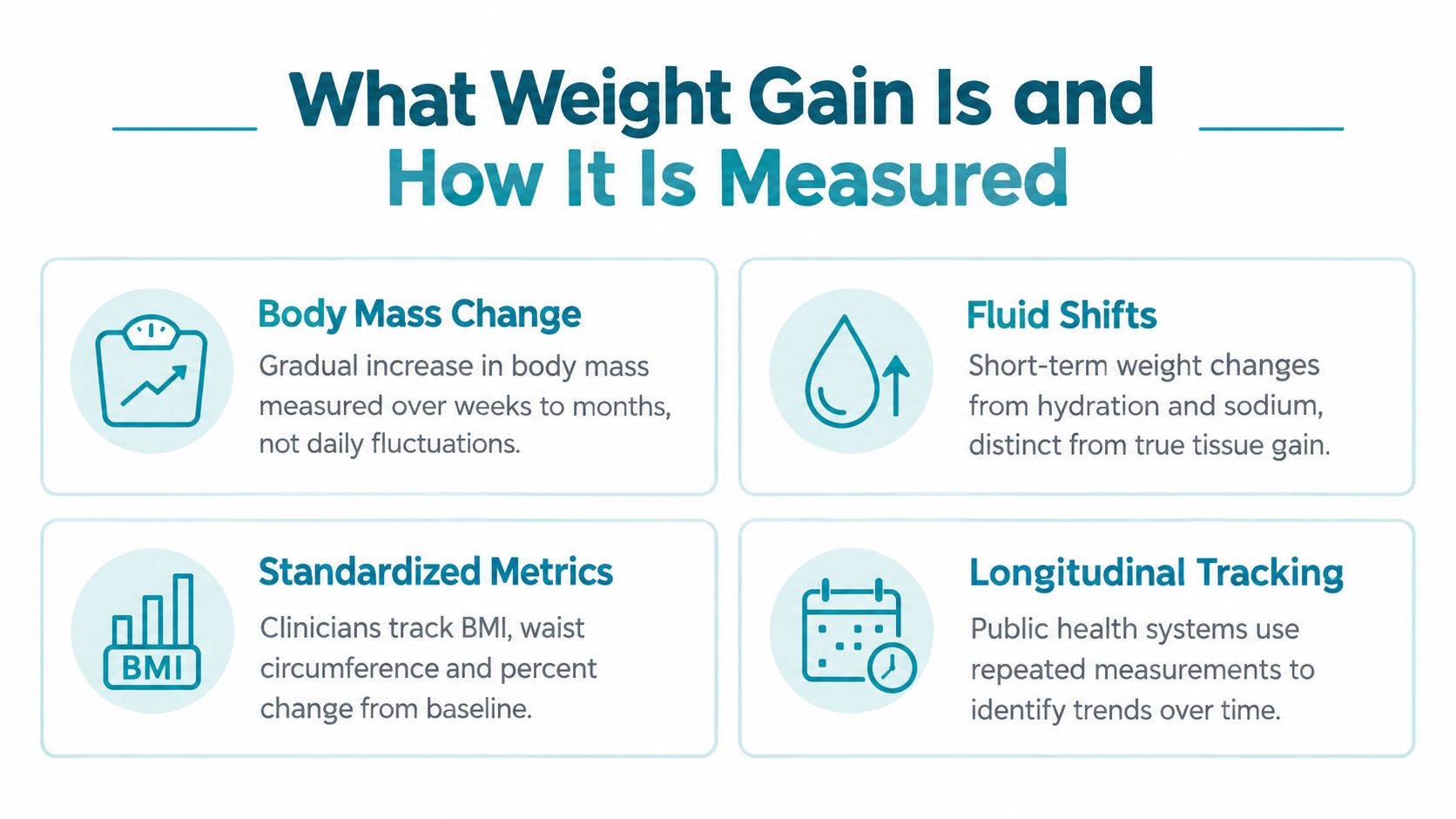
A higher number on the scale does not identify its cause. Weight gain is an increase in total body mass, which can reflect fat, muscle, glycogen, food in the digestive tract, or fluid. Short-term shifts often reflect hydration and digestion rather than a meaningful change in body fat.
Measurement works best when it shows a pattern. Use a consistent scale, weigh under similar conditions, and record results across weeks or months. A single reading is like one frame from a film. It may be accurate, but it cannot show the direction of change.
- Use a consistent scale: A calibrated scale limits measurement variation.
- Keep timing similar: Weighing at a similar time of day makes comparisons clearer.
- Record the trend: Repeated measurements are more informative than an isolated number.
- Add other measures: Waist circumference, clothing fit, health markers, and body composition can provide context when available.
Why BMI helps, and where it falls short
Body mass index, or BMI, compares weight with height. The World Health Organization defines adult obesity as a BMI of 30 kg/m² or higher. This shared threshold helps public-health systems compare populations without relying on appearance or clothing size.
BMI is a screening measure, not a diagnosis. It cannot distinguish muscle, fat, bone, or fluid. A clinician may also review waist circumference, blood pressure, glucose, lipids, medical history, and body composition when available.
For the calculation itself, the Empire Medical Wellness BMI calculator offers a starting point. The result cannot determine an individual's health status on its own.
Waist circumference adds information because fat distribution affects health. A growing waist alongside a sustained weight trend may lead to a closer review of metabolic health, medications, sleep, and other contributors. Interpretation still depends on the person's broader clinical picture.
Population data also explain why consistent measurement matters. WHO reports that overweight and obesity affect a large share of adults worldwide, with obesity increasing over time. These findings describe broad patterns, not an individual diagnosis. For personal care, the more useful question is how body weight, waist size, symptoms, and health markers are changing together.
The Biology Behind Energy Balance and Metabolism
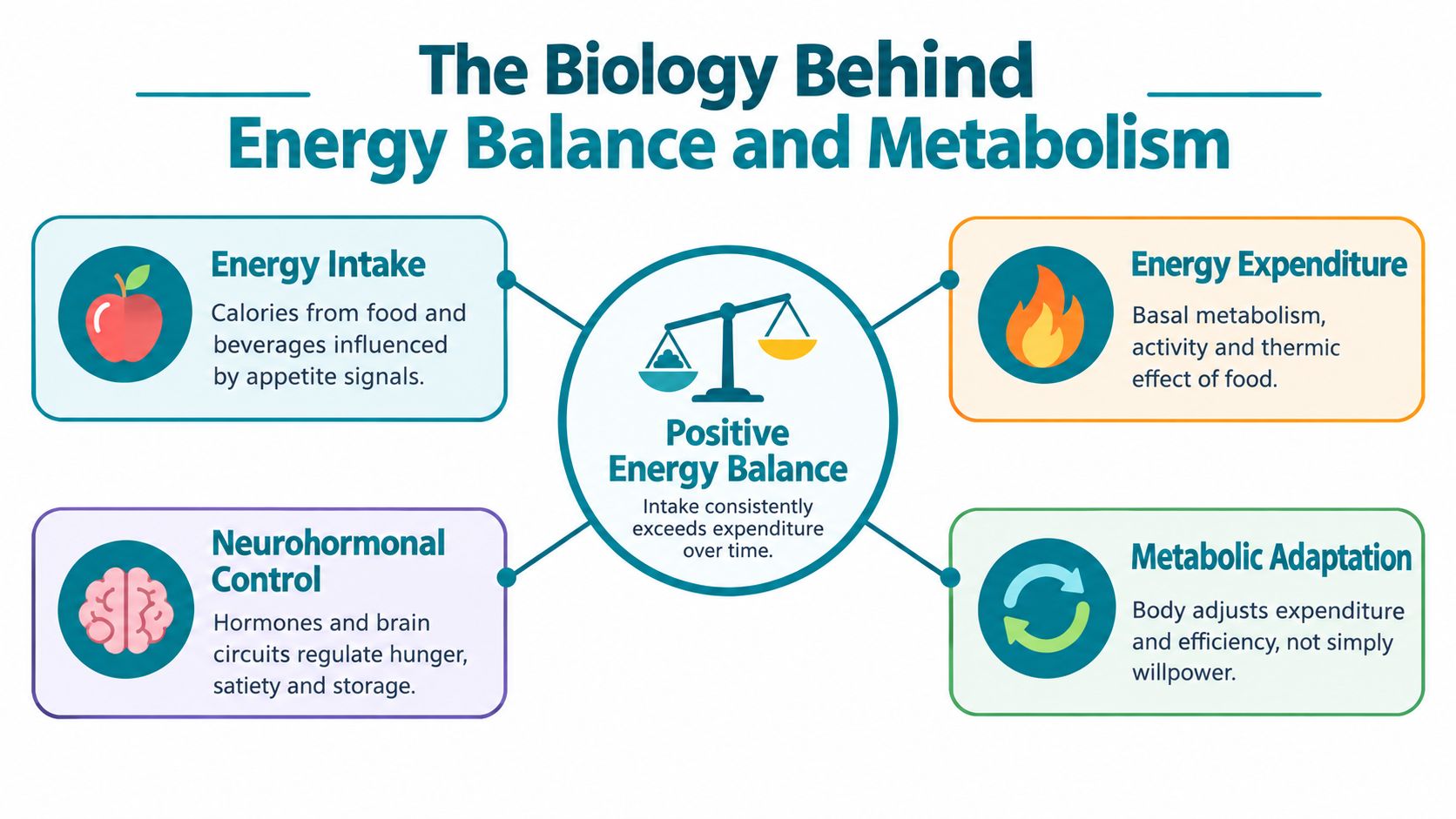
Weight gain generally occurs when energy intake remains greater than energy expenditure over time. That explanation is physiologically correct, but it leaves out the systems that influence appetite, fullness, movement, and how efficiently the body uses energy.
The brain, especially the hypothalamus, receives signals from the gut, pancreas, and fat tissue. Hormones such as leptin, ghrelin, insulin, and thyroid hormones participate in appetite, satiety, glucose handling, and energy use. Sleep, stress, medications, activity, and illness can alter these signals, so two people with similar food records may not have identical hunger or expenditure.
Metabolism changes with body size and weight change
Metabolism isn't a fixed number. It includes resting energy expenditure, physical activity, and the energy used to digest food. When body mass changes, energy needs change as well. The body can also adapt to weight change, although that adaptation doesn't fully cancel a sustained energy surplus.
In a controlled analysis, a 15-kg weight gain increased 24-hour energy expenditure by about 244 kcal per day and fat oxidation by about 152 kcal per day. The authors found that these changes were only slightly greater than predicted from the change in body size alone (PubMed summary). The practical lesson is that increased body mass raises energy use, but not enough to prevent continued storage when intake remains higher than expenditure.
Sleep and stress also matter. Poor sleep can affect appetite regulation and daily activity, while chronic stress may alter eating patterns and routines. A medication review can reveal another contributor that calorie tracking won't identify.
Food comparisons can be useful for understanding energy density, but they aren't a complete treatment plan. For example, comparing ghee and butter calories may clarify how preparation choices affect intake, while a physician-led plan considers the broader pattern of nutrition, hunger, activity, health conditions, and sustainability.
A calorie deficit may be part of weight-management care, but the appropriate approach differs by person. Sustainable care focuses on the factors that make a plan workable over time, rather than treating metabolism as a moral test.
Practical rule: A plateau or gain deserves investigation, not automatic self-blame or increasingly severe restriction.
Common and Often-Missed Drivers of Weight Gain
Weight gain is often a regulated biological response to several influences, not proof of one poor decision. The NIDDK lists food and beverage intake, activity, sleep, medications, endocrine disorders, depression, and long-term stress among factors affecting weight. These factors can overlap, so a useful evaluation looks for the pattern rather than assigning blame.
Five domains clinicians review
Lifestyle and environment may shift gradually. Larger portions, less movement, disrupted schedules, limited access to nutritious food, and inadequate sleep can change intake or daily energy use without a deliberate choice to eat more.
Medical and metabolic conditions can affect weight through different pathways. NIDDK identifies hypothyroidism, polycystic ovary syndrome, and Cushing's syndrome. Insulin resistance and obstructive sleep apnea may also warrant consideration when symptoms and medical history support it. Weight change by itself cannot identify the cause. It is one clue in a broader assessment.
Medications require a careful review of the full list, including prescriptions, over-the-counter products, and supplements. Certain antidepressants, antipsychotics, corticosteroids, insulin, some diabetes medicines, beta-blockers, and antihistamines may be linked with different weight trajectories. The effect depends on the drug, dose, duration, health condition, and individual response. A prescribed medicine should not be stopped without speaking with the prescriber.
The Empire Medical Wellness overview of whether Benadryl can contribute to weight gain illustrates why an antihistamine belongs in that review. It does not mean that everyone who takes one will gain weight, and it does not justify changing treatment independently.
Mental health and stress can influence appetite, sleep, activity, and eating behavior. Depression, anxiety, trauma-related symptoms, and emotional eating may make a previously workable routine difficult to sustain. That reflects a health need, not a character flaw, and mental health belongs in the medical history.
Life stages can change body composition, fat distribution, sleep, and energy needs. Perimenopause and menopause, postpartum recovery, aging, smoking cessation, alcohol use, and major changes in work or caregiving may occur together.
A practical question is: what changed before the weight changed? The answer may involve sleep, a prescription, menstrual or menopausal symptoms, alcohol, mood, activity, or a new medical symptom. Identifying those connections supports individualized care and durable maintenance rather than a short-term restriction plan.
When the Scale Stalls Despite Adherence
A hypothetical composite example
This is a hypothetical composite, not an actual patient. An adult records food intake, maintains regular activity, and reports adequate sleep. The scale stays nearly unchanged for ten days, creating concern that the plan has stopped working.
Ten days is too short to identify the cause of a scale pattern. Fluid retention, sodium, glycogen, bowel contents, meal timing, and exercise-related inflammation can mask changes in tissue mass. A short-term reading can't distinguish fat from fluid.
A plateau and weight-change audit
A physician may organize the review around several possibilities:
| Area to review | Question it helps address |
|---|---|
| Fat mass | Is the longer trend, waist measurement, or clothing fit changing? |
| Fluid | Are hydration, sodium, swelling, or another health issue affecting the scale? |
| Glycogen and bowel contents | Could recent carbohydrate intake, exercise, or digestion explain the reading? |
| Lean mass | Has resistance training, activity, illness, or nutrition changed body composition? |
| Medication effects | Did a prescription, over-the-counter product, or supplement change? |
| Medical contributors | Are there symptoms or history suggesting endocrine, sleep, metabolic, or other evaluation? |
The NIDDK Body Weight Planner illustrates why body weight and energy needs change dynamically rather than following a simple fixed equation. It isn't a diagnostic tool or a personal treatment plan.
Some adults also notice changes in waist measurement or clothing before the scale changes. A general explanation of losing inches and not weight can help explain why one measurement shouldn't dominate the assessment.
A plateau is information. It isn't proof that you failed or that your body is incapable of change.
The next step is usually a structured review, not a drastic response. A clinician may repeat measurements under consistent conditions, review the timeline, and decide whether further assessment is appropriate.
How a Physician Evaluates Weight Gain
A physician begins with the trajectory, not just the current number. The discussion may cover when the gain began, how quickly it developed, previous weight patterns, eating routines, activity, sleep, stress, reproductive or life-stage changes, and recent illness.
The review also considers symptoms. Depending on the history, questions may address thyroid-related symptoms, menstrual or reproductive changes, gastrointestinal concerns, mood, snoring, daytime sleepiness, swelling, shortness of breath, or changes in thirst and urination. These questions don't diagnose a condition on their own. They help determine what deserves closer evaluation.
Medication and laboratory review
Every prescription, over-the-counter product, and supplement matters. A medication may affect appetite, alertness, fluid balance, glucose regulation, or activity. A complete review should include recent starts, stops, and substitutions, while changes remain the responsibility of the prescribing clinician.
Commonly considered laboratory categories may include thyroid function, glucose or hemoglobin A1c, cholesterol and triglycerides, and liver enzymes. Cortisol or sex-hormone testing may be considered when the history and examination make it relevant. There is no universal first panel for every adult, and this article makes no claim about specific Empire laboratory orders, results, or clinician statements.
For readers exploring the topic, an overview of blood work for unexplained weight changes can explain why testing is selected according to symptoms and medical context. A result still needs interpretation by a qualified professional.
Follow-up provides the missing context
Longitudinal follow-up lets a clinician compare weight, waist circumference, symptoms, medication exposure, sleep, activity, and relevant health markers. It also allows the plan to change when the response differs from the original expectation.
A private physician-led weight-loss care consultation may include medical and metabolic assessment, review of weight history, individualized planning, and follow-up. The appropriate components depend on the person's situation, and no outcome is guaranteed.
Medications, Life Stages, and Weight Trajectories
Weight gain can follow medication exposure or a life-stage transition, but the pattern differs among people. The table below is a clinical reference, not a prescribing guide. It describes possible directions rather than assigning an expected amount of change. A clinician must consider the specific medicine, treatment duration, underlying condition, symptoms, and baseline health.
| Factor | Typical weight trajectory |
|---|---|
| Certain antipsychotics | Some may increase appetite or affect metabolic regulation. Effects vary substantially by medicine and individual. |
| Certain antidepressants | Weight patterns differ by medication and person. Mood, appetite, sleep, and activity can influence the result. |
| Glucocorticoids | Longer exposure may affect appetite, fluid balance, and fat distribution. Treatment purpose and duration matter. |
| Insulin and some secretagogues | These medicines may be associated with weight increase in some treatment settings. Glucose control remains a separate clinical priority. |
| Beta-blockers | Some people experience weight-related effects. The cardiovascular condition and activity level may also contribute. |
| Antihistamines | Evidence is limited and may reflect correlation rather than clear causation. Sedation and appetite effects vary by product. |
| Perimenopause and menopause | Hormonal transition may affect fat distribution, sleep, activity, and resting energy expenditure. |
| Postpartum recovery | Sleep disruption, lactation, recovery, mood, and daily demands can shape the weight trajectory. |
| Midlife androgen changes | Body-composition and activity changes may overlap with aging and other health factors. |
| Smoking cessation | Appetite, routine, taste, stress, and activity may change after cessation. The health benefits of quitting remain substantial. |
| Alcohol use | Alcohol supplies energy and may affect sleep, appetite, and food choices. The overall pattern matters. |
| Sleep loss | Reduced sleep can disrupt appetite regulation, energy, and daily routines. |
A medication or life-stage change can act like one input in a larger biological system. It may influence appetite, sleep, movement, fluid balance, or metabolic regulation without being the only cause of weight change. A timing link also does not prove that one factor caused the gain.
Medication review should protect the reason treatment was prescribed. Do not stop psychiatric, diabetes, cardiovascular, allergy, or steroid treatment independently. The prescribing clinician may need to coordinate with a physician managing obesity, especially when changing therapy could affect another condition.
Adults considering medication-based obesity treatment can review Empire's GLP-1 information for general context. Treatment decisions depend on the indication, medical history, risks, benefits, and monitoring needs. The FDA describes semaglutide 2.4 mg, marketed as Wegovy, as indicated for adults with obesity or adults with overweight who have at least one weight-related condition, with the goal of reducing excess body weight and maintaining that reduction long term (FDA announcement).
Long-term care focuses on a plan that can be maintained, not just a short period of weight loss. That plan may include medication review, sleep support, treatment of related conditions, and follow-up that adjusts care as the person's response changes.
Regain After Stopping Anti-Obesity Medications
Stopping an anti-obesity medication doesn't necessarily return the body to a stable, pre-treatment baseline. Regain after discontinuation can be a predictable, time-dependent biological response, not evidence that a person failed.
A 2026 systematic review and meta-analysis across 37 studies and 9,341 adults found average regain of about 0.4 kg, or 0.9 lb, per month after stopping weight-management drugs. Among semaglutide and tirzepatide users, average regain was about 0.8 kg, or 1.8 lb, per month, with weight moving toward baseline within roughly 1.5 to 2 years (University of Oxford summary).
A separate 2026 review found that stopping GLP-1 receptor agonists was associated with a pooled gain of 5.63 kg and higher HbA1c. Those findings reinforce a clinical question that is often missed: maintenance planning should begin before discontinuation is considered.
| Time after stopping | Average weight regained | Metabolic markers |
|---|---|---|
| First months | Regain may begin and differs by medication and person. | Improvements may begin to lessen. |
| Around one year | A substantial portion of lost weight may return in some groups. | Glycemic and other cardiometabolic benefits may partially reverse. |
| Longer follow-up | Weight may continue moving toward the prior baseline. | Ongoing monitoring helps assess the individual's course. |
The biology is consistent with obesity as a chronic, regulated condition. Appetite signals, energy expenditure, and food-seeking behavior may remain affected after treatment ends. That makes relapse-prevention planning more constructive than blame or repeated cycles of severe restriction.
Medication continuation, tapering, switching, or stopping requires a qualified prescriber. This article doesn't provide instructions to change treatment.
When to Seek Physician-Led Care
Routine medical follow-up is appropriate when weight has increased gradually, a plateau is causing concern, or previous efforts haven't produced durable results. A physician can review the trajectory, health risks, medications, sleep, mental health, nutrition, activity, and relevant medical contributors without assuming that appearance reveals a diagnosis.
Prompt evaluation is more important when weight changes are rapid, unexplained, or accompanied by other symptoms. New swelling, shortness of breath, marked weakness, severe fatigue, major changes in thirst or urination, or other concerning symptoms shouldn't be managed through self-directed dieting. Sudden breathing difficulty, chest pain, fainting, confusion, or severe symptoms require urgent medical attention or emergency services.
What the first consultation may address
A physician-led obesity medicine visit may include:
- Weight history: Timing, pattern, prior treatment attempts, and maintenance concerns.
- Medication review: Prescriptions, over-the-counter products, supplements, and recent changes.
- Metabolic assessment: Health history, examination, and laboratory testing when clinically indicated.
- Sleep and mental-health screening: Symptoms that may affect appetite, recovery, activity, or treatment planning.
- Shared planning: Nutrition, activity, routines, medical factors, and medication options when appropriate.
- Follow-up design: Repeated measurements and adjustments based on response and tolerability.
Obesity medicine and addiction medicine are distinct service lines. Weight change alone doesn't indicate an addiction, and obesity shouldn't be described as one. Referral depends on the dominant clinical concern, with each treatment goal kept clinically separate.
Empire Medical Wellness is a private-pay, physician-led outpatient practice that offers obesity medicine for adults, including medical and metabolic assessment, individualized weight-management planning, medication review, and long-term maintenance planning when appropriate. The practice also provides addiction medicine and mental-health services, but those areas shouldn't be conflated with obesity care.
This article is educational and isn't personal medical advice. A qualified clinician needs to assess your history, symptoms, medications, and health goals before making an individualized recommendation.
Empire Medical Wellness offers physician-led obesity medicine with structured assessment, individualized planning, and follow-up focused on sustainable weight management. Visit Empire Medical Wellness to learn more about the practice and decide whether a consultation fits your needs.
Byline: Empire Medical Wellness Editorial Team
Published: September 14, 2026
Updated: September 14, 2026