
The current FDA label starts tirzepatide at 2.5 mg injected subcutaneously once weekly and increases it by 2.5 mg no faster than every 4 weeks, with a 15 mg weekly maximum. The right long-term dose isn't automatically the highest dose. It depends on the exact brand, medical indication, response, and tolerability.
That distinction matters because tirzepatide dosage isn't calculated from body weight, and the starter dose isn't intended to produce the full treatment effect. A prescriber uses a deliberate dose ladder to help the body adjust while monitoring gastrointestinal symptoms, glucose when relevant, hydration, and other safety factors. The following guide describes the current FDA-labeled framework for Mounjaro and Zepbound, including maintenance choices, missed doses, interruptions, and symptoms that warrant prompt medical contact.
Byline: Empire Medical Wellness Editorial Team
Published: September 12, 2026
Updated: September 12, 2026
Table of Contents
- What Tirzepatide Dosage Means and Why It Starts Low
- How the Dose Ladder Was Built
- Approved Dose Schedules by Brand and Indication
- Taking Tirzepatide Week by Week
- Safety Domains That Shape Dose Decisions
- Maintenance Dosing and When to Reassess
- Missed Doses, Interruptions, and Red Flags
- Common Questions and When to Talk With a Clinician
What Tirzepatide Dosage Means and Why It Starts Low
Tirzepatide dosage is a planned progression, not a race to the highest number. The FDA-approved starting dose is 2.5 mg once weekly, injected under the skin, or subcutaneously. After four weeks, it may increase by 2.5 mg, with at least four weeks between later increases. The maximum recommended dose is 15 mg once weekly, according to the current FDA label for Zepbound.
Tirzepatide is a dual GIP and GLP-1 receptor agonist. It acts on two hormone pathways involved in glucose regulation and appetite signaling. Dosing uses fixed strengths rather than a calculation based on kilograms of body weight. The schedule works like a gradual volume control: each increase gives the body time to adjust before the next change.
The brand determines the indication
The active ingredient is the same in both brands, while the approved use and maintenance choices differ.
Mounjaro is labeled to improve blood sugar control in adults with type 2 diabetes. Its instructions begin at 2.5 mg weekly, increase to 5 mg after four weeks, and allow later increases according to response and tolerability. The Mounjaro prescribing information lists 15 mg once weekly as the maximum dosage.
Zepbound is labeled for chronic weight management and for certain adults with obesity and obstructive sleep apnea. Its 2.5 mg dose starts treatment but is not a chronic weight-management maintenance dose. For weight management, labeled maintenance options are 5 mg, 10 mg, or 15 mg weekly. For obstructive sleep apnea, they are 10 mg or 15 mg weekly, as described in the Zepbound label linked above.
The low starting dose mainly supports gastrointestinal tolerability. Nausea, vomiting, diarrhea, constipation, and reduced intake may become more troublesome after a rapid increase. A clinician can use symptoms, treatment response, and the approved indication to choose whether to hold, increase, or maintain a dose.
Practical rule: Judge the starting dose by tolerability first. The longer-term response is assessed after the prescribed progression, not after only a few injections.
A clinician-guided discussion about tirzepatide treatment should cover the entire ladder, the available maintenance doses, and the reason for each adjustment.
How the Dose Ladder Was Built
The tirzepatide dose ladder is built around fixed weekly doses, not a milligram-per-kilogram calculation. In SURMOUNT-1, 2,539 adults with obesity or overweight were randomized to tirzepatide treatment arms for 72 weeks, with target doses of 5 mg, 10 mg, or 15 mg. The FDA describes this stepwise design in the SURMOUNT-1 labeling data.
Fixed doses, measured increases
Treatment began at 2.5 mg weekly, followed by increases of 2.5 mg every four weeks toward the assigned target. This structure created a practical dose-response framework without requiring a separate weight-based calculation for each patient.
The four-week interval functions like a checkpoint. It gives the clinician time to see how the current dose is tolerated before another increase is considered. Tirzepatide builds in the body gradually, and gastrointestinal effects may become more noticeable after a dose change. A slower, labeled progression helps distinguish short-lived symptoms from persistent effects, medication-related problems, or another illness.
The first dose also needs careful interpretation. 2.5 mg is a labeled initiation dose, while chronic weight management uses different listed maintenance options. Appetite or glucose changes may be modest early in treatment, so limited initial effects do not by themselves show that treatment has failed. The opening step introduces the medication and establishes a foundation for later dose choices.
Why this is not a race
Tolerating 2.5 mg does not justify moving up before the labeled interval. The prescriber may review food and fluid intake, vomiting, diarrhea, bowel symptoms, glucose readings when applicable, and the person's ability to continue ordinary daily activities.
The same logic applies when comparing medicines. A semaglutide and tirzepatide comparison should not focus only on which drug has the higher maximum dose. The practical question is whether the prescribed medicine can be taken consistently at a dose that supports the treatment goal while limiting avoidable risk. That decision connects the starting dose, escalation pace, and eventual maintenance choice for both brand names. Dose availability and treatment interruptions also deserve review before a long-term plan is settled.
Approved Dose Schedules by Brand and Indication
Mounjaro and Zepbound contain the same active ingredient, tirzepatide, but their approved uses determine how the dose ladder ends. Both are injected once weekly and share a maximum of 15 mg weekly. Their maintenance choices are not interchangeable.
| 參數 | Mounjaro,第二型糖尿病 | Zepbound,體重管理/阻塞性睡眠呼吸中止症 |
|---|---|---|
| 起始劑量 | 每週一次 2.5 mg | 每週一次 2.5 mg |
| 首個標示調整 | 4 週後增加至 5 mg | 至少 4 週後增加 2.5 mg |
| 後續增加 | 依反應與耐受性,每次增加 2.5 mg | 每次增加 2.5 mg,間隔不可少於 4 週 |
| 體重管理維持選項 | 非 Mounjaro 核准適應症 | 每週 5 mg、10 mg 或 15 mg |
| 阻塞性睡眠呼吸中止症維持選項 | 非 Mounjaro 核准適應症 | 每週 10 mg 或 15 mg |
| 最高劑量 | 每週一次 15 mg | 每週一次 15 mg |
| 劑量選擇原則 | 依反應與耐受性調整 | 依反應與耐受性調整 |
FDA Mounjaro label列明,治療由每週一次 2.5 mg 開始,4 週後增加至 5 mg,之後可按 2.5 mg 遞增,最高為每週 15 mg。FDA Zepbound label則列出每次增加 2.5 mg、每級至少維持 4 週的方式,讓劑量達到每週 5 mg、10 mg 或 15 mg等維持選項。
如何讀懂處方上的劑量
同一個數字,可能代表不同治療階段。5 mg 可以是糖尿病治療中 2.5 mg 之後的下一級,也可以是慢性體重管理的核准維持劑量。10 mg 或 15 mg 可用於體重管理,或用於阻塞性睡眠呼吸中止症,但仍須配合核准適應症、治療反應與安全性評估。
例如,處方標示 10 mg,不代表應自行跳過較低劑量。劑量階梯像樓梯,每次只上升一級,讓醫療人員有機會觀察效果與副作用,再決定是否繼續。
產品規格與注射裝置可能因品牌和包裝而異。請核對藥局提供的筆型裝置、濃度與使用說明。需要查閱 Mounjaro prescribing information 時,應以核准資料及處方指示為準。不要自行轉換 Mounjaro 與 Zepbound、改造裝置,或依網路文章量取不同劑量。
Taking Tirzepatide Week by Week
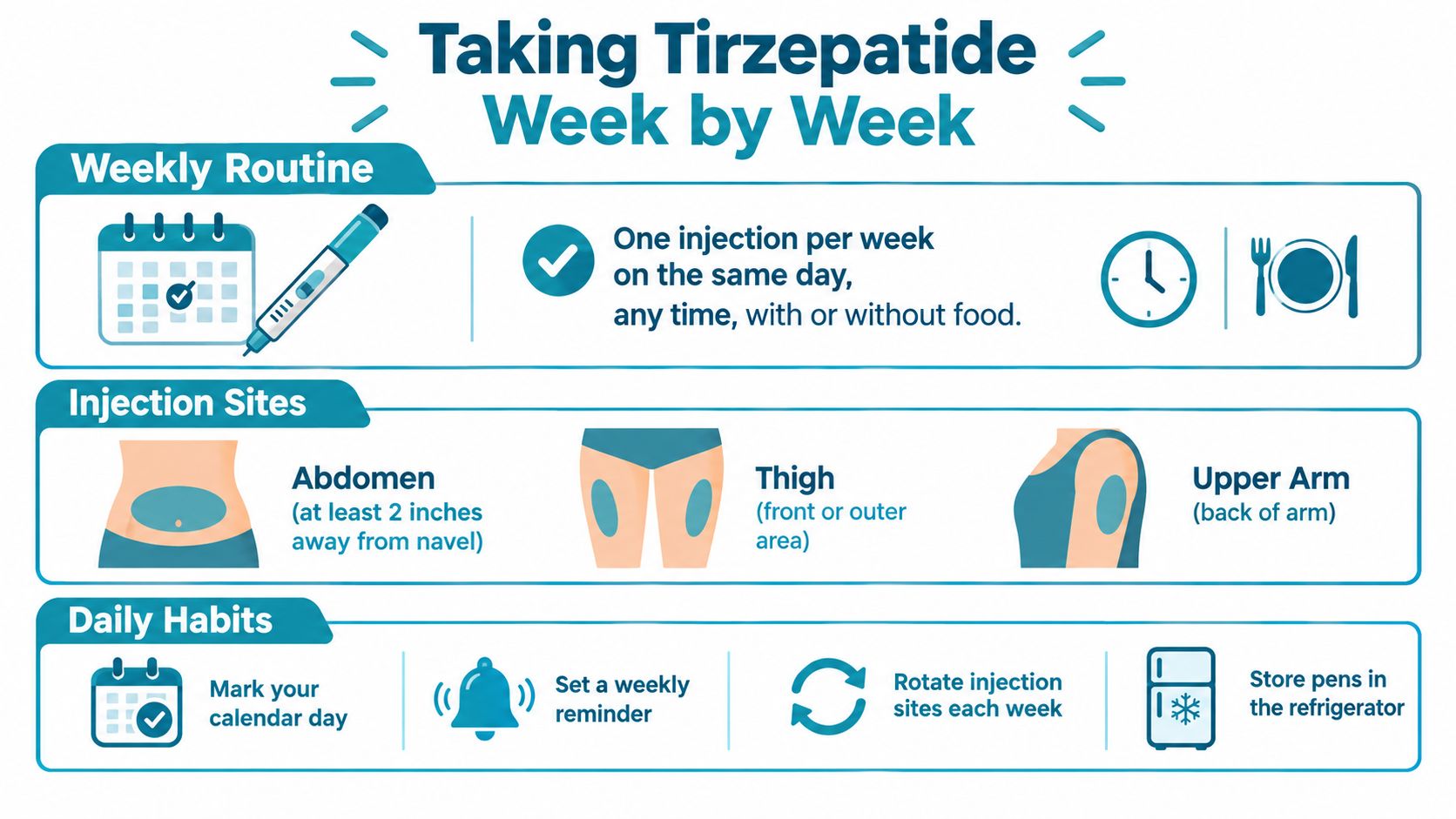
A consistent weekly routine connects the starting dose, each escalation decision, and the eventual maintenance dose. Tirzepatide is injected once weekly on the same calendar day, at any time, with or without food. Inject it into the abdomen, thigh, or upper arm, and rotate sites to limit repeated irritation or tissue changes.
Turn the dose into a routine
Choose a weekly anchor, such as a particular morning or evening, and set a phone reminder. Store the pen according to the product instructions. FDA labeling states that pens should be refrigerated at 36°F to 46°F, or may be kept unrefrigerated up to 86°F for 21 days, protected from light. Confirm the instructions for the specific device supplied by your pharmacy.
The 2.5 mg dose begins treatment. It is not a chronic weight-management maintenance dose. Early effects may change as the prescriber moves through the four-week stages, so initial results alone should not determine whether to increase, hold, or change treatment.
The dose ladder works like a staircase. Each step gives the prescriber time to assess benefit and tolerability before considering the next 2.5 mg increase. The maintenance choice depends on the brand, approved indication, response, and side effects, not on reaching the highest available dose.
Signs to report before an increase
Adequate food and fluid intake, with manageable gastrointestinal symptoms, makes a dose step easier to assess. Contact a clinician before escalation if vomiting persists, fluids cannot be maintained, abdominal pain worsens, or symptoms disrupt ordinary activities.
If a device fails, a pen is damaged, or storage conditions are uncertain, contact the dispensing pharmacy or prescriber. Do not estimate a replacement amount or take an extra injection. Dose availability and device instructions should be confirmed before the next scheduled dose.
Safety Domains That Shape Dose Decisions
A safe tirzepatide dosage decision depends on more than body weight or a small set of laboratory results. The prescriber connects five domains: the product and indication, current medicines, medical history, symptoms, and practical factors such as procedures or access to the prescribed device. These domains work like checkpoints. A problem at one checkpoint may delay escalation even when the labeled dose ladder remains unchanged.
Medication and medical history
Insulin and sulfonylureas can raise the risk of low blood sugar when combined with tirzepatide. The clinician may need to adjust or review those medicines rather than changing tirzepatide. Other GLP-1 medicines also require review. Do not combine or switch them without medical direction.
The FDA labeling lists personal or family medullary thyroid carcinoma and multiple endocrine neoplasia syndrome type 2 as contraindications. Tell the prescriber about pregnancy plans, previous pancreatitis, gallbladder disease, severe gastrointestinal disease or gastroparesis, diabetic retinopathy, and any planned procedure or anesthesia. These details can affect whether treatment starts, pauses, or advances.
What laboratory tests can add
Glucose and A1c may help when diabetes or abnormal glucose is part of the treatment question. Kidney function deserves attention if vomiting, diarrhea, dehydration, or another illness could increase kidney risk. Other tests should follow the patient's history and symptoms, not a universal dosing panel.
The FDA labels do not require a dose adjustment based solely on renal impairment, including severe impairment. They still warn about kidney problems associated with gastrointestinal fluid loss. Hepatic impairment generally does not require a dose adjustment, although information in severe disease is more limited. Older adults do not automatically need a different dose, but hydration, kidney function, and tolerability remain relevant.
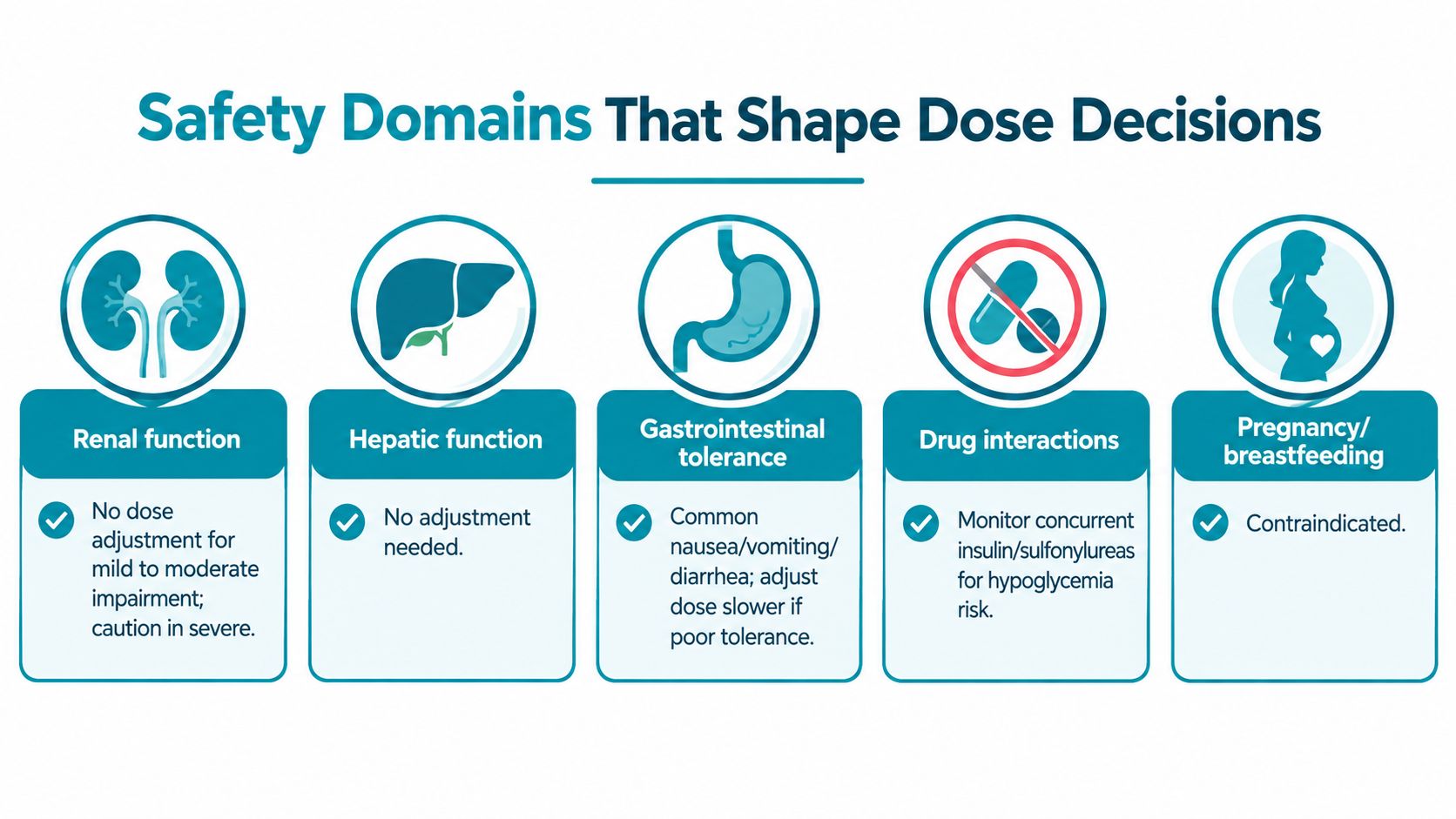
Before escalation: Medication interactions, pregnancy plans, gastrointestinal tolerance, thyroid history, procedure plans, and the availability of the correct device can change the timing of a dose decision.
For a plain-language review of symptoms that may affect a treatment discussion, see tirzepatide side effects and safety information.
Maintenance Dosing and When to Reassess
Maintenance dosing is a treatment choice, not a race to 15 mg. For chronic weight management, the FDA-labeled options are 5 mg, 10 mg, or 15 mg weekly. If a lower dose supports the agreed goal with acceptable side effects, staying there may be reasonable. Someone else may need a higher tolerated dose to obtain the intended effect.
Obesity pharmacotherapy is generally planned as ongoing care rather than a short course. Canadian 2025 guidance discusses 5 mg, 10 mg, or 15 mg weekly for obesity treatment and identifies 10 mg or 15 mg as long-term options when effective. NICE guidance describes the highest tolerated dose as a possible choice for some patients and recommends reassessing continuation when weight loss remains below 5% after 6 months on the highest tolerated dose. These points are summarized in the peer-reviewed Canadian obesity guidance.
A practical decision matrix
| Factor | Favor lower maintenance, 5 to 10 mg | Favor higher maintenance, 10 to 15 mg |
|---|---|---|
| Response | Weight or glucose trajectory is moving toward the agreed goal | Response remains inadequate at a tolerated lower dose |
| Tolerability | Nausea, vomiting, diarrhea, reduced intake, or fatigue persists | Gastrointestinal symptoms are manageable and hydration is stable |
| Safety | Comorbidities, interacting medicines, or recent illness raise concern | Safety review supports continued escalation |
| Long-term plan | A lower dose preserves benefit with fewer unwanted effects | A higher dose is needed for the indication-specific target |
| Reassessment | Benefits remain meaningful at the current dose | The clinician is deciding whether more effect is needed |
A plateau is a reason to review the whole treatment picture, including weight trend, cardiovascular risk, glycemic control when relevant, nutrition, activity, and adverse effects. Deintensification means moving to a lower dose, and it may be reasonable when unwanted effects outweigh benefit. Dose selection works like adjusting a dimmer switch: the aim is enough effect without creating problems that make treatment difficult to continue.
There is no universal requirement to keep escalating, and no universal rule that everyone should remain at the lowest dose. The prescriber must make any maintenance change. Patients should not hold, increase, decrease, or space doses independently. Long-term planning can be discussed through obesity medicine care, with decisions based on the individual's response rather than a predetermined number.
Missed Doses, Interruptions, and Red Flags
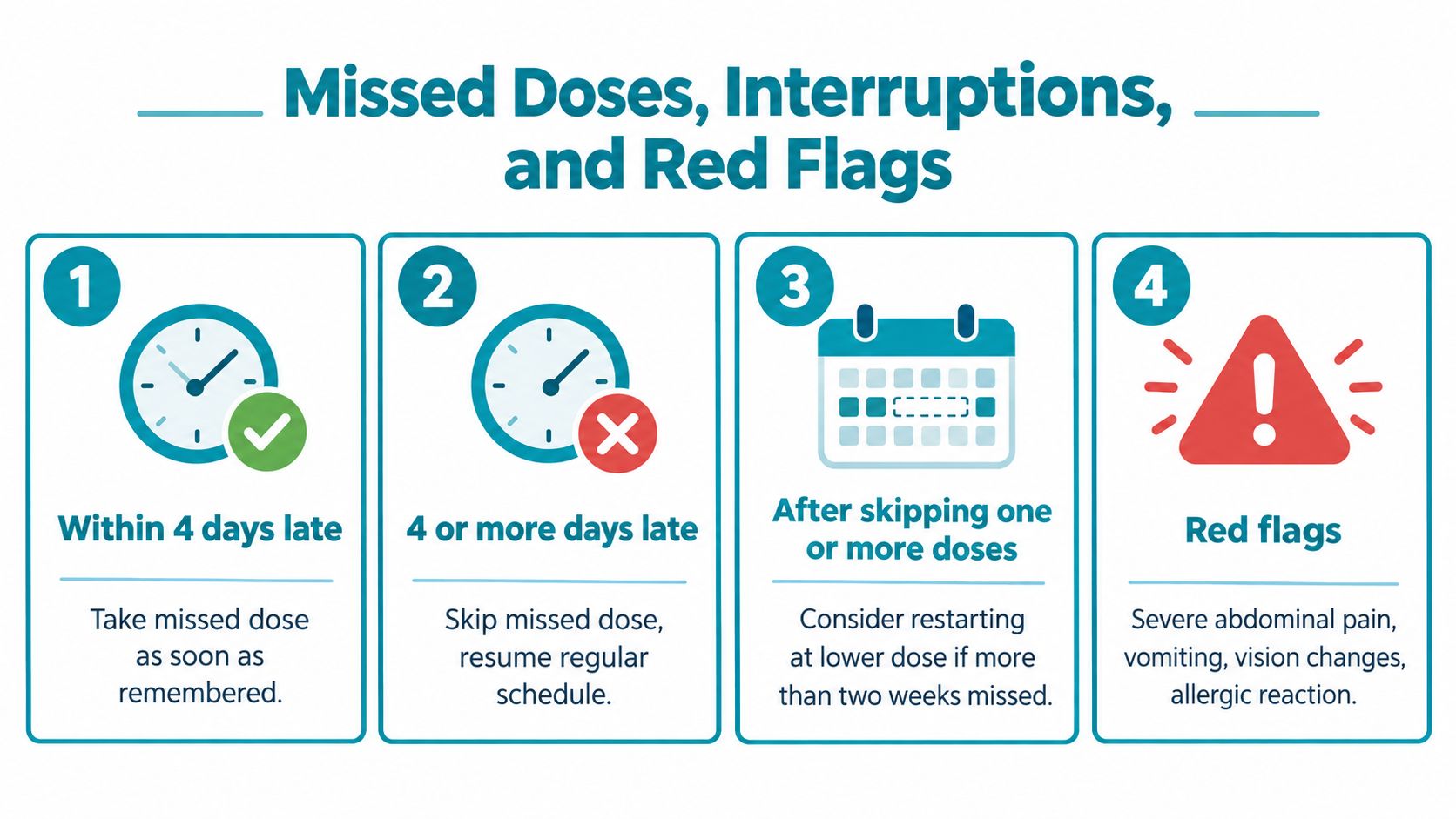
A missed tirzepatide injection should be handled by timing, not by taking extra medication. The FDA-labeled instructions are:
- Within 4 days late: Take the missed dose as soon as you remember.
- 4 or more days late: Skip it and take the next injection on the regular scheduled day.
- Never double up: Keep the label's required spacing between doses.
- After a longer interruption: Contact the prescriber before restarting. A gap of several weeks may call for a lower restart dose, depending on the last tolerated dose, interruption length, and current health.
Check the pen and storage
The FDA label permits refrigerated storage at 36°F to 46°F. It also allows an unrefrigerated pen to remain at temperatures up to 86°F for 21 days, protected from light. Ask the pharmacy before using a pen that was frozen, exposed to excessive heat, left out beyond the permitted period, or stored under uncertain conditions.
A planned procedure, anesthesia, or acute gastrointestinal illness can change the safety plan. Notify the prescriber before a procedure, and contact the clinician during substantial vomiting or diarrhea. After more than one missed dose, resume only according to medical advice. The restart plan works like resetting a staircase: the appropriate step depends on how far treatment has been interrupted and how well the previous step was tolerated.
Symptoms that need prompt contact
Call the prescriber promptly for severe or persistent abdominal pain, repeated vomiting, inability to maintain fluids, dizziness, or reduced urination. Low-blood-sugar symptoms require urgent attention when tirzepatide is combined with insulin or a sulfonylurea.
Report visual changes, a new neck mass, hoarseness, trouble swallowing, or an injection-site reaction that spreads or does not resolve. Breathing difficulty, facial swelling, or other signs of a serious allergic reaction require emergency evaluation.
Contact the clinician and dispensing pharmacy rather than trying to correct a missed dose by changing the schedule yourself.
Common Questions and When to Talk With a Clinician
Is there an FDA-approved tirzepatide dosage above 15 mg weekly?
No FDA-approved tirzepatide dose exceeds 15 mg once weekly. That maximum applies to both brand indications, although the reason for treatment affects the product used and the maintenance choice. Do not create a higher dose by combining injections, altering a pen, or shortening the interval. The weekly schedule functions like a guardrail, keeping dose exposure predictable.
Is compounded tirzepatide recommended for solving a dose problem?
Compounded products are not a substitute for clarifying an approved dose, pen strength, or escalation step. This article does not provide instructions for vial splitting, click counting, dose conversion, or nonstandard amounts. Products obtained outside the FDA-approved pathway may not provide the same verified device instructions, strength, or dose accuracy. Contact the prescribing clinician and dispensing pharmacy before changing products or trying to match an online dosing chart.
What should happen if surgery or illness interrupts treatment?
Tell the prescriber about planned surgery, anesthesia, severe gastrointestinal illness, or difficulty maintaining fluids. The clinician will decide whether treatment should be held and when it can resume. Do not restart at a different dose or use a catch-up injection without medical advice. A prolonged interruption may require a new step-up plan based on the last tolerated dose, rather than an automatic return to the previous amount.
When should I schedule an individualized review?
Arrange a review after a new medical diagnosis, before pregnancy, when starting insulin or a sulfonylurea, or if gastrointestinal symptoms persist. A plateau on maintenance therapy also merits discussion. Bring the exact brand, pen strength, injection day, other medicines, and any glucose information the clinician asked you to record.
Empire Medical Wellness provides physician-led obesity medicine evaluations, individualized medication planning when clinically appropriate, follow-up, and long-term maintenance discussions for adults seeking private-pay care. Visit Empire Medical Wellness to learn about the practice and request an appointment.
This article is educational, not personal medical advice. Only the prescribing clinician can determine whether tirzepatide should be started, continued, held, or changed.