
Metabolic syndrome is a clinical label for having at least 3 of 5 cardiometabolic findings, central adiposity, high triglycerides, low HDL cholesterol, high blood pressure, and impaired fasting glucose. It signals higher long-term risk for cardiovascular disease and type 2 diabetes, even when diabetes hasn't been diagnosed.
An estimated 1.54 billion adults worldwide were living with metabolic syndrome in 2023, and global prevalence rose from 11.9% in 2000 to 28.4% in 2023, according to a large analysis published in Nature Communications. That scale can make the label feel alarming, but metabolic syndrome isn't a verdict. It is a way to recognize a pattern early enough to evaluate risk and choose sustainable care.
Byline: Empire Medical Wellness Editorial Team
Published: September 12, 2026
Updated: September 12, 2026
Table of Contents
- What Metabolic Syndrome Means
- How the Definition Evolved
- The Five Diagnostic Criteria
- Metabolic Syndrome Versus Related Conditions
- Why the Risk Factors Cluster
- Evaluation, Monitoring, and When to Escalate
- Lifestyle and Medical Care That Actually Helps
- Common Myths and Misunderstandings
- Myth one, metabolic syndrome automatically means diabetes
- Myth two, a normal body weight rules it out
- Insulin resistance, prediabetes, and metabolic syndrome are the same thing
- One strict diet fixes the problem
- Can metabolic syndrome be reversed?
- How often should labs be repeated?
- Can children meet the criteria?
- What should you bring to a first appointment?
What Metabolic Syndrome Means
Metabolic syndrome is a cluster of measured risk factors that often travel together. It is commonly identified when at least three of five findings are present: increased waist circumference, high triglycerides, low HDL cholesterol, high blood pressure, and high fasting glucose.
The pattern belongs to a broader cardiovascular-kidney-metabolic risk picture. Changes in body fat, blood vessels, blood sugar regulation, and kidney health can influence one another, so the label helps clinicians look beyond a single test result. For example, someone may have high blood pressure and high triglycerides without diabetes, while another person may have impaired glucose regulation and increased waist circumference with blood pressure in the usual range.
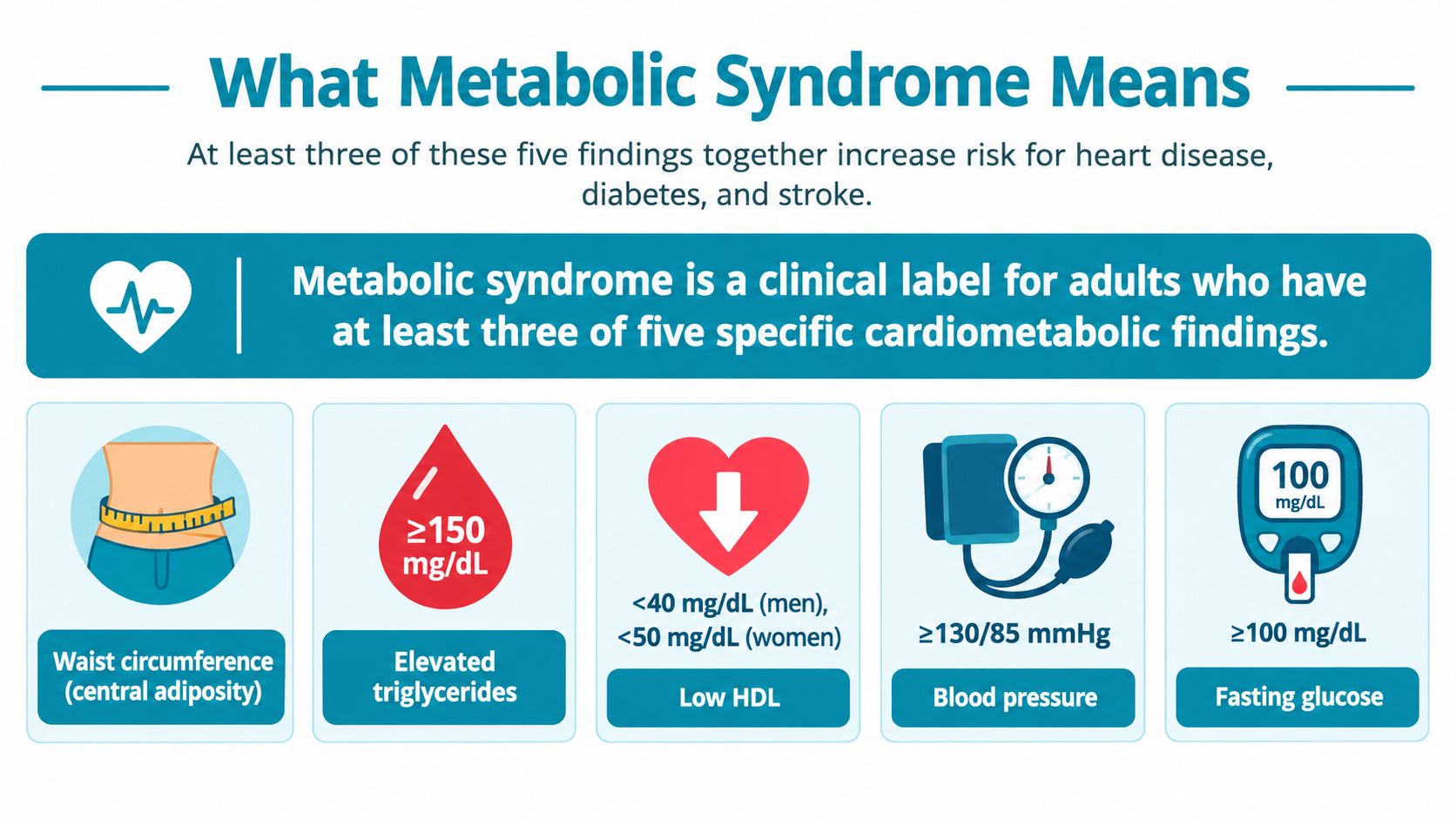
A diagnosis cannot be based on fatigue, body shape, a home calculation, or one abnormal result. A clinician reviews repeated measurements, laboratory testing, medications, medical history, and the definition being used. The American Heart Association's scientific statement notes that treatment for a component may count as an alternate indicator, meaning a controlled reading does not always show that the underlying risk factor has disappeared.
These terms describe related but different ideas. Insulin resistance is a reduced response to insulin, prediabetes means blood glucose is above the usual range but below the diabetes range, and type 2 diabetes is a diagnosed disorder of glucose regulation. Metabolic syndrome is the combined risk pattern, not another name for any one of them. A focused explanation of insulin resistance and its clinical meaning can help clarify that distinction.
How the Definition Evolved
In 1988, Gerald Reaven introduced “Syndrome X” after observing that insulin resistance, glucose abnormalities, hypertension, dyslipidemia, and abdominal obesity frequently occurred together. The historical development is summarized in an AHA review of metabolic syndrome.
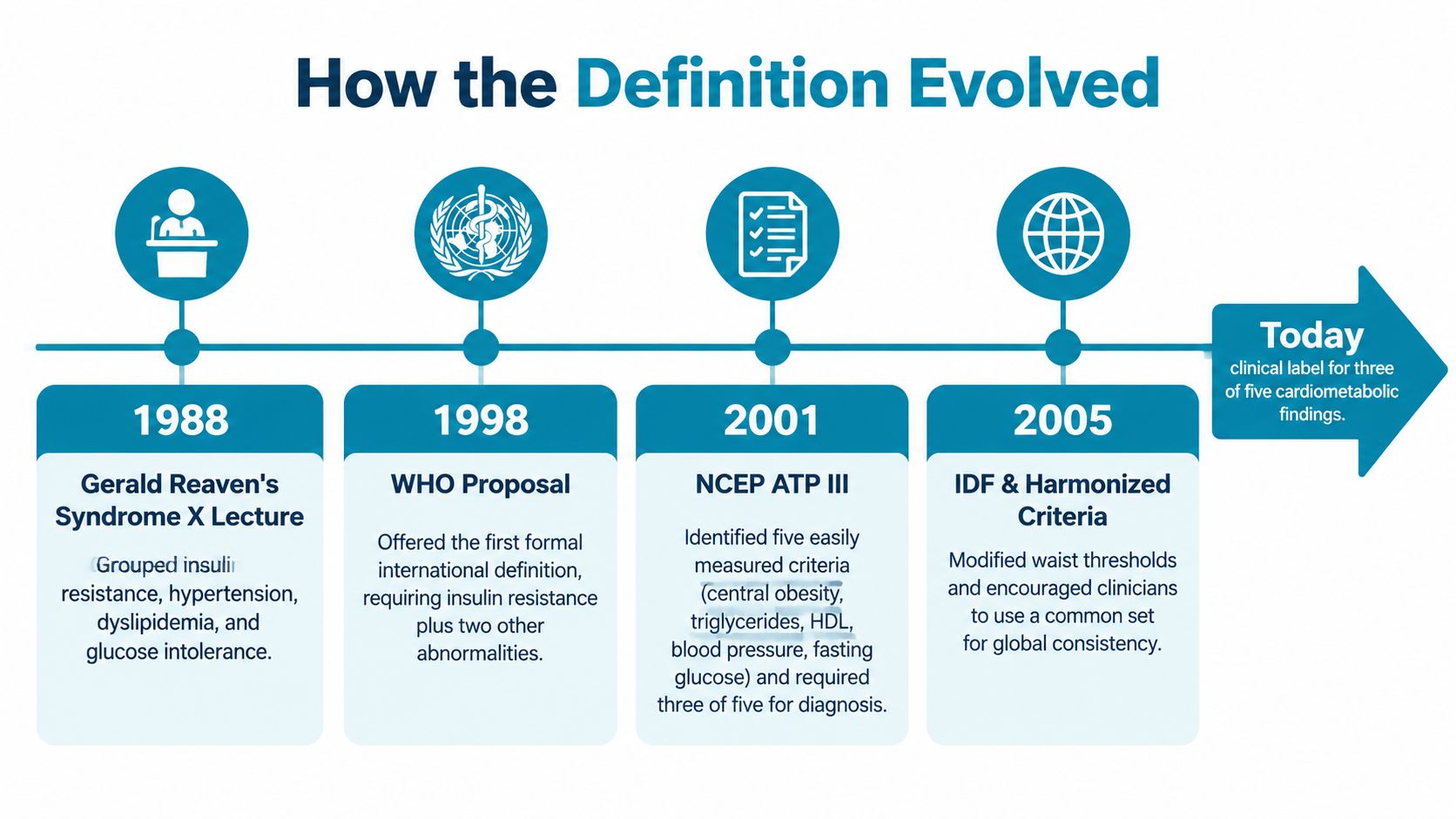
Later organizations defined the pattern in different ways. Some required direct evidence of insulin resistance. Others used findings available in routine care, including waist circumference, blood pressure, fasting glucose, triglycerides, and HDL cholesterol. The ATP III approach became influential because any three of five findings could qualify, without requiring one specific abnormality first.
These differences explain why prevalence estimates do not always agree. Definitions may use different waist thresholds across populations, glucose or triglyceride cutoffs, and rules for people taking medication. A comparative review found estimates ranging from 8.6% to 44.5% across criteria, while another global analysis reported 12.5% to 31.4%, depending on the definition used PubMed.
The label now fits within a broader cardiovascular-kidney-metabolic framework. That model links adiposity, metabolic abnormalities, chronic kidney disease, cardiovascular disease, diabetes, and fatty liver disease as connected risks AHA CKM health advisory. Metabolic syndrome is one expression of this pattern. It is distinct from insulin resistance, prediabetes, and diabetes, which describe particular parts, or later stages, of metabolic dysfunction rather than the entire cluster.
The Five Diagnostic Criteria
The harmonized framework uses five findings. For U.S. adults, a person generally meets the definition when three or more criteria apply. Waist thresholds can differ by ancestry and population, so the table is a guide for interpretation, not a substitute for clinical judgment.
| Criterion | Threshold | Or Treatment With |
|---|---|---|
| Central adiposity | Waist circumference at least 102 cm, or 40 inches, in men, or at least 88 cm, or 35 inches, in women | Population-specific waist thresholds may apply |
| High triglycerides | At least 150 mg/dL, or 1.7 mmol/L | A triglyceride-lowering medication |
| Low HDL cholesterol | Below 40 mg/dL in men, or below 50 mg/dL in women | Treatment intended to raise HDL |
| High blood pressure | At least 130/85 mmHg | An antihypertensive medication |
| Impaired fasting glucose | At least 100 mg/dL, or 5.6 mmol/L | Treatment for high glucose |
The medication column prevents a common misunderstanding. A person taking an antihypertensive drug may have a lower reading at the appointment and still meet the blood-pressure criterion. The same logic can apply to lipid or glucose treatment. These criteria describe a cluster of cardiovascular, kidney, and metabolic risk. They do not, by themselves, prove insulin resistance or diabetes.
Reading the measurements correctly
Waist circumference estimates central adiposity, the concentration of body fat around the abdomen. It is a measurement of risk, not a judgment about appearance. Triglycerides are a type of blood lipid. HDL is often called “good cholesterol,” but the criterion concerns a low HDL value within the wider risk pattern.
Blood pressure has systolic and diastolic readings. Either a systolic value at or above 130 mmHg or a diastolic value at or above 85 mmHg meets this criterion in the harmonized framework. For a clearer understanding of how readings should be obtained and interpreted, review this guide to accurate blood-pressure assessment.
Fasting glucose measures blood sugar after a period without food. HbA1c reflects average glucose over time and serves a different diagnostic purpose. A person can meet the glucose criterion without having diabetes, just as a person with diabetes may also have the broader cluster.
One measurement may need confirmation. Recent illness, stress, medications, hydration, and testing conditions can affect results. A clinician may repeat testing or compare the result with earlier values rather than assign a label from one isolated number. The useful question is not only whether one value crosses a threshold, but how the findings fit together over time.
Metabolic Syndrome Versus Related Conditions
The clearest way to avoid confusion is to ask what each term measures.
| Condition | What It Measures | Defining Threshold | Relationship to Metabolic Syndrome |
|---|---|---|---|
| Insulin resistance | A physiologic state in which cells respond less effectively to insulin | No single universal patient-facing threshold establishes the diagnosis | It can contribute to several metabolic syndrome findings, but it isn't identical to the label |
| Prediabetes | Blood glucose regulation that is higher than usual but below the diabetes range | Validated glucose or HbA1c testing interpreted under diabetes guidelines | It may be one component of metabolic risk, but a person with prediabetes may not meet three of five criteria |
| Type 2 diabetes | Established hyperglycemia caused by impaired insulin action, insulin production, or both | Diagnostic glucose or HbA1c testing, usually confirmed according to clinical guidance | It can coexist with metabolic syndrome, but diabetes isn't required for metabolic syndrome |
| Metabolic syndrome | A cluster of waist, lipid, blood-pressure, and glucose findings | At least three of five criteria | It is a risk-stratification label, not a direct measure of insulin action alone |
NIDDK guidance on insulin resistance and prediabetes explains why insulin resistance shouldn't be inferred from symptoms alone. Fatigue after meals, abdominal weight change, or difficulty maintaining weight may deserve evaluation, but none confirms insulin resistance, prediabetes, diabetes, or metabolic syndrome.
A person can have insulin resistance without meeting the glucose criterion. Another can have prediabetes without having high triglycerides or blood pressure. Someone with type 2 diabetes may or may not meet the remaining metabolic syndrome criteria. These distinctions affect which tests are needed and which treatment decisions a clinician considers.
Practical rule: A glucose result answers a glucose question. It doesn't automatically answer the questions about blood pressure, lipids, waist circumference, or insulin physiology.
Why the Risk Factors Cluster
The five findings often appear together because they share biological pathways. Visceral adipose tissue, the fat stored around internal abdominal organs, is metabolically active. It can release fatty acids and signaling molecules that affect the liver, muscle, blood vessels, and pancreatic function.
Increased fatty-acid flow to the liver can contribute to hepatic insulin resistance and abnormal lipid handling. The liver may produce more glucose than the body needs and assemble more triglyceride-rich particles. At the same time, reduced insulin sensitivity can make it harder for muscle and other tissues to use glucose efficiently.
Inflammatory signaling adds another layer. Adipose tissue can release chemical messengers that influence blood-vessel function and the balance of hormones involved in appetite, energy use, and glucose regulation. These processes may contribute to endothelial dysfunction, a term for impaired function of the vessel lining, and can interact with blood-pressure elevation.
The result isn't five independent problems randomly appearing at once. The abnormalities can form a connected pattern, although the exact combination differs from person to person. One individual may show prominent triglyceride and glucose abnormalities. Another may have central adiposity and high blood pressure with a relatively normal HDL value.
A meta-analysis found pooled relative risks of 2.35 for cardiovascular disease, 2.40 for cardiovascular mortality, 1.58 for all-cause mortality, 1.99 for myocardial infarction, and 2.27 for stroke among people with metabolic syndrome PubMed meta-analysis. These figures describe population-level associations. They don't predict what will happen to a particular reader, but they explain why clinicians take the cluster seriously even when diabetes isn't present.
Evaluation, Monitoring, and When to Escalate
A structured evaluation usually begins with measurements that map directly to the five criteria:
- Waist circumference: Measured consistently using an accepted technique.
- Blood pressure: Taken while seated, with an appropriately sized cuff and validated equipment.
- Fasting lipid panel: Used to assess triglycerides, HDL cholesterol, and other lipid measures.
- Glucose assessment: Fasting glucose, HbA1c, or both, depending on the clinical question.
- Medication review: Important because treatment can count as an alternate indicator for some criteria.
A clinician may also review sleep, activity, nutrition, family history, tobacco exposure, alcohol use, kidney health, and medications that affect weight, glucose, lipids, or blood pressure. The evaluation should focus on the complete risk pattern rather than treating one lab result as the whole story.
Follow-up depends on which findings are present, whether treatment has begun, and how stable the results are. A clinician may arrange reassessment after an interval such as three to six months when abnormalities need active monitoring, then use longer intervals once values stabilize. That isn't a universal schedule, and medication decisions belong to the treating clinician.
Contact emergency services for new chest discomfort, severe headache with concerning symptoms, or a blood-pressure reading above 180/120 mmHg. Severe hyperglycemia symptoms or unexplained weight loss also deserve prompt medical attention rather than waiting for a routine appointment. Adults with established glucose disease can review type 2 diabetes care and evaluation as a starting point, but online information can't replace testing.
Lifestyle and Medical Care That Actually Helps
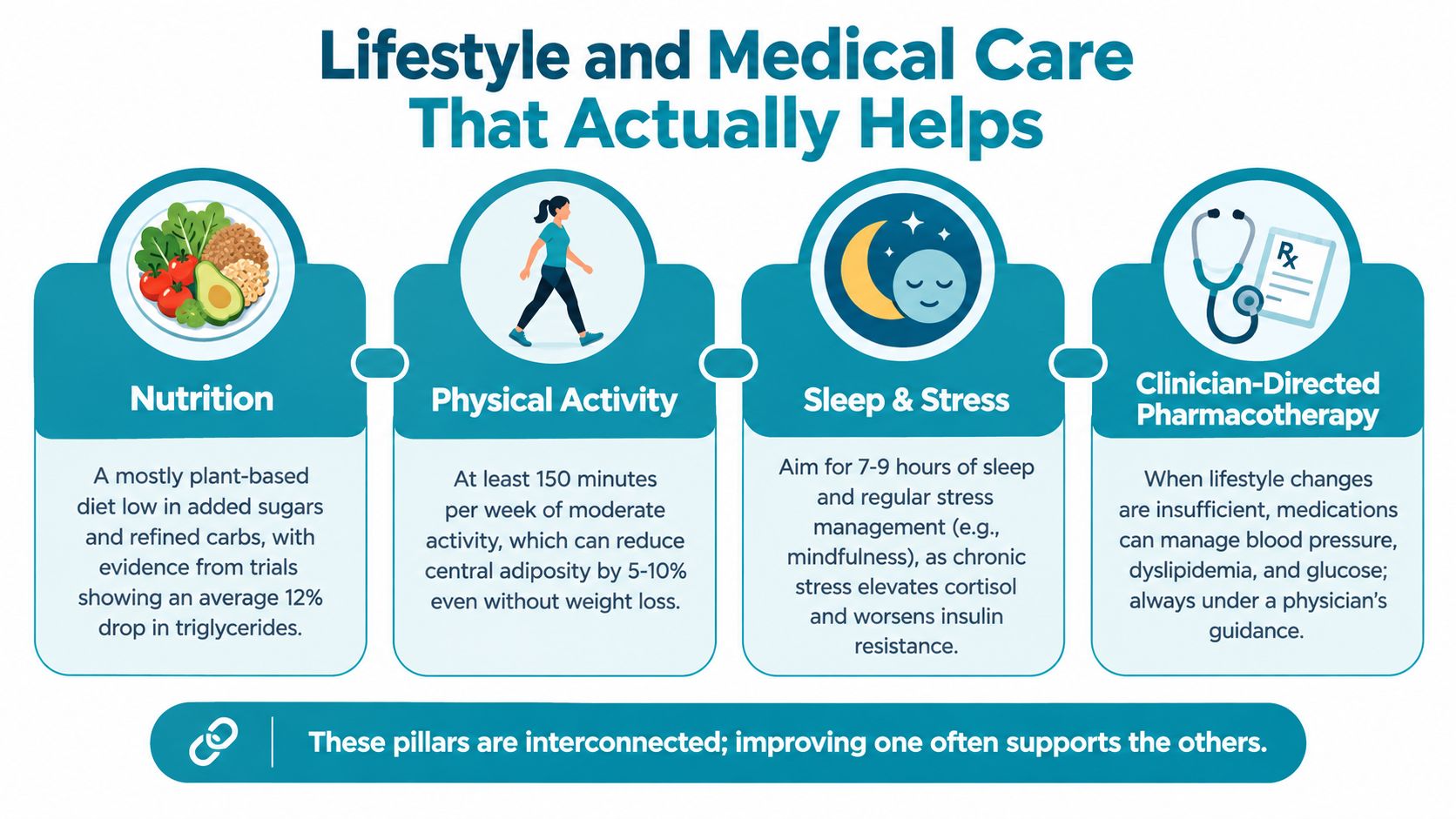
Metabolic syndrome care works best as a coordinated plan. Nutrition, movement, sleep, stress management, and clinician-directed medication aren't competing choices. Each addresses a different part of the risk pattern.
Nutrition and movement
Mediterranean-style and DASH-style eating patterns emphasize vegetables, fruits, legumes, whole grains, nuts, and other minimally processed foods, with attention to sodium, added sugars, and saturated fat. The practical question isn't whether one diet is morally “good” or “bad.” It's whether the pattern is realistic, culturally appropriate, enjoyable enough to sustain, and suited to the person's laboratory findings and medical conditions.
Regular activity can include moderate aerobic movement and resistance training. Public health guidance commonly describes a target of approximately 150 minutes per week of moderate aerobic activity, but a clinician may help adapt that goal for pain, mobility limits, cardiovascular disease, or other conditions. Starting below a target can still be clinically sensible when the alternative is remaining inactive.
Sleep, stress, and medication
Sleep deserves direct assessment when snoring, witnessed breathing pauses, morning headaches, or daytime sleepiness suggest possible obstructive sleep apnea. A clinician may recommend evaluation and, when indicated, treatment such as continuous positive airway pressure. Stress-management practices may support adherence and well-being, but they shouldn't be presented as a substitute for metabolic testing.
Medication is selected according to the abnormality and the person's overall risk. Statins may be considered for appropriate lipid risk, antihypertensives for blood-pressure management, and glucose-lowering or anti-obesity medications when clinically appropriate. Coverage for GLP-1 medications used for obesity varies considerably. As of January 2026, 13 state Medicaid programs covered GLP-1 drugs for obesity, according to KFF, so access can affect which evidence-based options are realistic.
People researching supplements may encounter products marketed for AMPK or “metabolic support.” A supplement isn't a substitute for a fasting laboratory panel, clinician assessment, or prescribed treatment. If someone wants to understand the marketing claims and ingredients, they can find your AMPK metabolic support, but should discuss supplements with a clinician, especially when taking medication.
A physician-led obesity medicine evaluation may include medical and metabolic assessment, review of weight history and relevant health factors, individualized planning, medication consideration when clinically appropriate, and long-term maintenance planning. Obesity medicine care is one possible setting for that kind of assessment. No responsible clinician can promise a particular outcome or determine a treatment plan without reviewing the individual.
Common Myths and Misunderstandings
Myth one, metabolic syndrome automatically means diabetes
Fact: Metabolic syndrome can include impaired fasting glucose, but diabetes requires diabetes-range glucose or HbA1c testing. A person can meet three other metabolic syndrome criteria without having diabetes. Conversely, a person with diabetes may not meet the remaining metabolic syndrome criteria.
Symptoms can't settle the question. Thirst, frequent urination, fatigue, or blurred vision deserve medical attention, but testing is needed to determine whether diabetes or another condition is present.
Myth two, a normal body weight rules it out
Fact: Body weight alone doesn't measure waist circumference, triglycerides, HDL cholesterol, blood pressure, or fasting glucose. Appearance can't establish or exclude metabolic syndrome. A clinician evaluates measurements and laboratory findings rather than assigning a diagnosis from a person's size.
Insulin resistance, prediabetes, and metabolic syndrome are the same thing
They aren't. Insulin resistance describes physiology. Prediabetes is defined by validated glucose or HbA1c results. Metabolic syndrome is a cluster of five findings, and the glucose component is only one part of that cluster.
A hypothetical composite adult might report fatigue and abdominal weight gain but have no diagnostic testing. A careful clinician wouldn't diagnose insulin resistance from those symptoms. The evaluation would obtain glucose or HbA1c, blood pressure, waist circumference, triglycerides, HDL cholesterol, and relevant history, then address the abnormalities present.
One strict diet fixes the problem
There isn't one universally correct diet. A sustainable eating pattern should fit culture, budget, schedule, medical conditions, and personal preferences. Some adults benefit from a Mediterranean-style pattern, some from DASH-style principles, and others from a different structured approach that reduces added sugars and highly refined foods without creating an unsustainable cycle of restriction.
This is also why intermittent fasting and metabolic health should be discussed carefully. Time-restricted eating may be unsuitable for some people, particularly when medication timing, pregnancy, eating-disorder history, or glucose-lowering treatment is relevant. A supplement, cleanse, or detox can't replace evaluation or prescribed care.
Can metabolic syndrome be reversed?
The label may no longer apply if the person no longer meets at least three criteria, but that doesn't mean future risk has disappeared. Cardiometabolic risk can improve as measurements improve, and continued follow-up helps identify whether the changes persist. The appropriate goal is risk reduction and durable health behavior, not a promise of a particular timeline or outcome.
How often should labs be repeated?
The answer depends on the abnormality, treatment, prior results, and clinician judgment. When a result is abnormal or treatment changes, follow-up may be closer. Once findings are stable, reassessment may be less frequent. Don't use an online calculator as a substitute for a fasting laboratory panel and professional interpretation.
Can children meet the criteria?
Children and adolescents require age-appropriate assessment and different clinical frameworks. Adult thresholds shouldn't be applied casually to a child. Families should seek pediatric guidance rather than using an adult checklist.
What should you bring to a first appointment?
Bring recent laboratory reports, home blood-pressure readings if available, a medication and supplement list, relevant family history, and questions about symptoms or treatment goals. Family patterns of diabetes, hypertension, abnormal lipids, kidney disease, and cardiovascular disease are worth discussing, but heredity raises risk rather than determining an inevitable outcome.
Metabolic syndrome is a risk-stratification tool, not a personal failure and not a forecast written in advance. If you have chest pain, a severe headache with concerning symptoms, or blood pressure above 180/120 mmHg, seek emergency care rather than scheduling an outpatient visit.
Empire Medical Wellness provides physician-led obesity medicine evaluations that can include medical and metabolic assessment, individualized planning, and follow-up for relevant cardiometabolic risk factors. Visit Empire Medical Wellness to learn about the practice's approach and request an evaluation if structured, private-pay care fits your needs.
This article is educational and isn't personal medical advice.