
Prediabetes means blood sugar is higher than normal but not yet in the type 2 diabetes range. It's defined by an A1C of 5.7% to 6.4%, fasting glucose of 100 to 125 mg/dL, or a 2-hour oral glucose tolerance test result of 140 to 199 mg/dL. NIDDK
That distinction matters. Prediabetes isn't a diagnosis of diabetes, but it is a measurable metabolic risk state that deserves follow-up. It can affect younger adults as well as people in midlife and later adulthood, and meaningful improvement may be possible through changes in activity, nutrition, sleep, medication when appropriate, or body composition, not only through a lower number on the scale.
Table of Contents
- Understanding Prediabetes and Lab Thresholds
- How Common Prediabetes Really Is
- Comparing the Three Prediabetes Lab Tests
- Evidence-Based Strategies to Lower Your Risk
- What a Clinical Evaluation for Prediabetes Involves
- A Hypothetical Example of Prediabetes Care Over Time
- When to Seek Physician-Led Evaluation
Understanding Prediabetes and Lab Thresholds
Prediabetes is blood glucose above the usual range, without reaching the diagnostic range for type 2 diabetes. The CDC guidance on prediabetes describes it as a chance to prevent or delay type 2 diabetes, rather than diabetes itself. This matters for younger adults too. A concerning result at 30 or 40 deserves attention, even when someone feels healthy and has not been told to lose weight.
Clinicians usually assess prediabetes with three tests:
- A1C: 5.7% to 6.4% is the prediabetes range. It estimates average blood glucose over roughly the previous 2 to 3 months, so it is useful for following longer-term patterns.
- Fasting plasma glucose: 100 to 125 mg/dL indicates prediabetes. It measures glucose after a period without food, providing one fasting snapshot.
- 2-hour oral glucose tolerance test: 140 to 199 mg/dL at two hours indicates prediabetes. Because it measures the response to a glucose challenge, it may identify difficulty processing glucose that fasting testing does not show.
These tests are different windows onto the same metabolic system. One result can look normal while another is abnormal, especially when fasting glucose and after-meal glucose vary. Illness, anemia, hemoglobin variants, pregnancy, and some medicines can affect test choice or interpretation. Unexpected or conflicting results may lead a clinician to repeat testing or select another method.
Practical rule: A lab value is evidence, not a complete diagnosis. It needs context, confirmation when appropriate, and a monitoring plan.
Prediabetes often causes no symptoms. Waiting for thirst, frequent urination, or fatigue can therefore miss the opportunity to act early. A physician may review blood pressure, cholesterol, family history, prior gestational diabetes, sleep, physical activity, and medication use alongside the laboratory results.
Improvement is not limited to weight loss. Better activity, nutrition, sleep, or medication when appropriate can improve glucose regulation, even if body weight changes little. Understanding the difference between prediabetes and type 2 diabetes care can make a lab report less alarming and more actionable.
How Common Prediabetes Really Is
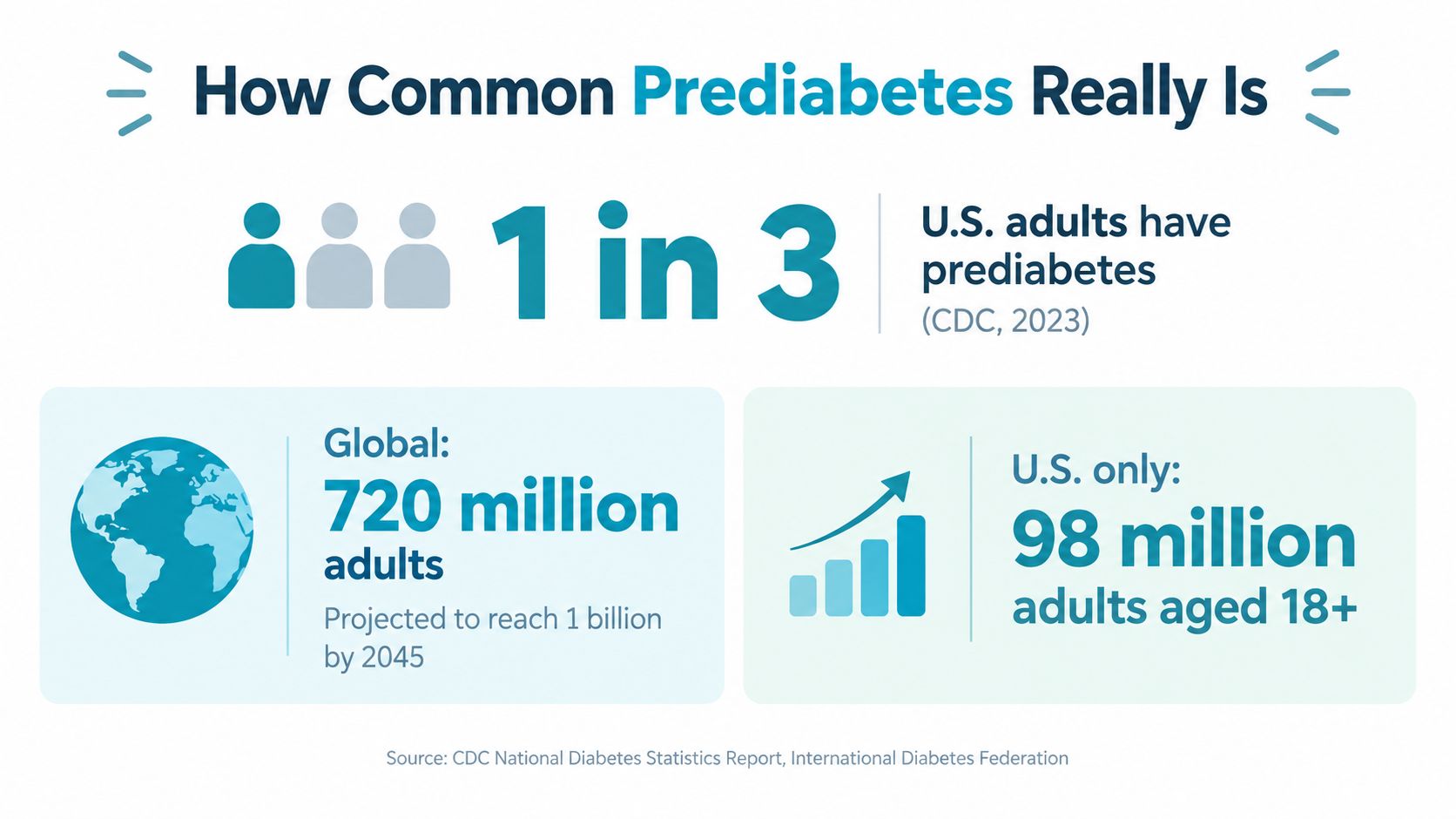
Prediabetes affects more than 1 in 3 U.S. adults. The CDC estimated that 96 million adults age 18 and older had prediabetes in 2019. Its reporting found that prevalence stayed steady from 2005–2008 through 2017–2020, while awareness improved but remained limited. The share who had been told they had prediabetes rose from 6.5% to 17.4% during that period. CDC prediabetes data
More recent CDC materials estimate that 115.2 million American adults have prediabetes, described as more than 2 in 5 adults, and report that 8 in 10 adults with prediabetes don't know they have it. These estimates use different reporting periods and methods, so they should not be read as a simple year-to-year trend. Taken together, they show why feeling well does not rule out a meaningful glucose abnormality or remove the value of discussing screening with a physician.
Age is only part of the risk picture
The 2019 CDC estimate included over 37 million adults ages 45 to 64 and over 26 million adults age 65 or older. Prediabetes is therefore common in midlife and older adulthood, but a younger age does not make an abnormal result unimportant.
A 2025 JAMA Network Open paper reported that prediabetes was more life-threatening in adults ages 20 to 54 than in older groups. The authors argued for earlier A1C screening in younger adults, particularly when obesity, family history, or socioeconomic disadvantage is present. Summary of the younger-adult findings
This does not establish one testing schedule for every younger adult. It does support taking risk factors, possible diabetes symptoms, and previous abnormal results seriously. An online BMI calculator can add context about body size, but it cannot diagnose prediabetes or replace clinical assessment.
Metabolic improvement can also occur without major weight loss. Regular activity, more consistent nutrition, adequate sleep, and medication when appropriate may improve glucose regulation even when body weight changes little.
Prediabetes is a worldwide concern. A 2023 analysis estimated that in 2021, impaired glucose tolerance affected 464 million adults, or 9.1% of adults worldwide, while impaired fasting glucose affected 298 million, or 5.8%. It projected that by 2045, those figures could reach 638 million, or 10.0%, and 414 million, or 6.5%, respectively. Global prediabetes analysis
Comparing the Three Prediabetes Lab Tests
Each test answers a different question about glucose regulation. A1C is convenient for trend monitoring, fasting plasma glucose captures a fasting state, and the oral glucose tolerance test shows how the body handles a measured glucose challenge. No single test predicts progression best for every person.
| Test | Prediabetes range | What it measures | Key considerations |
|---|---|---|---|
| A1C | 5.7% to 6.4% | Average glycemia over roughly 2 to 3 months | Convenient and useful for trends, but anemia, hemoglobin variants, pregnancy, illness, and some medicines can affect interpretation |
| Fasting plasma glucose | 100 to 125 mg/dL | Blood glucose after fasting | A single fasting snapshot can vary with illness, stress, sleep, and other factors |
| 2-hour oral glucose tolerance test | 140 to 199 mg/dL at 2 hours | Glucose handling after an oral glucose challenge | Can identify post-challenge abnormalities missed by A1C or fasting glucose, but requires more preparation and time |
The thresholds shown above are based on NIDDK diagnostic criteria. A clinician may choose one test because it suits the person's circumstances, or combine tests when results conflict.
Why results can disagree
A fasting glucose can fall within the expected range while A1C is higher. The reverse pattern can also occur: A1C may remain below the prediabetes threshold while the 2-hour result is abnormal. These findings represent different parts of glucose regulation and do not, by themselves, prove that the laboratory made an error.
Interpretation depends on more than the highest number. The clinician considers whether the result is reliable, whether confirmation is appropriate, and how it fits with family history, medications, pregnancy status, anemia, and other health factors.
A home meter can show glucose patterns in selected situations, but it cannot independently establish a diagnosis. For readers comparing monitoring equipment, a stat strip glucometer review may clarify device features. Laboratory testing and physician interpretation remain the basis for diagnosis.
Metabolic improvement can be tracked through more than body weight. A person may improve glucose regulation through activity, more consistent nutrition, adequate sleep, or medication when appropriate, even if weight changes little. That matters for younger adults, who may benefit from addressing abnormal results early rather than waiting for substantial weight loss.
A1C answers a different question from fasting glucose. Good evaluation respects those differences and interprets each result in context.
Evidence-Based Strategies to Lower Your Risk
Prediabetes risk can improve through several sustainable changes, not one rigid “prediabetes diet.” Food quality, physical activity, sleep, alcohol use, stress, medicines, and body composition may all matter. The most useful plan fits a person's health, preferences, schedule, culture, and medical history.
Build changes around function, not punishment
The Diabetes Prevention Program paired nutrition changes with regular activity and a weight-loss target. In that structured research program, diabetes incidence fell by 58% versus placebo over about three years. That finding describes diabetes incidence, not a guaranteed A1C improvement or a promised outcome for one person. The long-term DPP evidence supports the value of sustained prevention efforts.
For someone with overweight, a clinician may discuss an individualized 5% to 7% weight-loss goal. Weight is only one progress marker, however. Glucose regulation can improve through better activity, meal patterns, sleep, or treatment even when the scale changes little. This point matters for younger adults, who should not have to wait for substantial weight loss before responding to abnormal results.
Practical steps include:
- Replace sugary beverages with water or unsweetened drinks.
- Eat more non-starchy vegetables, beans, legumes, whole grains, lean proteins, and unsaturated fats.
- Reduce frequent refined carbohydrates, highly processed foods, and excess alcohol without creating an unnecessarily rigid list of forbidden foods.
- Build toward at least 150 minutes per week of moderate activity, such as brisk walking, when medically appropriate.
- Address sleep problems and choose goals that remain realistic after initial motivation fades.
The Empire nutrition care page offers information about individualized nutrition-focused support. For sweetener questions, the educational discussion of xylitol sweetener for diabetics provides context, but no single sweetener makes an overall eating pattern suitable for everyone.
A short educational video can reinforce these prevention concepts:
Prevention benefits can persist beyond the initial intervention. In long-term follow-up, lifestyle intervention reduced diabetes incidence by 24% over 21 years of median follow-up, while metformin reduced incidence by 17%. These results support early, durable changes, including for people whose weight does not change substantially.
What a Clinical Evaluation for Prediabetes Involves
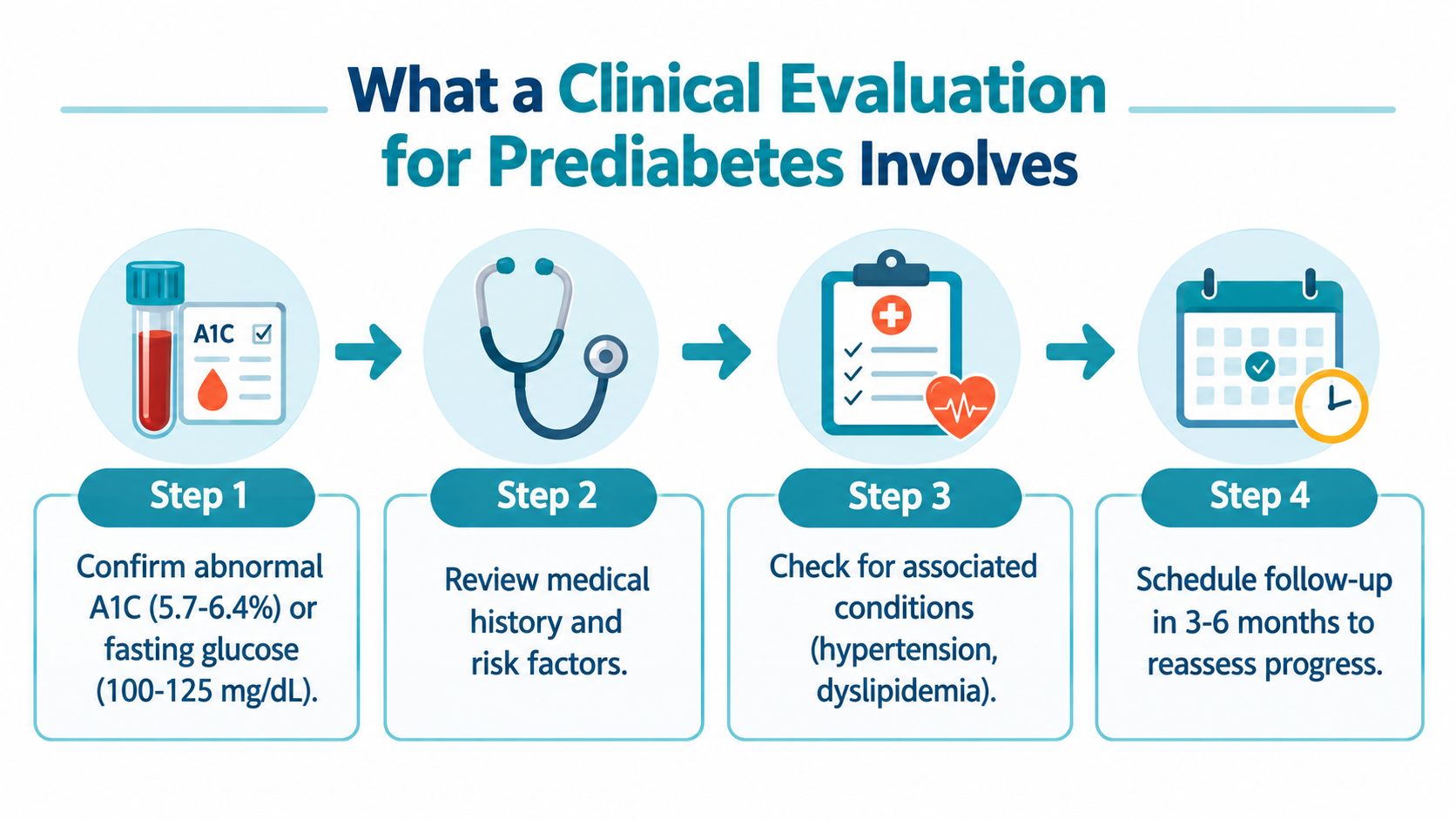
A physician-led evaluation begins by verifying what the laboratory result measures. The clinician reviews whether it was an A1C, fasting glucose, or oral glucose tolerance test, considers factors that might affect accuracy, and decides whether repeat or additional testing is appropriate. One result is a starting point, not a complete picture.
The rest of the assessment examines health factors that can influence diabetes risk:
- Blood pressure and lipid results.
- Weight history and waist measurement, without treating appearance as a diagnosis.
- Sleep duration, sleep quality, and possible sleep disorders.
- Current activity and typical meals or beverages.
- Prescription medicines, over-the-counter products, and supplements.
- Family history of diabetes.
- A history of gestational diabetes, when relevant.
Turning information into a manageable plan
A useful appointment ends with specific decisions rather than a general instruction to “be healthier.” The clinician and patient can choose one or two measurable changes, such as planned walking, a different regular beverage pattern, more consistent meal structure, or a response to a sleep barrier. A CDC-recognized Diabetes Prevention Program may provide structured education and accountability for some adults.
The plan should measure progress broadly. Metabolic improvement can occur even when weight changes little, so follow-up may consider A1C, fasting glucose when appropriate, blood pressure, activity, eating patterns, waist measurement, and changes the person can maintain. The 2025 ADA Standards advise at least annual monitoring for people with prediabetes, although a clinician may recommend earlier reassessment based on the result, risk factors, or treatment changes.
Metformin can be discussed for selected patients as an addition to lifestyle intervention, rather than as a universal solution. A 2024 meta-analysis found lower A1C and lower type 2 diabetes incidence with metformin plus lifestyle intervention compared with lifestyle intervention alone, while the U.S. DPP found intensive lifestyle intervention reduced diabetes incidence by 58% and metformin by 31% over about three years. Metformin and lifestyle evidence
Those findings describe study groups, not a guaranteed individual outcome. Before prescribing, a physician considers kidney function, pregnancy status, other medicines, contraindications, preferences, and the overall balance of expected benefit and risk. People reviewing related metabolic concerns can read metabolic syndrome information while arranging appropriate medical care.
For general diabetes-related prevention, readers may also find foot care tips for diabetes useful. Foot care matters particularly after diagnosed diabetes and does not replace evaluation of prediabetes.
A Hypothetical Example of Prediabetes Care Over Time
Hypothetical composite example, not an Empire patient: An adult receives an A1C in the prediabetes range. The person feels well and initially wonders whether the result could wait. At a physician visit, the result is reviewed alongside medical history, current medications, activity, eating patterns, sleep, and family history. The clinician confirms whether additional testing or repeat testing is needed.
The adult chooses a structured prevention program and starts with practical changes rather than an extreme plan. Beverage patterns shift away from regularly sweetened drinks, meals include more vegetables and sources of protein, and activity gradually builds toward 150 minutes of moderate activity each week. Because the person has overweight, the clinician discusses an individualized goal of 5% to 7% weight loss, without treating that goal as the only acceptable marker of progress.

At follow-up, the adult's A1C is below the prediabetes threshold. That's encouraging, but it isn't proof that future risk has vanished. The person continues monitoring on a clinician-selected schedule and keeps the changes that are realistic enough to maintain.
This example also illustrates why the word “reversal” needs care. A later normal result can mean the person's current glucose regulation has improved. It doesn't erase family history, prior abnormal results, age-related changes, medication effects, or other risk factors.
No Empire patient story or six-month average has been supplied, so there's no basis for claiming a typical practice outcome. Individual progress varies, and a responsible report compares baseline and follow-up values with the person's activity, adherence, blood pressure, waist measurement, and other relevant findings.
When to Seek Physician-Led Evaluation
Consider a physician evaluation if you've received an abnormal A1C, fasting glucose, or oral glucose tolerance test result, even if you feel healthy. Evaluation is also reasonable when risk factors include family history of diabetes, overweight, previous gestational diabetes, limited physical activity, or a pattern of results that has changed over time.
You don't need to wait until symptoms appear. Prediabetes often has no clear symptoms, and younger adults can also warrant careful assessment when obesity, family history, or socioeconomic disadvantage increases concern. A clinician can help distinguish a result that needs confirmation from one that supports immediate prevention planning.
What a private evaluation can address
Obesity medicine may be relevant when weight-related health concerns and prediabetes overlap, but care should remain individualized and respectful. A physician-led visit may include medical and metabolic assessment, review of weight history and related health factors, weight-management planning when appropriate, discussion of FDA-approved anti-obesity medication when clinically suitable, ongoing monitoring, and long-term maintenance planning.
Empire Medical Wellness provides physician-led obesity medicine care through telemedicine for adults physically located in New York, New Jersey, Connecticut, Pennsylvania, or Virginia, with in-person appointments also available. The current standard structure is a 50-minute initial evaluation for $350 and a 25-minute follow-up for $225. Empire doesn't bill insurance directly, and an itemized receipt is available through the patient portal.
The Empire weight-loss service page offers information about the practice's approach. It doesn't replace laboratory testing or a personal discussion with a qualified physician.
Empire Medical Wellness offers physician-led obesity medicine evaluations that can address metabolic health, individualized weight-management planning, monitoring, and long-term maintenance when clinically appropriate. If you're concerned about prediabetes or an abnormal lab result, visit Empire Medical Wellness to review the available care options and request an appointment.
Byline: Empire Medical Wellness Editorial Team
Published: September 8, 2026. Updated: September 8, 2026.
Sources
- CDC prediabetes data and national estimates
- NIDDK diabetes diagnostic criteria
- CDC prediabetes communication resources
- Global estimates of impaired glucose tolerance and impaired fasting glucose
- Diabetes Prevention Program long-term evidence
This article is educational and isn't personal medical advice.