
Semaglutide is a GLP-1 receptor agonist available as Wegovy for chronic weight management and Ozempic for type 2 diabetes, and it works by reducing appetite and slowing gastric emptying to support sustained weight loss when combined with lifestyle changes. In the STEP 1 trial, adults without diabetes who received semaglutide 2.4 mg weekly lost an average of 14.9% of baseline body weight over 68 weeks, compared with 2.4% with placebo.STEP 1 and STEP 5 evidence
That result is clinically meaningful, but it isn't the whole story. Semaglutide requires appropriate eligibility screening, gradual dose escalation, monitoring for adverse effects, and a plan for long-term maintenance. Stopping treatment can lead to substantial regain for many people, so the most useful question isn't only how much weight someone may lose. It's how the treatment will be managed before, during, and after active weight loss.
Table of Contents
- Understanding Semaglutide and Its FDA-Approved Uses
- What the Clinical Evidence Shows About Efficacy
- How Dosing and Administration Work in Practice
- Side Effects, Safety Warnings, and Contraindications
- What Happens When Treatment Is Stopped
- What to Expect from Physician-Led Obesity Care
- Frequently Asked Questions About Semaglutide
- Sources
Understanding Semaglutide and Its FDA-Approved Uses
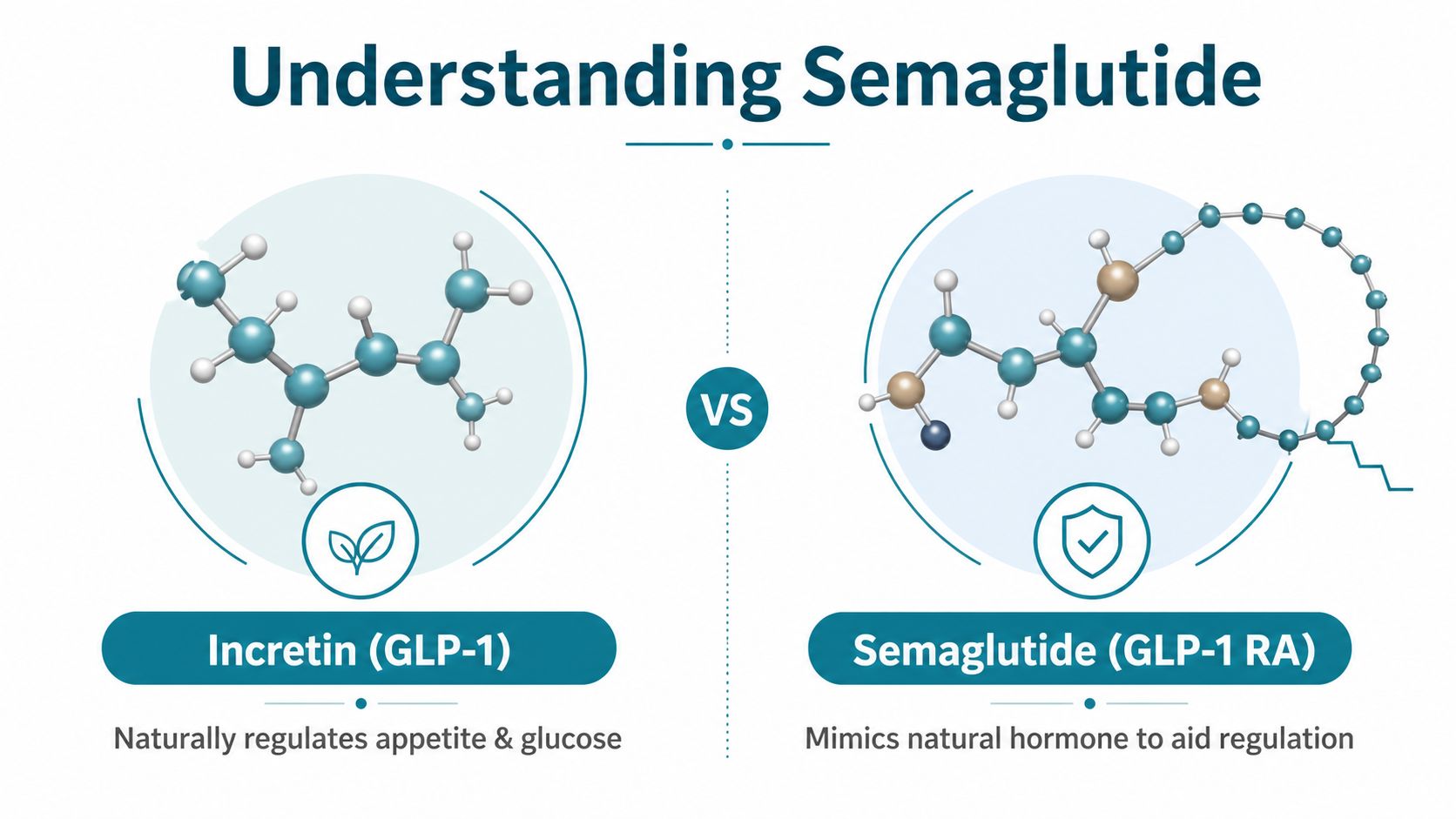
Semaglutide mimics glucagon-like peptide-1, or GLP-1, an incretin hormone involved in appetite regulation and glucose metabolism. It also slows gastric emptying, which can increase fullness and change how quickly food leaves the stomach. These effects help explain both its therapeutic benefits and its gastrointestinal side effects.
The same active ingredient appears in several FDA-approved products, but the products aren't interchangeable without physician guidance.
| Brand | Formulation | FDA-approved role |
|---|---|---|
| Wegovy | Once-weekly subcutaneous injection | Chronic weight management in adults with obesity, or overweight with a weight-related comorbidity, as an adjunct to reduced-calorie nutrition and increased physical activity |
| Ozempic | Once-weekly subcutaneous injection | Blood-glucose control in adults with type 2 diabetes, with cardiovascular risk-reduction use in the indicated population |
| Rybelsus | Oral tablet | Blood-glucose control in adults with type 2 diabetes |
The FDA approved Ozempic on December 5, 2017, and later approved Wegovy on June 4, 2021 for adults with a BMI of at least 30 kg/m², or at least 27 kg/m² with a weight-related comorbidity.FDA history and clinical context The current Wegovy prescribing information describes its use with reduced-calorie dietary intake and increased physical activity.Wegovy FDA prescribing information
Semaglutide isn't a stimulant or a short-term diet product. It may be used as part of chronic disease management, with nutrition, physical activity, sleep, medical review, and maintenance planning remaining relevant. Readers who want a broader discussion of public debate around Ozempic can review this Ozempic weight loss discussion, while the GLP-1 treatment overview provides practice-specific context. This article focuses primarily on Wegovy for obesity medicine, not off-label substitution between brands.
What the Clinical Evidence Shows About Efficacy
The longer-term evidence matters because semaglutide is generally considered a chronic treatment, not a short course. In STEP 5, adults with obesity without diabetes were followed for 104 weeks. Average weight loss with semaglutide was 15.2%, compared with 2.6% with placebo.STEP trial evidence The result supports continued treatment for maintaining weight reduction, while also showing that semaglutide works alongside nutrition and physical activity rather than replacing them.
The earlier STEP 1 trial established the shorter-term efficacy profile in 1,961 adults with obesity without diabetes over 68 weeks. Its findings are summarized below alongside STEP 5 and SELECT.
| Trial | Population | Duration | Semaglutide result | Placebo result |
|---|---|---|---|---|
| STEP 1 | Adults with obesity without diabetes | 68 weeks | 14.9% average weight loss | 2.4% average weight loss |
| STEP 5 | Adults with obesity without diabetes | 104 weeks | 15.2% average weight loss | 2.6% average weight loss |
| SELECT | Adults with overweight or obesity, established cardiovascular disease, and no diabetes | Mean follow-up of about 33 months | 20% relative reduction in major adverse cardiovascular events | Compared with placebo |
SELECT examined a different clinical question. In adults with overweight or obesity, established cardiovascular disease, and no diabetes, once-weekly semaglutide 2.4 mg was associated with a 20% relative reduction in major adverse cardiovascular events, including cardiovascular death, heart attack, or stroke, compared with placebo.SELECT trial This finding applies to the studied population and should not be treated as evidence that semaglutide prevents cardiovascular events in every patient who takes it.
Individual results vary. Baseline health, adherence, tolerability, concurrent conditions, nutrition, physical activity, appetite control, and continued treatment all affect the outcome. A percentage change can also obscure whether a patient has better mobility, improved glucose-related measures, or a more sustainable routine.
Treatment decisions involve trade-offs. Gastrointestinal adverse effects can limit dose escalation or continuation, and stopping therapy may make long-term weight maintenance more difficult. Patients comparing semaglutide with a stimulant medication can review how GLP-1 medications and phentermine differ, but medication choice still depends on medical history, contraindications, treatment goals, response, and follow-up needs.
How Dosing and Administration Work in Practice
Wegovy starts at a low dose and increases gradually over 16 weeks. The purpose is to give the body time to adapt, especially because nausea, vomiting, diarrhea, and constipation often become more noticeable during dose increases. The FDA-approved and European product information describe the following general schedule.Wegovy product information
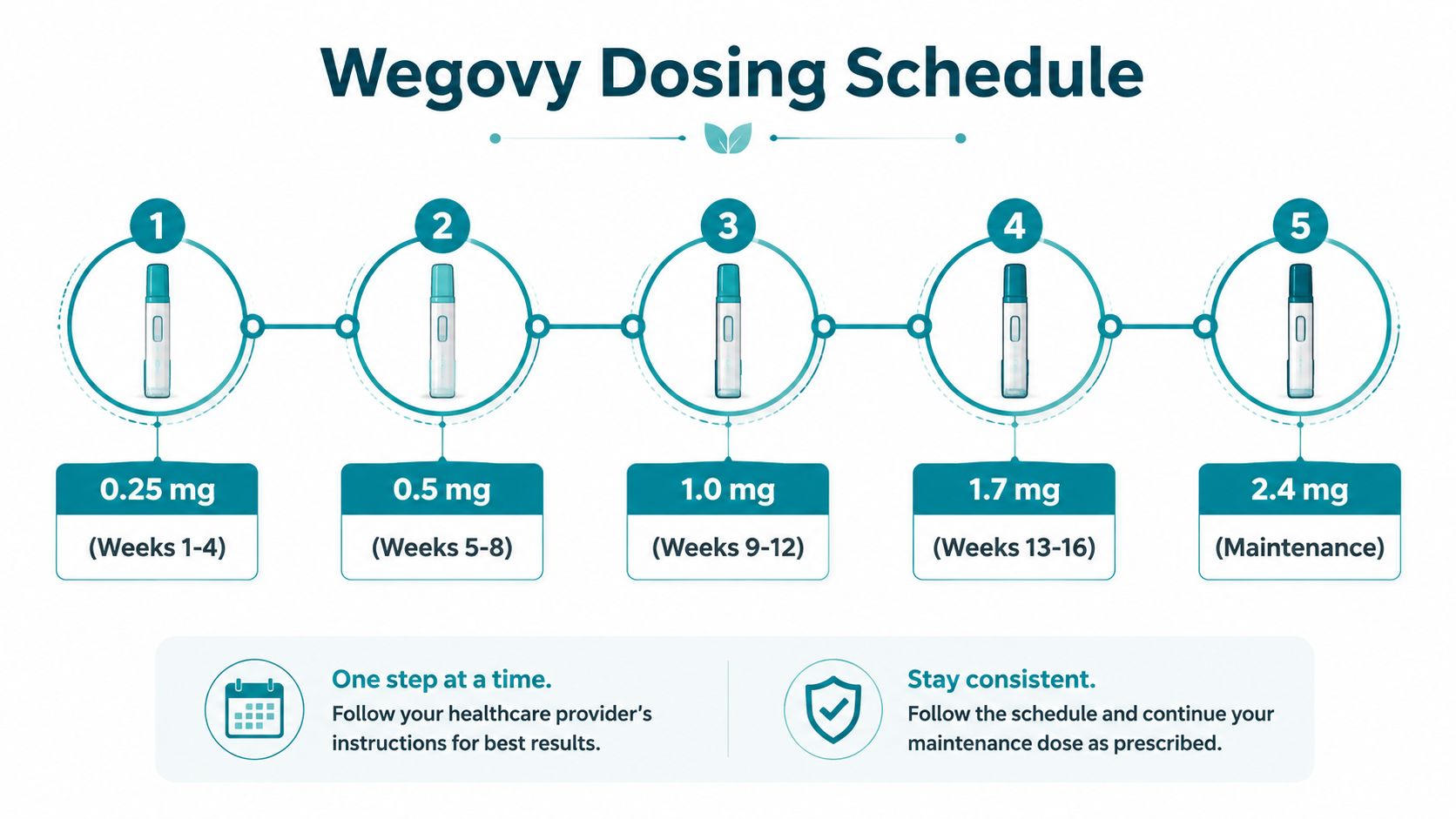
- Weeks 1 to 4: 0.25 mg once weekly
- Weeks 5 to 8: 0.5 mg once weekly
- Weeks 9 to 12: 1.0 mg once weekly
- Weeks 13 to 16: 1.7 mg once weekly
- Maintenance: 2.4 mg once weekly
This is the standard Wegovy escalation framework, not individualized medical advice. A prescriber may need to delay escalation or reassess treatment when side effects are difficult to tolerate. Semaglutide has an elimination half-life of approximately one week and can remain in circulation for about five weeks after the last dose, which helps explain why symptoms may persist and why rapid changes can be problematic.Semaglutide pharmacokinetic evidence
The injection is subcutaneous, meaning it goes into the fatty tissue under the skin. Approved instructions identify the abdomen, thigh, or upper arm as injection areas. It can generally be administered at any time of day, with or without food, on the same day each week. Patients should follow the product instructions and their clinician's directions rather than adapting the schedule independently.
Missed-dose decisions depend on how close the next scheduled dose is. The official prescribing information should guide the response, and patients shouldn't double a dose to compensate. Because a prolonged interruption may require a different restart approach, contact the prescribing clinician before making schedule changes. Related medication schedules, such as the Mounjaro dosage guide, shouldn't be used to infer a semaglutide plan.
Side Effects, Safety Warnings, and Contraindications
The most common problems with semaglutide involve the gastrointestinal tract. Slower gastric emptying and reduced appetite can be helpful therapeutically, but they can also make large, high-fat meals difficult to tolerate. Small portions, slower eating, adequate hydration, and clinician-guided adjustments may help, but persistent symptoms deserve medical review.
| Category | Details | Action required |
|---|---|---|
| Common gastrointestinal effects | Nausea, vomiting, diarrhea, constipation, abdominal discomfort | Report persistent or limiting symptoms. Escalation may need to pause or be reassessed |
| Pancreatitis | Acute pancreatitis has been observed with GLP-1 receptor agonists | Severe or persistent abdominal pain, especially with vomiting, requires urgent medical evaluation |
| Gallbladder problems | Wegovy labeling includes warnings about gallbladder disease | Seek medical attention for significant upper-abdominal pain, fever, jaundice, or ongoing vomiting |
| Hypersensitivity | Serious allergic reactions are possible | Emergency care is appropriate for facial or throat swelling, trouble breathing, or widespread severe hives |
| Thyroid C-cell tumors | The prescribing information includes a boxed warning | Wegovy is contraindicated with a personal or family history of medullary thyroid carcinoma or MEN2 |
FDA labeling warns about acute pancreatitis, gallbladder problems, and serious thyroid C-cell tumors.FDA safety labeling Patients with a personal or family history of medullary thyroid carcinoma, or multiple endocrine neoplasia syndrome type 2, shouldn't use Wegovy. Severe hypersensitivity to semaglutide or an ingredient is another contraindication. Pregnancy requires prompt discussion with the prescribing clinician because weight management with Wegovy isn't appropriate during pregnancy.
Semaglutide also deserves medication reconciliation. Delayed gastric emptying may affect absorption of some oral medicines, and people using insulin or a sulfonylurea may face a greater risk of hypoglycemia when therapies are combined. Semaglutide shouldn't be combined with another semaglutide-containing product or another GLP-1 receptor agonist unless a qualified clinician has made a specific, documented plan.
Practical rule: Severe, persistent abdominal pain, signs of a serious allergic reaction, or symptoms suggesting gallbladder disease aren't side effects to manage casually at home.
A focused guide to Ozempic side effects can provide additional brand-specific context, but patients should use the prescribing information for their actual product. Don't stop or restart medication based only on an online symptom list. Contact the prescriber for non-emergency concerns, and seek urgent care when symptoms are severe or rapidly worsening.
What Happens When Treatment Is Stopped
Weight loss from semaglutide is not automatically permanent after treatment ends. In randomized withdrawal data, participants who stopped semaglutide regained 11.6 percentage points of lost body weight within one year.Evidence on withdrawal and regain
The reason is biological, not moral. Once treatment stops, appetite and satiety signaling may change, and the medication's effect on gastric emptying no longer continues in the same way. Some patients notice more hunger, less fullness after meals, and greater difficulty maintaining the eating pattern that felt manageable during treatment.
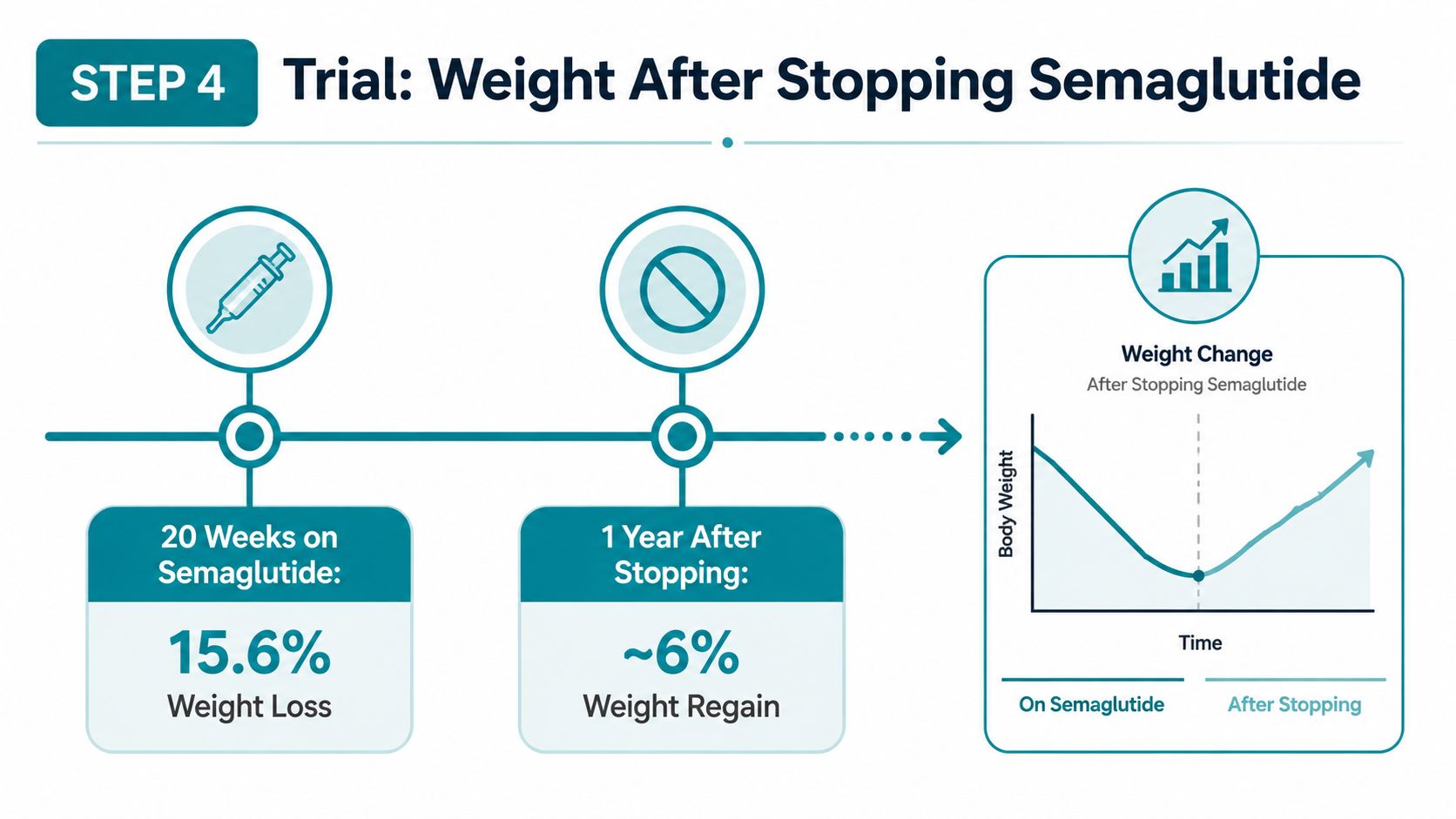
A broader 2026 Oxford-led systematic review of 37 studies found that weight increased by an average of 0.4 kg per month after weight-management drugs were stopped overall, and by about 0.8 kg per month for newer agents such as semaglutide and tirzepatide. The review projected a return to baseline at roughly 1.5 years for semaglutide and tirzepatide, compared with 1.7 years overall.Systematic review of weight regain
These averages do not predict every patient's course. A 2026 Cleveland Clinic analysis of nearly 8,000 patients reported average regain after stopping semaglutide or tirzepatide of 0.5% at one year. Many patients had restarted treatment or switched therapies, while 55% of obesity patients still gained weight. The practical answer is more nuanced than either “nothing happens” or “everyone rebounds.”
Maintenance planning should start before treatment begins. It can include nutrition and activity routines, behavioral support, monitoring of weight and cardiometabolic measures, and a discussion about continuing medication, changing therapy, or using another approach. A lower dose or slower strategy may be more sustainable than pursuing the highest dose at any cost. The treating clinician should guide that decision.
What to Expect from Physician-Led Obesity Care
A careful evaluation begins with eligibility and safety, not with a prescription. Current FDA labeling supports Wegovy for adults with obesity, or adults with overweight plus a weight-related comorbidity, as an adjunct to reduced-calorie nutrition and increased physical activity.Wegovy FDA label
A source-based evaluation framework includes:
- Medical history and weight history: Review prior treatment attempts, relevant diagnoses, symptoms, family history, and goals.
- Medication reconciliation: Identify diabetes medicines, oral drugs whose absorption may be affected, other GLP-1 receptor agonists, and agents that may influence appetite or weight.
- Risk assessment: Consider cardiovascular health, gastrointestinal history, gallbladder and pancreatic concerns, thyroid cancer history, pregnancy potential, and allergy history.
- Baseline assessment: Depending on the clinical picture, a clinician may review laboratory and metabolic information relevant to glucose regulation, kidney function, liver health, lipids, and other conditions.
- Follow-up planning: Assess tolerability, appetite, weight trend, physical function, adherence, and patient-reported experience before considering any treatment adjustment.
No single laboratory marker determines whether semaglutide is appropriate for everyone. A composite hypothetical illustrates the reasoning without representing a real patient: an adult with an eligible BMI, type 2 diabetes medicines, prior gallbladder symptoms, and significant nausea would need medication reconciliation and safety review before escalation. Individual outcomes vary, and a fictional example can't predict what will happen to a particular reader.
Some follow-up can occur through telemedicine when the patient is physically located in a state where the practice can legally provide care and the clinical issue is suitable for virtual assessment. In-person evaluation may still be necessary for certain examinations, urgent symptoms, or diagnostic questions. Empire Medical Wellness describes its weight-management care as physician-led outpatient care that can include medical assessment, individualized planning, monitoring, and long-term maintenance discussions. The practice's specific appointment process and availability should be confirmed directly.
Frequently Asked Questions About Semaglutide
Can semaglutide be combined with another weight-loss medication?
There isn't a general rule that makes combinations appropriate. Wegovy shouldn't be combined with another semaglutide product or another GLP-1 receptor agonist without a clinician-directed plan. Other combinations require review of indications, interactions, adverse effects, and evidence rather than self-directed experimentation.
Is alcohol safe with semaglutide?
Alcohol can worsen nausea, vomiting, dehydration, or poor food intake for some people. It may also complicate glucose management in people with diabetes. Discuss alcohol use with the treating clinician, particularly when gastrointestinal symptoms or diabetes medicines are involved.
Does semaglutide affect fertility or pregnancy planning?
Pregnancy planning deserves advance discussion. Wegovy isn't intended for weight management during pregnancy, and a clinician should review timing, contraception, and alternative care when pregnancy is possible or desired.
What does “Ozempic face” mean?
Facial volume changes can occur with weight loss from many causes. The phrase doesn't identify a unique facial toxicity caused only by semaglutide. Rapid or substantial weight change may alter facial soft tissue, but an individual evaluation is needed for concerning changes.
Are compounded versions the same as FDA-approved products?
Compounded semaglutide isn't the same as an FDA-approved Wegovy, Ozempic, or Rybelsus product. Quality, concentration, labeling, and oversight can differ, so patients should discuss the risks and use FDA-approved products when clinically appropriate. Injectable products also require attention to storage and travel conditions described in the product labeling. Don't place a medication in checked luggage or improvise storage without confirming the manufacturer's instructions.
Empire Medical Wellness provides private, physician-led outpatient obesity care that can include medical assessment, medication evaluation when appropriate, monitoring, and long-term maintenance planning. Visit Empire Medical Wellness to learn more about the practice and request information about an evaluation.
Byline: Empire Medical Wellness Editorial Team
Published: August 21, 2026
Updated: August 21, 2026
Sources
- Wegovy FDA prescribing information
- FDA semaglutide safety labeling
- STEP clinical trial evidence
- SELECT cardiovascular outcomes trial
- Systematic review of weight regain after treatment withdrawal
This article is educational and isn't personal medical advice.