
Antidepressants are several distinct medication classes with different evidence, side effects, interactions, and discontinuation risks. Choosing among them depends on diagnosis, prior response, other health conditions, current medicines, pregnancy considerations, and personal preferences, with close monitoring early in treatment.
Could a medication that helps one person create an entirely different problem for another? Yes. “Antidepressant” is a broad category, not a single treatment, and the safest choice depends on the person and the clinical question being addressed.
The need for careful medication management has grown alongside use. In OECD countries, antidepressant consumption rose by nearly 50% between 2011 and 2021, while average consumption increased from 52.42 defined daily doses per 1,000 inhabitants in 2010 to 69.5 in 2020. Consumption increased in every OECD country except Denmark and Norway over that 11-year period, according to the OECD analysis of pharmaceutical consumption.
This article is for adults researching physician-led mental-health care. It explains what antidepressants are, how major classes differ, what early follow-up may involve, and which symptoms require urgent attention. It doesn't diagnose depression or tell you to start, stop, taper, or change a medicine on your own.
Table of Contents
- What Antidepressants Are and What They Are Not
- How Antidepressants Work in the Brain
- Major Classes of Antidepressants Compared
- How Clinicians Choose Which Antidepressant to Try
- What to Expect in the First Weeks and Follow Up
- Safety Interactions and Special Considerations
- Making an Informed Next Step With Your Clinician
What Antidepressants Are and What They Are Not
What should someone expect from an antidepressant? It is a prescription medicine used for depression and, depending on the medicine, conditions such as certain anxiety disorders, obsessive-compulsive disorder, panic disorder, or trauma-related symptoms. Medicines within the same broad category can still feel different because they affect nerve-cell signaling through different biological pathways.
Antidepressants are not sedatives intended to make someone calm. They are also not a test that proves a person has depression. A questionnaire can identify symptoms that warrant further attention, while screening isn't diagnosis. Diagnosis requires a clinician to assess symptom patterns, duration, effects on daily function, medical conditions, substance use, current medicines, and other possible explanations.
The modern antidepressant era is often associated with FDA approval of fluoxetine, or Prozac, on December 29, 1987. Earlier milestones included iproniazid in 1958 and imipramine in 1959. Later selective serotonin reuptake inhibitors, or SSRIs, included sertraline in 1991, paroxetine in 1992, citalopram in 1998, and escitalopram in 2002, as described in the OECD historical overview of antidepressant use. Prescriptions for all antidepressants also rose substantially from 1988 to about a decade later, according to that historical review.
Medication is one part of care
Medication may be used alongside psychotherapy, sleep and activity support, treatment of medical contributors, and attention to alcohol or other substance use. The appropriate combination depends on the person and the clinical findings. A physician-led depression evaluation can help distinguish symptom screening from diagnostic clarification and medication planning.
Expectations should remain realistic. A network meta-analysis of 432 randomized controlled trials involving 102,443 adults found that every antidepressant studied was more effective than placebo, while overall effects were mostly modest. Response odds ranged from 2.13 for amitriptyline to 1.37 for reboxetine. Those findings support comparing effectiveness with tolerability and acceptability, rather than treating any one medicine as universally suitable. The Lancet network meta-analysis32802-7/fulltext) informs that comparison.
How Antidepressants Work in the Brain
Nerve cells communicate across tiny spaces called synapses. One neuron releases a chemical messenger, called a neurotransmitter, and the neighboring neuron detects that signal through receptors. The sending neuron then reabsorbs some of the messenger through a process called reuptake.
A useful analogy is a conversation across a narrow gap. The speaker releases words, the listener receives them, and a system clears the space so the next message can arrive. Some antidepressants alter that clearing process. SSRIs, for example, reduce serotonin reuptake, leaving more serotonin available in the synapse for signaling.
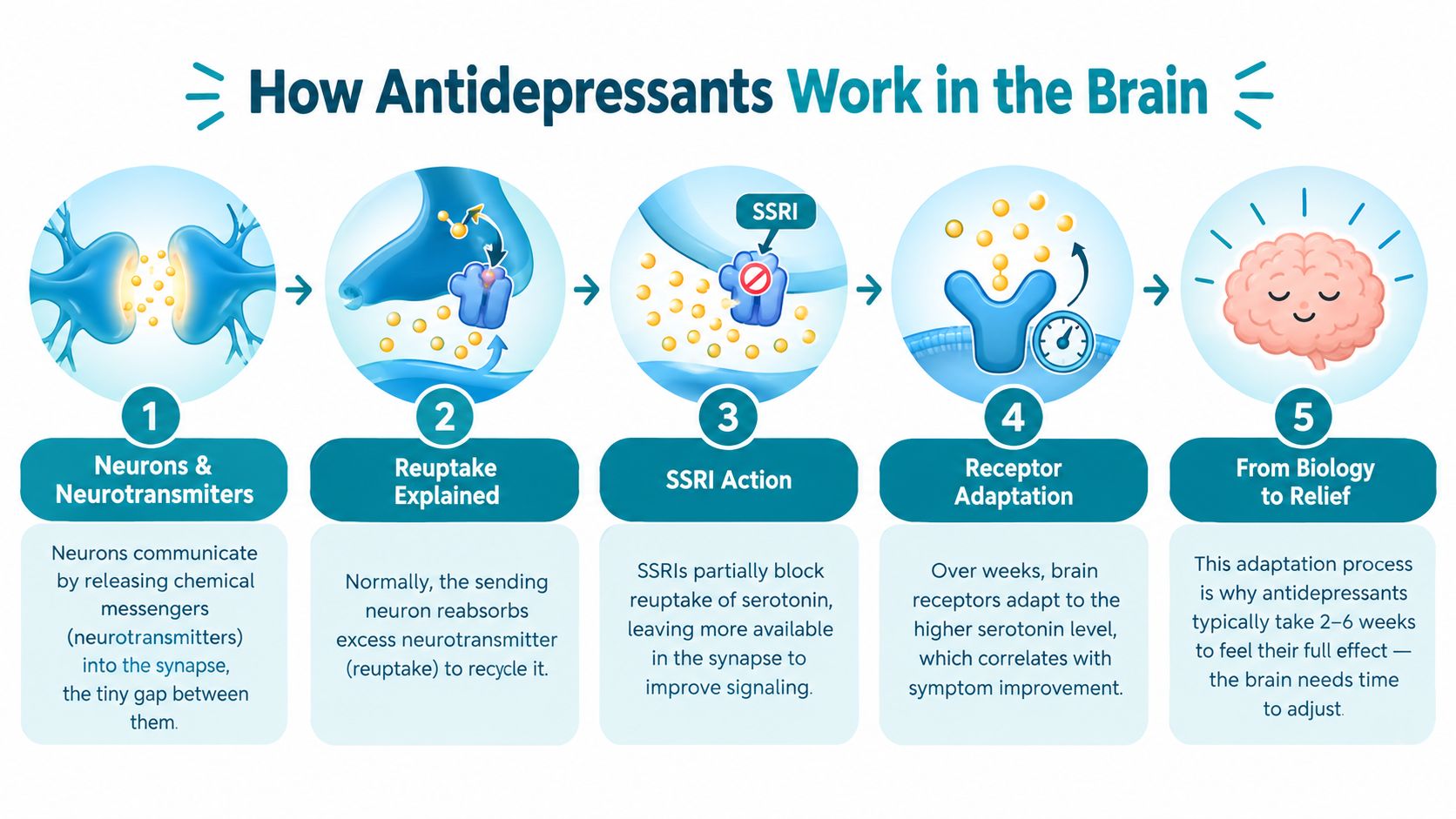
The chemical change can occur before a person feels better. The brain's receptors and connected networks need time to adapt, which helps explain why symptom improvement often develops gradually rather than immediately. Sleep, appetite, anxiety, energy, concentration, and mood may not change at the same pace.
No single chemical explanation fits every person
The phrase “chemical imbalance” is an oversimplification. Depression is a complex condition involving brain networks, stress biology, sleep, physical health, genetics, relationships, and lived experience. Antidepressants can influence neurotransmitter systems, but their mechanism doesn't prove that one chemical caused the illness.
Different classes affect different targets. SSRIs primarily influence serotonin signaling. SNRIs affect serotonin and norepinephrine. Other medicines act through combinations of receptors or pathways. Those differences can shape adverse effects, interactions, and discontinuation concerns.
People researching medication for anxiety often encounter overlapping drug classes, but the diagnosis and treatment goals still matter. A physician-led anxiety medication evaluation should clarify what symptoms are being treated rather than assuming that every anxious feeling calls for the same medicine.
Practical rule: A change in a neurotransmitter is not the same as a guaranteed change in mood. The clinical response still needs observation.
Major Classes of Antidepressants Compared
How can different antidepressant classes guide a treatment discussion? Each class offers a different set of expected effects, adverse effects, and interaction concerns. The table is a comparison tool, not a prescribing guide. Examples are representative, and the actual safety profile depends on the specific medicine, medical history, other substances, and concurrent prescriptions.
A large umbrella review involving people with comorbid medical disease found antidepressants effective for treating and preventing depression. It also found lower tolerability and acceptability than placebo. Reported adverse effects include sexual dysfunction, drowsiness, weight gain, insomnia, dizziness, nausea, and, in some patients, hyponatremia or SIADH, as described in the JAMA Psychiatry umbrella review.
Antidepressant Class Comparison at a Glance
| Class and examples | Typical indications | Common adverse effects | Key safety and interaction notes |
|---|---|---|---|
| SSRIs, sertraline, fluoxetine, escitalopram, paroxetine, citalopram | Depression and several anxiety-related conditions, depending on the medicine | Nausea, sleep changes, headache, sexual dysfunction, dizziness, or emotional flattening | Review other serotonergic medicines, bleeding risk, sodium concerns, and age-related suicidality warnings |
| SNRIs, venlafaxine, duloxetine | Depression, some anxiety conditions, and selected pain conditions, depending on the medicine | Nausea, sweating, insomnia, sexual dysfunction, dizziness, and possible blood-pressure concerns | Review cardiovascular history, other medicines, withdrawal risk, and kidney or liver considerations |
| Atypical antidepressants, bupropion, mirtazapine, trazodone | Depression, with some used for specific symptom patterns or other clinical purposes | Bupropion may be activating; mirtazapine may cause sedation and appetite or weight changes; trazodone may cause drowsiness and dizziness | Safety depends strongly on the specific medicine, seizure risk, sedation, interactions, and the reason for use |
| TCAs, amitriptyline, nortriptyline, imipramine | Depression and selected pain or other conditions, depending on the medicine | Dry mouth, constipation, blurred vision, urinary difficulty, sedation, dizziness, and cognitive effects | Anticholinergic effects and cardiac toxicity can be important, especially with overdose or certain medical conditions |
| MAOIs, phenelzine, tranylcypromine | Selected depression cases when other approaches haven't been suitable | Dizziness, sleep changes, weight changes, and blood-pressure effects | Tyramine-containing foods and numerous medicines can create serious interactions. Specialist supervision is essential |
Class-level summaries cannot replace the FDA prescribing information for a particular product. Interactions may involve prescription medicines, over-the-counter products, supplements, and recreational substances. A clinician may also use a monitoring plan to compare benefits with adverse effects during follow-up.
For adults seeking medication review, adult mental-health care may include diagnostic clarification, medication review, ongoing management, and coordination with another treating clinician when useful and authorized. Professional resources, including this content guide for mental health pros, can help clinicians and writers explain medication differences without presenting the classes as interchangeable.
How Clinicians Choose Which Antidepressant to Try
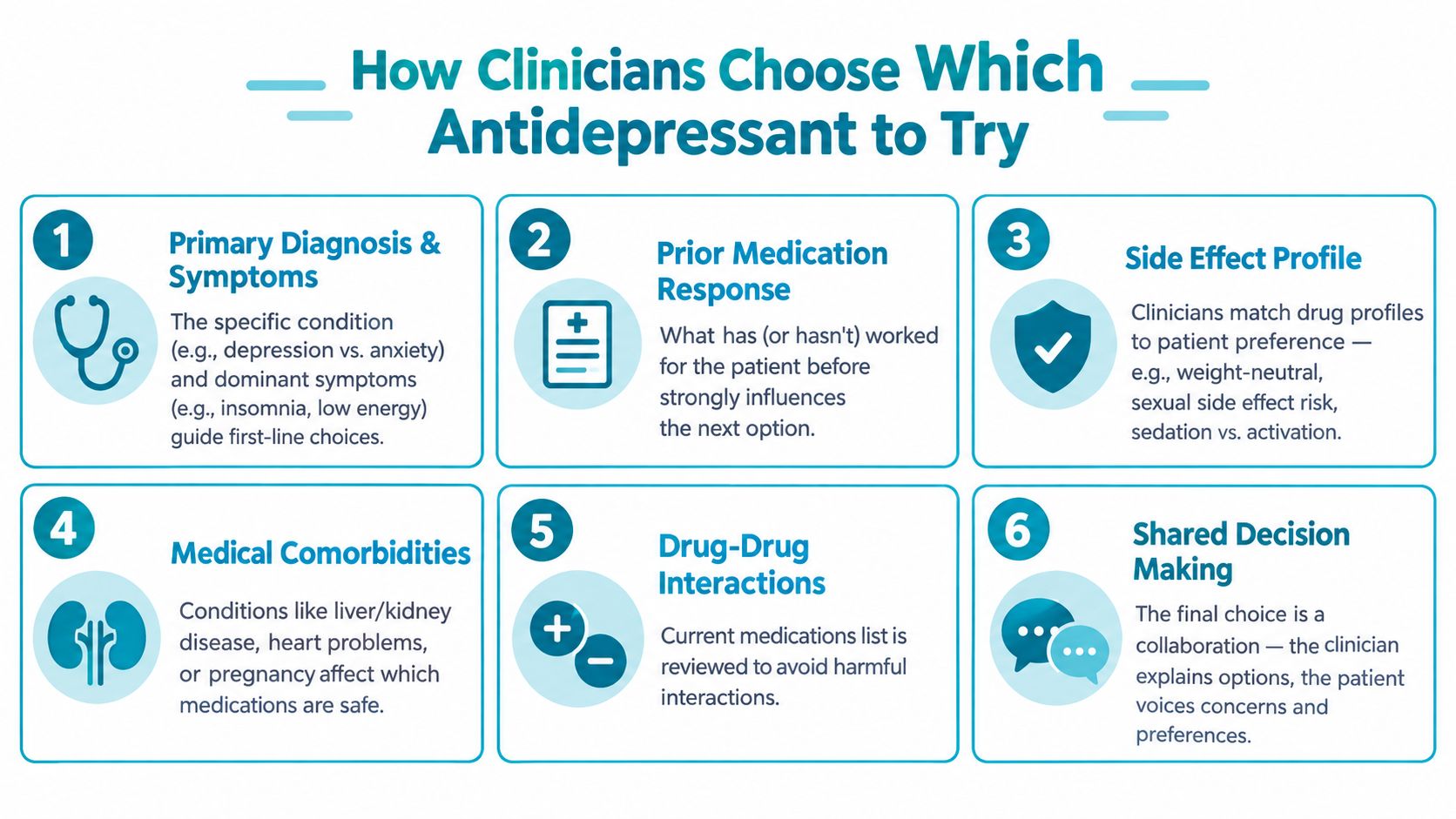
The first choice usually isn't based on one symptom or one popular medication. A clinician weighs several factors together, then discusses tradeoffs with the patient.
The clinical questions behind the choice
Primary diagnosis and symptoms come first. Depression, panic symptoms, obsessive thoughts, trauma-related symptoms, and generalized anxiety can overlap, but they aren't identical. Insomnia, low energy, agitation, pain, appetite changes, and concentration problems may also influence the discussion.
Previous response is valuable evidence. If a medicine helped before and was tolerated, that history can matter. If a relative had a useful or difficult response, the patient may mention it, but family experience doesn't guarantee the same outcome.
Comorbidities change the risk calculation. Heart disease, seizures, liver or kidney disease, bipolar-spectrum symptoms, chronic pain, sleep disorders, pregnancy, and breastfeeding may affect which options are reasonable to consider. These factors require direct clinical assessment.
The full medication list matters. A clinician needs prescription drugs, over-the-counter products, vitamins, herbal supplements, alcohol use, and other substances. Interaction risk can be missed when a patient reports only prescription medicines.
Preferences are clinical information. Some people are especially concerned about sexual adverse effects, sedation, activation, appetite, weight, emotional blunting, or the complexity of switching. Those concerns can affect adherence, so they belong in the decision rather than being dismissed.
A preparation checklist
Before an evaluation, consider bringing:
- Symptom timeline: When symptoms began, what changed, and how sleep, work, relationships, and daily function are affected.
- Medication history: Previous medicines, benefits, adverse effects, missed doses, and why each was stopped.
- Medical context: Diagnosed conditions, allergies, pregnancy or breastfeeding status, and relevant family history.
- Complete substance list: Alcohol, cannabis, stimulants, supplements, and nonprescription products.
- Treatment priorities: The adverse effects you most want to avoid and the improvements that would matter most to you.
A first trial may need adjustment. That doesn't automatically mean treatment has failed, and it doesn't mean a patient has done anything wrong. It may mean the diagnosis needs clarification, the benefit is partial, adverse effects are limiting, or another class better fits the clinical picture.
What to Expect in the First Weeks and Follow Up
What should you watch during the first weeks of an antidepressant trial? Treatment is judged over time, not after one dose. Sleep, appetite, anxiety, or energy may change before mood does. Some people notice adverse effects first, no immediate change, or several changes at once.
The schedule depends on the medicine, diagnosis, age, medical history, and prescriber's plan. Use the timeline as a discussion guide, not as a promise of when improvement will occur.
| Treatment period | What may be observed | What to communicate |
|---|---|---|
| Early treatment | Nausea, headache, fatigue, dizziness, sleep changes, or no noticeable change may appear before benefit | Report effects that interfere with daily life. Share worsening mood, agitation, or unusual behavior promptly |
| Developing response | Sleep, appetite, anxiety, energy, concentration, and mood may change at different speeds | Track daily functioning, such as work, relationships, self-care, and sleep, rather than relying only on whether you “feel better” |
| Clinical reassessment | The prescriber reviews benefit, tolerability, adherence, interactions, and whether the diagnosis remains appropriate | Ask whether to continue, adjust, or reconsider the plan |
| Ongoing care | Benefit and adverse effects require periodic review | Keep follow-up appointments and report new medicines, supplements, pregnancy, or major health changes |
The FDA required a boxed warning for all antidepressants in January 2005 and expanded it in 2007 to include young adults through age 24. The warning concerns age-related differences in suicidal thinking and behavior found in short-term studies. A peer-reviewed review of antidepressants and suicidality provides context for the findings across age groups, including the absence of increased risk in adults older than 24 and a protective effect against suicidal ideation and behavior in adults 65 and older.
Routine concerns versus urgent concerns
Nausea, sleep disruption, sexual dysfunction, dizziness, and uncertainty about improvement are routine concerns to record and discuss. Do not stop, restart, or change the medicine without clinical guidance.
Seek urgent help for new or worsening suicidal thoughts, severe agitation, dangerous impulsivity, confusion, a severe allergic reaction, or symptoms that could signal a life-threatening problem. NIMH advises close observation for people of all ages, with particular attention to children, teenagers, and young adults under 25 during the first few weeks or after a dose change. The NIMH overview of mental-health medications describes this monitoring need.
CMS notes that the FDA requires a Medication Guide with every antidepressant prescription. Read it, and ask the pharmacist or prescriber about any warning or instruction you do not understand.
Safety Interactions and Special Considerations
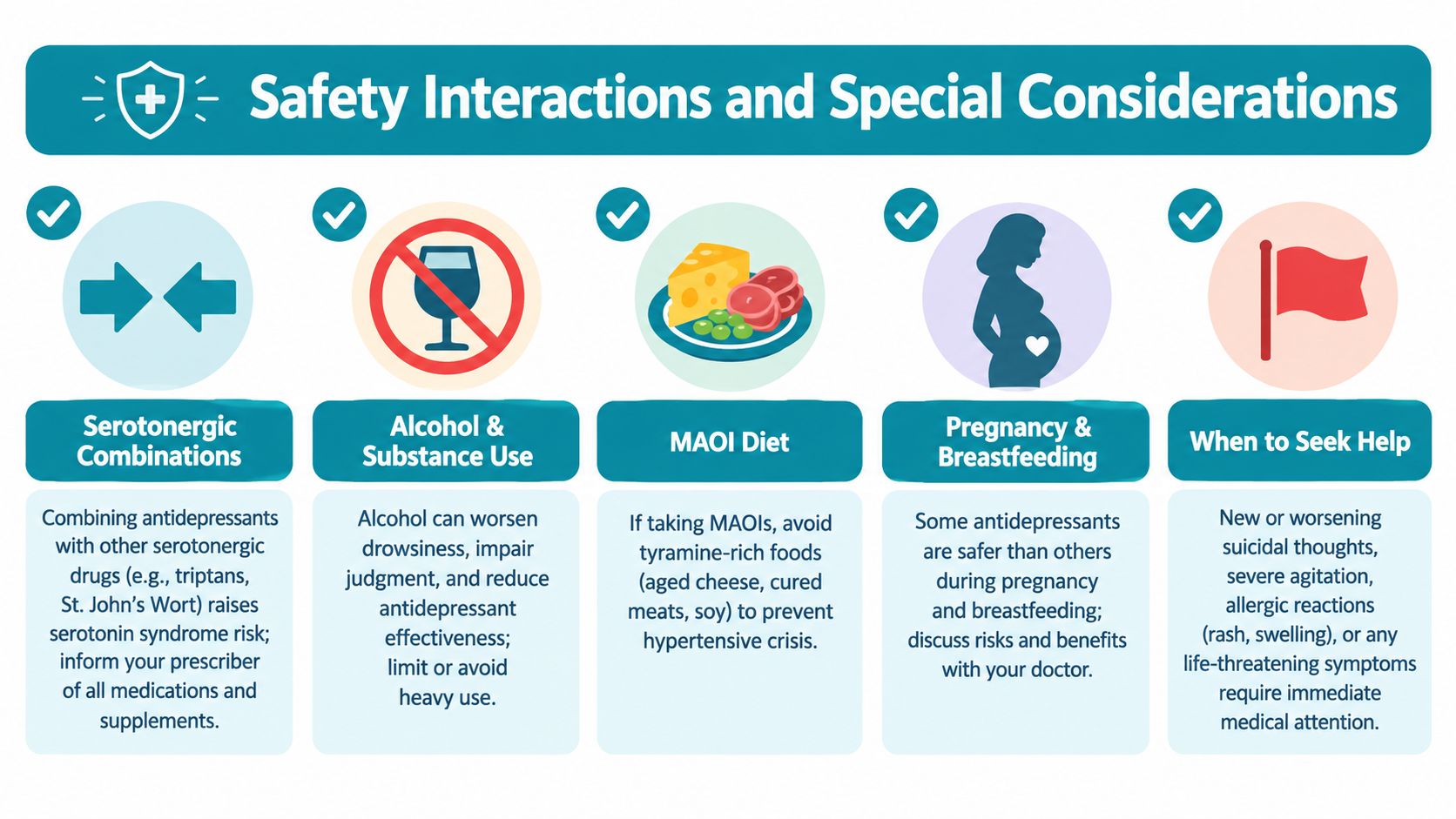
Medication safety depends on the combination, not just the antidepressant name. A person may face interaction risks from another prescription, a migraine medicine, an herbal supplement, alcohol, or a substance used recreationally. Providing a complete list helps the prescriber identify risks before a problem develops.
A practical safety checklist
- Serotonergic combinations: Some combinations can raise the risk of serotonin syndrome, a potentially serious reaction involving symptoms such as agitation, confusion, sweating, fever, tremor, or muscle changes. Tell the prescriber about other antidepressants, triptans, St. John's Wort, and all supplements.
- Alcohol and substances: Alcohol may worsen drowsiness and impair judgment. It can also complicate symptom assessment and medication safety. Adults who want confidential medical discussion of alcohol use can review addiction medicine care.
- MAOI precautions: MAOIs have extensive dietary and medication interactions. Tyramine-rich foods, such as aged cheese, cured meats, and some soy products, may be relevant, and the prescriber must explain the specific restrictions.
- Pregnancy and breastfeeding: Don't make medication changes based on a general internet list. Pregnancy, plans for pregnancy, and breastfeeding require an individualized discussion of risks, benefits, untreated symptoms, and alternatives.
- Older adults and medical illness: Dizziness, falls, sodium changes, cardiac effects, sedation, and interactions may require particular attention. The person's full health history matters.
Stopping suddenly can cause discontinuation symptoms, which may include dizziness and flu-like sensations. Discontinuation isn't the same as relapse, but the symptoms can overlap and feel frightening. Evidence about who is most likely to relapse after stopping long-term treatment remains limited, and recent research has produced mixed conclusions about the average severity of discontinuation symptoms because many studies were short and had limited follow-up. The review of antidepressant discontinuation and relapse evidence discusses those limitations.
Never stop, taper, or switch an antidepressant alone. A prescriber may need to distinguish discontinuation, relapse, adverse effects, an emerging bipolar-spectrum condition, substance-related symptoms, or another medical issue.
If you might act on suicidal thoughts, have a life-threatening reaction, or can't stay safe, call 911 or go to the nearest emergency department. In the United States, call or text 988 for the Suicide & Crisis Lifeline. SAMHSA also provides crisis and treatment information through its national helpline and support resources.
Making an Informed Next Step With Your Clinician
A useful appointment focuses on patterns, not only on whether the medicine “worked.” Bring the symptom timeline, medication history, adverse effects, missed doses, other medicines and supplements, alcohol or substance use, and the changes you hope to see.
Ask how the clinician will evaluate benefit, what adverse effects should be reported promptly, which symptoms require emergency help, and how any future medication change would be supervised. If symptoms have only partly improved, ask whether the next discussion should involve continued monitoring, a different medicine, psychotherapy with an outside clinician, diagnostic clarification, or another evidence-based option.
Composite example, not a real patient: An adult feels better and stops an antidepressant abruptly. Dizziness and flu-like symptoms appear soon afterward. Rather than assuming the depression has returned or restarting independently, the person contacts the prescriber, who evaluates timing, symptoms, relapse risk, other medicines, and a supervised plan.
This example illustrates why discontinuation decisions belong with the prescriber. It doesn't establish a universal tapering schedule, because the safest approach can depend on the medicine, duration of use, prior symptoms, current health, and treatment goals.
For readers who work with healthcare administration, a general overview of CPT codes for mental-health billing may explain how services are categorized, but billing information isn't a substitute for clinical guidance.
Empire Medical Wellness provides adult mental-health evaluation, medication review, ongoing medication management, and authorized coordination with a therapist or another treating clinician when useful. You can learn about the practice's mental-health medication review and decide whether a physician-led consultation fits your needs.
Empire Medical Wellness offers physician-led adult mental-health evaluation and medication management for people who need diagnostic clarification, medication review, or thoughtful follow-up. Visit Empire Medical Wellness to review the care model and request information about an appointment.
Byline: Empire Medical Wellness Editorial Team
Published: September 18, 2026
Updated: September 18, 2026
Sources
- OECD pharmaceutical consumption analysis
- FDA and OECD antidepressant history
- Lancet network meta-analysis of antidepressants32802-7/fulltext)
- JAMA Psychiatry umbrella review
- NIMH mental-health medication guidance
This article is educational and isn't personal medical advice.